










Custom Crafts Blog
Home » Custom Crafts Blog » The Ultimate Guide to Choosing the Perfect Lapel Pin for Your Brand
The Ultimate Guide to Choosing the Perfect Lapel Pin for Your Brand
Table of Contents
In the competitive landscape of brand building, every touchpoint matters. From your website design to your social media presence, every element shapes your audience’s perception. One often-overlooked yet powerful tool is the lapel pin: more than a small accessory, it’s a tangible representation of your brand’s identity, a conversation starter, and a cost-effective way to boost awareness, foster loyalty, and build community among your team, customers, and fans.
With countless options—materials, styles, production techniques, and designs—choosing the right lapel pin can feel overwhelming. Do you opt for classic enamel or sleek die-struck? What size and shape align with your brand? How do you stand out while staying true to your core values? This guide answers these questions, walking you through every step to choose a pin that drives real results. Let’s dive in.
Chapter 1: Why Lapel Pins Matter for Your Brand
Before exploring specifics, it’s critical to understand why lapel pins are a valuable brand asset. Used for decades to signify belonging, honor achievements, and promote causes, they’ve only grown more relevant in our digital age. Here’s their key value:
1.1 Tangible Brand Representation in a Digital World
In an era of online interactions, a physical lapel pin offers a unique, tangible connection. Unlike a social media post or email, it’s something people can touch, wear, and keep for years—serving as a constant reminder and turning every wearer into a walking brand ambassador. Whether on a blazer, backpack, or hat, the pin publicly endorses your brand to everyone the wearer encounters.
A single pin can be seen by dozens of people daily—at conferences, networking events, or even the grocery store—driving organic word-of-mouth marketing far more trusted than paid ads.
1.2 Builds Community and Belonging
Lapel pins foster community, whether among employees, customers, or fans. For teams, a custom pin symbolizes pride and loyalty, creating a unified look at events and reinforcing team spirit—boosting morale and productivity. For customers, pins act as a badge of honor: given as gifts with purchase, loyalty rewards, or tokens of appreciation, they create exclusivity and deepen engagement.
Brands like Starbucks use collectible pins to build loyal communities, while sports teams use them to unite fans around shared passion—proving their power to connect people to your brand.
1.3 Cost-Effective Branding and Marketing
Compared to billboards, TV ads, or social campaigns, lapel pins are incredibly cost-effective. Bulk production costs as little as $1–$3 per unit, making them accessible for brands of all sizes. Their long lifespan ensures ongoing promotion—unlike digital ads that disappear after days—delivering high ROI.
Versatile enough for employee onboarding, corporate events, trade shows, and loyalty programs, they’re a smart addition to any marketing budget.
1.4 Versatile and Customizable
Lapel pins adapt to any brand aesthetic—sleek, playful, luxurious, or casual. Whether you have a complex logo, simple slogan, or unique symbol, they can capture your brand’s essence with endless size, shape, color, and material options. Suitable for corporate brands, nonprofits, startups, sports teams, and more, they tailor to any goal: promoting products, honoring milestones, or raising cause awareness.
1.5 Timeless Appeal
Unlike trendy marketing tools, lapel pins have stood the test of time for over a century. Simple, elegant, and functional, they never feel outdated—often becoming collectible. Military pins honoring service members and corporate pins from iconic brands like Coca-Cola remain highly valued, ensuring your pin will represent your brand effectively for years.
Chapter 2: Define Your Brand Goals for the Lapel Pin
Before browsing options, define your goals—they’ll guide every decision from design to distribution. Here are common goals and how to align your pin with them:
2.1 Brand Awareness and Promotion
To boost awareness, your pin needs to be eye-catching and recognizable. Feature your logo prominently with bold colors and clear messaging, and choose a 1.25–1.5 inch size (visible but not bulky). For giveaways at trade shows, events, or as gifts with purchase, prioritize affordability: soft enamel or printed pins work best for bulk orders.
2.2 Employee Recognition and Team Building
For employee recognition, focus on pride and belonging. Incorporate company values, mission, or achievement symbols, and choose premium materials (hard enamel, die-struck metal) to convey appreciation. Create team-specific pins (e.g., sales targets for sales teams, hearts for customer service) to reinforce identity and healthy competition.
2.3 Customer Loyalty and Retention
To reward loyalty, make pins feel exclusive. Design limited-edition options for loyalty program members or milestone customers (e.g., 5-year patrons). Prioritize quality over quantity: hard enamel, gold plating, or 3D molds, plus special details (glitter, custom backings) to make customers feel valued and encourage repeat engagement.
2.4 Event Promotion and Commemoration
For events or milestones (e.g., conferences, anniversaries), tie the design to the occasion—include dates, logos, or themes to create a keepsake. Match the design to the audience: sleek die-struck pins for formal corporate events, creative colors/shapes for casual festivals. Limited-edition event pins also generate buzz as collectibles.
2.5 Cause Marketing and Awareness
For cause-aligned brands, design pins with cause-related symbols (trees for sustainability, hearts for charity) and matching colors. Be transparent: donate a portion of pin sales to the cause and highlight this on the pin or packaging to build trust and raise awareness.
Chapter 3: Understand the Different Types of Lapel Pins
Choosing the right pin type is critical—each has unique characteristics, production methods, and appeal. Here’s a breakdown of the most common options:
3.1 Soft Enamel Pins
Soft enamel pins are popular for their affordability and versatility. Made with a die-struck metal base (zinc alloy, brass, copper) with raised ridges separating enamel sections, the enamel is applied to recessed areas and baked at low temperatures. The result is a textured surface with enamel slightly below the metal ridges—dimensional and tactile.
Advantages of Soft Enamel Pins
- Affordable: $1–$3 per unit in bulk, ideal for promotions and giveaways.
- Highly customizable: Works with simple or complex designs, multiple colors, and details like gradients or glitter.
- Textured look: Raised ridges add depth and visual interest.
- Durable: Resistant to wear, suitable for everyday use.
Disadvantages of Soft Enamel Pins
- Textured surface: Recessed enamel collects dirt, requiring occasional cleaning.
- Less smooth: Not ideal for a sleek, polished finish.
- Limited fine details: Enamel application struggles with small text or intricate patterns.
Best for
Startups, small businesses, and brands with playful/colorful aesthetics—perfect for promotions, employee onboarding, and trade shows.
3.2 Hard Enamel Pins
Hard enamel (cloisonné) pins are the premium alternative to soft enamel. Using the same die-struck process, they add a high-temperature bake (800–900°F) and polishing step, leaving enamel level with metal ridges for a smooth, glass-like finish. Made with high-quality metal (brass, copper) and premium enamel, they’re more durable and vibrant.
Advantages of Hard Enamel Pins
- Sleek finish: Premium, high-end look for formal branding and executive gifts.
- Durable: Scratch/fade-resistant, long-lasting.
- Vibrant colors: High-quality enamel maintains color over time.
- Easy to clean: Smooth surface doesn’t collect dirt.
Disadvantages of Hard Enamel Pins
- More expensive: $2–$5 per unit, less ideal for bulk giveaways.
- Longer production time: Polishing adds time to manufacturing.
- Less texture: Smooth surface lacks dimensional contrast.
Best for
Luxury brands, corporate executives, nonprofits, and high-end events—ideal for executive gifts, membership badges, and formal brand ambassadors.
3.3 Die-Struck Pins
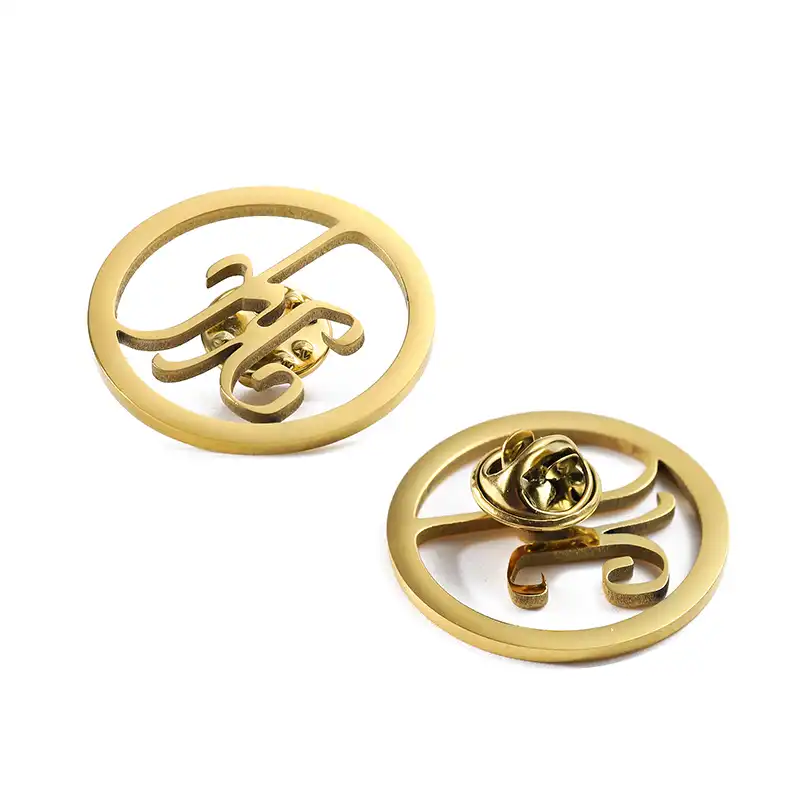
Die-struck pins focus on metal beauty, using a die to stamp designs into brass, copper, or silver. Uncolored (or plated with gold, silver, nickel, or antique brass), they have a timeless, sophisticated look—perfect for classic or minimalist brands. Common for military insignias, fraternities, and corporate logos.
Advantages of Die-Struck Pins
- Classic look: Sleek, timeless, ideal for formal branding.
- Durable: High-quality metal ensures longevity.
- Versatile finishes: Plating options match any brand aesthetic.
- Fine details: Perfect for complex logos and small text.
Disadvantages of Die-Struck Pins
- Limited color: Not ideal for bold, colorful branding.
- More expensive than soft enamel: Premium finishes add cost.
Best for
Law firms, financial institutions, military organizations, and luxury brands—great for executive gifts, membership pins, and formal events.
3.4 Printed Pins
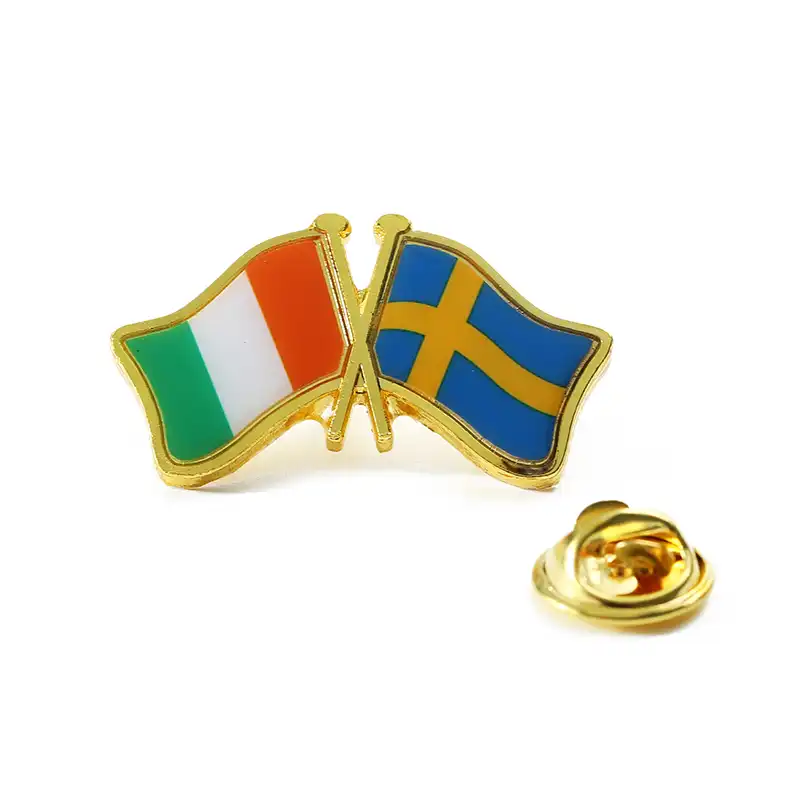
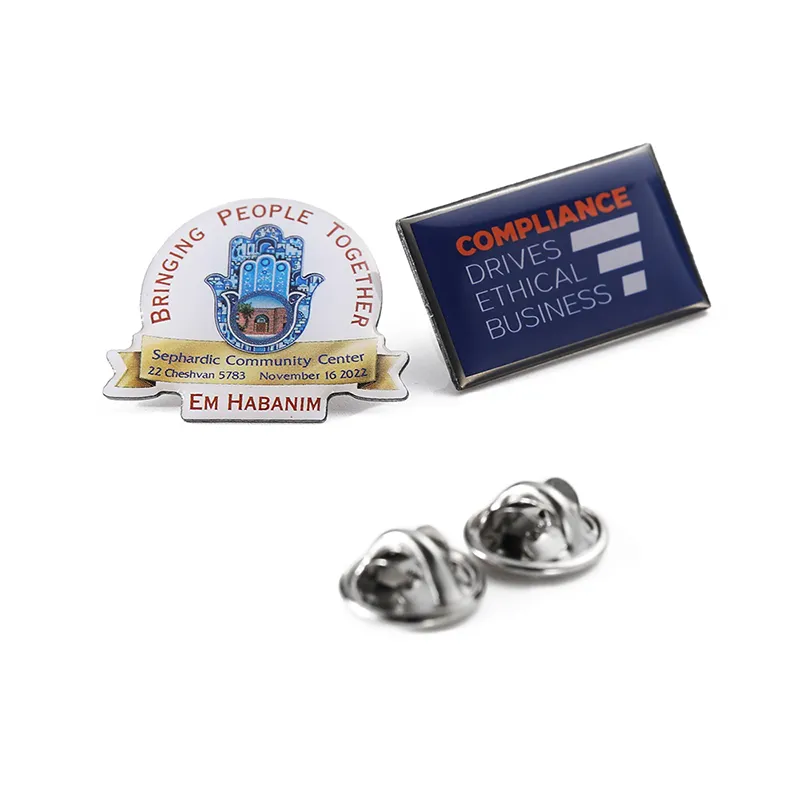
Printed (offset/digital) pins print designs directly onto aluminum or stainless steel, then coat with clear epoxy for protection. They offer unlimited design flexibility—gradients, photos, and intricate details impossible with enamel/die-struck. Fast to produce, ideal for last-minute orders.
Advantages of Printed Pins
- Unlimited design: Perfect for complex, photo-based, or gradient designs.
- Fast production: Ideal for time-sensitive events.
- Affordable for small orders: Cost-effective for 10–50 units (startups, limited budgets).
- Vibrant colors: Digital printing matches brand palettes accurately.
Disadvantages of Printed Pins
- Less durable: Epoxy can scratch/chip; design fades in sunlight.
- Lower perceived value: Flat, printed look feels less premium.
- Not for everyday wear: Epoxy wears quickly with regular use.
Best for
Tech startups, creative agencies, film/TV promotions, and one-time events—great for small orders and collectibles.
3.5 3D Mold Pins
3D mold (die-cast) pins use a custom mold to cast designs into zinc alloy, creating a three-dimensional shape. Finished with enamel, plating, or left uncolored, they’re bold and memorable—ideal for mascots, 3D logos, or custom shapes. Popular for sports teams and entertainment brands.
Advantages of 3D Mold Pins
- Unique 3D design: Stands out and creates a lasting impression.
- Highly customizable: Any shape or design (mascots, logos).
- Durable: High-quality metal ensures longevity.
- Versatile finishes: Enamel, plating, or antique options.
Disadvantages of 3D Mold Pins
- More expensive: Custom molds add cost.
- Longer production time: Mold creation takes time.
- Bulky: 3D design may be too large for everyday wear.
Best for
Sports teams, entertainment brands, and promotional items needing to stand out—perfect for collectibles and event giveaways.
3.6 Offset Epoxy Pins
Offset epoxy pins combine printed pin flexibility with enamel durability. Designs are offset-printed onto metal, then coated with epoxy for a glossy, protected finish. Ideal for tech brands and startups needing complex designs with durability.
Advantages of Offset Epoxy Pins
- Design flexibility: Handles gradients, photos, and complex patterns.
- Durable: Epoxy protects against scratches/fading (better than printed pins).
- Premium appearance: Glossy finish feels more high-end than printed pins.
- Fast production: Quicker than enamel pins for time-sensitive orders.
Disadvantages of Offset Epoxy Pins
- More expensive than printed pins: Epoxy adds cost.
- Less durable than hard enamel: Still prone to wear compared to premium enamel.
Best for
Tech brands, startups, and creative agencies—ideal for complex designs needing durability.
Chapter 4: Choose the Right Material for Your Lapel Pin
Material impacts appearance, durability, and cost. Choose one aligned with your goals, design, and budget. Here are common options:
4.1 Zinc Alloy
Zinc alloy is the most common material for soft enamel, hard enamel, and 3D mold pins. Lightweight, durable, and affordable, it’s ideal for mass production—perfect for brands on a budget.
Pros
- Affordable: One of the most cost-effective options.
- Lightweight: Comfortable for extended wear.
- Durable: Resistant to rust and corrosion.
- Easy to work with: Adaptable to die-striking, casting, or stamping.
Cons
- Less premium: Cheaper look/feel than brass/copper.
- May tarnish: Requires occasional care to maintain appearance.
Best for
Bulk promotions, everyday wear, and brands with limited budgets—common for soft/hard enamel and 3D mold pins.
4.2 Brass
Brass (copper-zinc alloy) is premium, with a warm golden appearance and smooth finish. More expensive than zinc, it conveys luxury and professionalism—ideal for high-end pins.
Pros
- Premium appearance: Warm, golden look for luxury branding.
- Durable: Extremely resistant to rust and corrosion.
- Smooth finish: Polishes to a high shine for die-struck/hard enamel pins.
- Holds details: Easy to engrave/stamp for complex designs.
Cons
- More expensive: Less ideal for bulk giveaways.
- May tarnish: Polishing restores shine easily.
Best for
High-end pins, executive gifts, and brands conveying luxury—common for die-struck and hard enamel pins.
4.3 Copper
Copper is a premium metal with a unique reddish-brown appearance. More expensive than zinc/brass, it’s perfect for classic or artisanal brands, developing a distinctive patina over time.
Pros
- Distinctive appearance: Warm, reddish-brown stands out.
- Durable: Resistant to rust and corrosion.
- Holds details: Ideal for complex designs.
- Patina: Adds character over time (optional appeal).
Cons
- Most expensive: Not ideal for bulk orders.
- Patina: Some brands may dislike the changing appearance.
Best for
High-end, artisanal pins and commemorative items—common for die-struck and hard enamel pins.
4.4 Aluminum
Aluminum is lightweight and affordable, perfect for printed pins. Smooth and easy to print on, it’s less durable than other metals—ideal for short-term use.
Pros
- Lightweight: Extremely comfortable for wear.
- Affordable: Cost-effective for printed pins.
- Smooth surface: Perfect for digital/offset printing.
- Rust-resistant: Low maintenance.
Cons
- Less durable: Soft, prone to bending/scratching.
- Less premium: Cheaper look than brass/copper.
Best for
Printed pins, bulk promotions, and short-term events—common for tech startups and one-time uses.
4.5 Stainless Steel
Stainless steel is durable and corrosion-resistant, ideal for harsh conditions (outdoor events, sports teams). More expensive than zinc/aluminum, it’s low-maintenance and sleek.
Pros
- Extremely durable: Resistant to scratches, bending, and corrosion.
- Low-maintenance: No tarnishing or rust.
- Sleek appearance: Modern, minimalist look.
Cons
- More expensive: Costlier than zinc/aluminum.
- Hard to work with: Difficult for complex die-struck designs.
Best for
Durable pins for sports teams, outdoor events, and low-maintenance needs—common for die-struck and printed pins.
Chapter 5: Design Your Lapel Pin: Key Elements to Consider
A well-designed pin aligns with your brand and stands out. Focus on these key elements:
5.1 Brand Identity Alignment
Your pin should reflect your brand’s values, tone, and aesthetic. Revisit brand guidelines: use your color palette, match your tone (professional, playful, luxurious), and incorporate brand symbols. For example, luxury brands need sleek, premium designs; startups can be colorful and quirky—ensure the pin is instantly recognizable as yours.
5.2 Logo Placement and Size
Your logo is the focal point—keep it prominent and visible. For 1.25–1.5 inch pins, logos should be at least 0.5 inches (circular) to be recognizable. Simplify complex logos to remove small, hard-to-see details.
5.3 Color Selection
Use your brand’s primary colors for the main design, secondary colors for accents. Consider color psychology: blue for trust (corporate), red for energy (sports), gold/silver for luxury, green for sustainability, black for minimalism. Stick to 2–3 colors to avoid clutter.
5.4 Size and Shape
Size
- Small (0.75–1 inch): Subtle, professional—ideal for formal attire and employee pins.
- Medium (1.25–1.5 inches): Most common—visible but not bulky, perfect for promotions and everyday wear.
- Large (1.75–2 inches): Bold—ideal for event pins, mascots, and collectibles (bulky for everyday wear).
Shape
- Circular: Classic, versatile—works for most logos.
- Square/Rectangular: Modern, sleek—ideal for minimalist/corporate brands.
- Custom Shape: Unique—tailored to logos/mascots, perfect for standing out (more expensive but impactful).
5.5 Text and Typography
Keep text minimal (1–2 lines: brand name, tagline). Use legible fonts (Arial, Helvetica) and ensure contrast (light text on dark background). Text should be at least 0.125 inches tall for readability.
5.6 Finishes and Add-Ons
Metal Finishes
- Polished Gold/Silver/Nickel: Luxury, formal—executive gifts, high-end pins.
- Antique Gold/Silver/Brass: Vintage—classic brands, collectibles.
- Matte Gold/Silver/Nickel: Modern, minimalist—contemporary brands.
- Black Nickel: Edgy—fashion, tech startups.
Enamel Add-Ons
- Glitter Enamel: Playful—youth brands, event pins.
- Glow-in-the-Dark Enamel: Unique—events, concerts.
- Transparent Enamel: Highlights metal—die-struck pins.
Other Add-Ons
- Epoxy Coating: Protects—printed/soft enamel pins.
- Engraving: Personalized—recognition/commemorative pins.
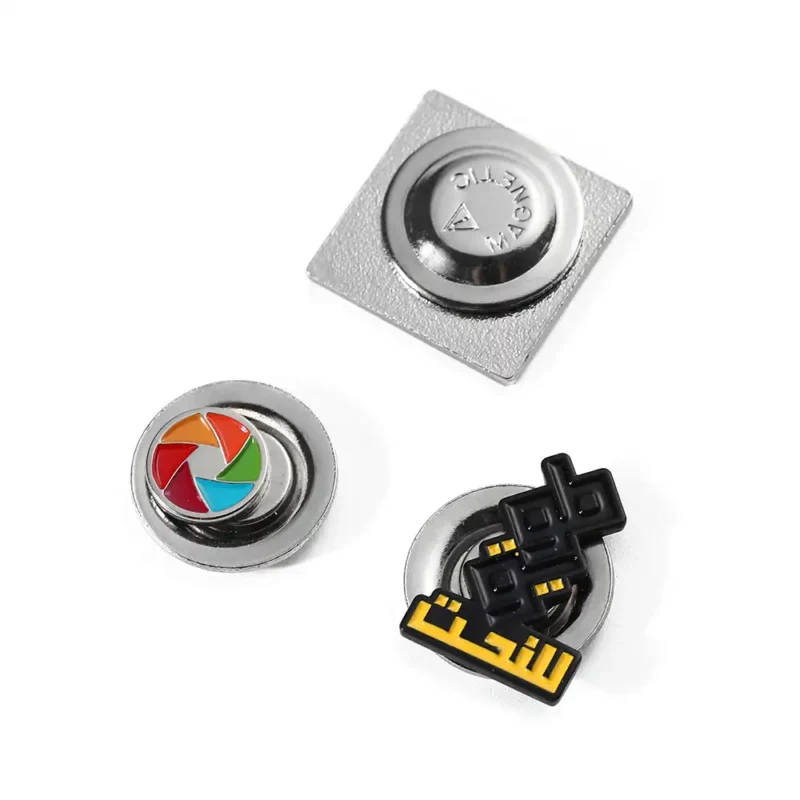
- Custom Backings: Butterfly/rubber/magnetic—magnetic for no clothing damage.
Chapter 6: Choose a Reputable Lapel Pin Manufacturer
Manufacturer quality defines your pin’s success. Follow these steps to choose the right one:
6.1 Research and Compare Manufacturers
Research custom lapel pin manufacturers online, focusing on experience, portfolio, reviews, pricing, production time, and customer service. Compare 3–5 options: check their work quality, customer feedback, and ability to meet your timeline/budget.
6.2 Ask for Samples
Request a sample (small fee, often refundable) to inspect quality: even enamel application, smooth metal edges, consistent finish, legible logo/text, and durability. This ensures the manufacturer meets your standards.
6.3 Ask About Production Processes and Quality Control
Reputable manufacturers have strict quality control. Ask about their production methods and how they ensure consistency—e.g., enamel application checks, metal finishing standards, and final inspections. Avoid manufacturers with vague processes or poor quality control.
6.4 Consider Communication and Support
Choose a manufacturer with responsive customer service. They should answer questions promptly, offer design support (if needed), and keep you updated on production progress. Poor communication can lead to delays or mistakes.
6.5 Review Terms and Conditions
Read contracts carefully: check for hidden fees, minimum order quantities, production timelines, and return policies. Ensure the manufacturer guarantees quality and offers refunds/replacements for defective pins.
Chapter 7: Final Tips for Success
To ensure your lapel pin drives results, keep these tips in mind:
- Test your design: Share a mockup with your team or customers to get feedback before production.
- Order extras: Print 10–15% more pins than needed to account for defects or future use.
- Promote your pin: Share photos on social media, feature it in email campaigns, or highlight it at events to maximize visibility.
- Track results: Monitor how the pin impacts brand awareness (e.g., social media mentions) or loyalty (e.g., repeat purchases) to refine future strategies.
Conclusion
Choosing the perfect lapel pin for your brand requires aligning your goals, design, and budget with the right type, material, and manufacturer. A well-designed pin is more than an accessory—it’s a powerful branding tool that builds community, boosts awareness, and leaves a lasting impression.
By following this guide, you’ll have the knowledge to select a pin that not only looks great but also drives real results. Whether you’re promoting your brand, recognizing employees, or rewarding customers, a thoughtful lapel pin will become a beloved symbol of your brand’s identity for years to come.
PRODUCT CATEGORIES
Do you want to have unique metal crafts?
Let's connect ASAP.
We are a professional manufacturer of custom metal crafts, we can create exquisite metal artworks for you according to your needs and preferences.