










Custom Crafts Blog
Home » Custom Crafts Blog » 2026 Pin Design Trends: A Look at Popular Elements and Styles
2026 Pin Design Trends: A Look at Popular Elements and Styles
Table of Contents
In the accessory world, pins have never been a “niche item” — from practical tools in the 13th century to today’s trendy symbols that combine decorativeness, commemorative value, and commercial value, they carry the aesthetic changes of the times and people’s emotional expressions in a small form. In 2026, with the “minimalist revival”, “deepening of sustainable concepts”, and “intensified cultural integration” in the fashion circle, pin design has ushered in a new round of innovation. Whether in materials, craftsmanship, styles, or functions, it presents a pattern of diverse coexistence. This article will comprehensively inventory the core popular elements and popular styles of pin design in 2026, combining industry cases, craftsmanship details, and market insights to provide a comprehensive and practical trend guide for designers, brands, foreign trade practitioners, and fashion enthusiasts, helping them grasp industry opportunities and unlock new possibilities in pin design.
The charm of pins lies in their “small but exquisite” nature — in a small space, they can not only be the finishing touch to an outfit, but also serve as a carrier for brand communication, a sustenance for emotional memories, and even a medium for cultural inheritance. In 2026, consumers’ demand for pins is no longer limited to the basic function of “fixing clothes”, but also pursues “personalization, texture, and scenarization”, which also promotes designers to continuously break through in the use of elements, style creation, and craftsmanship innovation. From the in-depth penetration of Pantone’s Color of the Year to the wide application of 3D printing technology; from the innovative inheritance of intangible cultural heritage craftsmanship to the cross-border integration of IP co-brands, pin design in 2026 is steadily moving towards a “diverse, exquisite, and warm” direction.
Chapter 1: Analysis of Core Popular Elements in 2026 Pin Design
Popular elements are the soul of trends. The popular elements of pin design in 2026 not only continue the environmental protection and minimalist concepts of recent years, but also integrate new era emotions and cultural symbols, forming a unique pattern of “classic reproduction + innovative breakthrough”. The following five core popular elements run through all dimensions of pin design and become the mainstream trends in 2026.
1. Color Elements: Coexistence of Warm Blank Space and Diverse Collisions
The color design of pins in 2026 is centered on “emotional resonance”. On the one hand, it responds to the global collective desire for tranquility and blank space; on the other hand, it meets the demand for personalized expression through diverse color collisions. Among them, two major color trends are particularly prominent.
The primary popular color is Pantone’s 2026 Color of the Year — 「Cloud Dancer」 (PANTONE 11-4201). This is the first time Pantone has designated white as the Color of the Year in history. Like clouds in the morning mist, it is light, soft, and full of strength, accurately catering to people’s pursuit of a spiritual pure land in the era of information overload. In pin design, 「Cloud Dancer」 is not a single cold white or warm white, but a neutral color with a balance of cold and warm. It is neither cold and hard nor warm and greasy. It can not only be used as a base color to highlight the texture of the material itself, but also blend perfectly with other colors to create a relaxed sense of breathability.
In practical applications, 「Cloud Dancer」 pins mostly adopt matte or satin-textured materials, such as frosted silver, matte enamel, and acrylic, paired with minimalist shapes, abandoning redundant decorations to highlight the aesthetic pursuit of “less is more”. For example, Bottega Veneta’s 2026 Spring and Summer Collection launched 「Cloud Dancer」 enamel pins, with pure white enamel as the base and delicate metal edging on the edges. Without complex patterns, it conveys understated luxury only through the texture of the material, suitable for various scenarios such as suits, shirts, and bags; domestic designer brands launched 「Cloud Dancer」 pearl pins, combining natural pearls with frosted white metal. The rounded lines paired with soft white have a gentle temperament, becoming a popular choice for commuting, dating and other scenarios.
In addition to the warm blank space of 「Cloud Dancer」, another major trend in pin colors in 2026 is “low-saturation color collision + retro color system”. Different from the previous high-saturation contrast, low-saturation color collision is based on Morandi colors and earth tones, paired with soft color collision combinations, such as haze blue + off-white, light gray + nude pink, light brown + mint green. It can not only avoid the monotony of a single color, but also not appear exaggerated, highlighting a sense of high-grade. The retro color system is mainly composed of caramel color, dark green, wine red, and gilded gold, echoing the revival of retro style. It is mostly used in enamel pins and metal carved pins, conveying a strong sense of the times and texture.
It is worth noting that the color application in 2026 pays more attention to “scene adaptation” — commuting pins mostly adopt low-saturation and neutral colors to highlight professionalism and simplicity; holiday commemorative and cultural and creative pins mostly adopt retro colors or bright color collisions to enhance a sense of ritual and memory points; children’s and IP co-branded pins mostly adopt lively macaron colors to fit the preferences of the audience. At the same time, the sustainability of colors has also become a consideration. Many brands use environmentally friendly pigments to ensure that the colors are bright and free of harmful substances, in line with the overall environmental protection trend.
2. Material Elements: Parallel Development of Sustainability and Texture Upgrade
Materials are the core carrier of pin texture. The core trend of pin material design in 2026 is “sustainability, texture, and diversification”, breaking the previous limitation of mainly ordinary metals, integrating more environmentally friendly materials, high-end materials, and innovative materials, balancing environmental protection concepts with visual and tactile experiences.
Sustainable materials have become the absolute mainstream in 2026. With the continuous improvement of global environmental awareness, consumers’ demand for “green accessories” is increasing, and pin design has also turned to the application of environmentally friendly materials. Among them, recycled metals are the most widely used, such as recycled silver, recycled copper, and recycled zinc alloy. These materials are processed by recycling waste metals, which not only reduces resource waste, but also retains the texture and durability of metals. For example, Taiwan’s Shuye brand launched rabbit’s foot fern pins, using 925 recycled silver as the raw material, with a silver content of 92.5%, adding 7.5% alloy to improve hardness and anti-allergy. After manual polishing, the forging texture is deliberately retained, which is both environmentally friendly and high-grade. At the same time, it is paired with natural pearls to convey the design concept of nature and circulation.
In addition to recycled metals, degradable resin and natural plant materials have also become important choices for sustainable materials. Degradable resin pins are light in texture and rich in color, which can be made into transparent or translucent textures, paired with minimalist shapes, suitable for young groups; natural plant materials such as wood, bamboo, and shells, after polishing and anti-corrosion treatment, are used in pin design, with natural texture and warm texture, echoing the natural style trend. For example, designers seal dried petals and leaves to make pins, retaining the original shape of plants, which is both environmentally friendly and ornamental, becoming the first choice for literary and artistic enthusiasts.
In terms of texture upgrade, the application of high-end metals and natural gemstones is more extensive. High-end metals such as gold, platinum, and K gold, paired with fine electroplating technology, create various textures such as mirror, frosted, and brushed, enhancing the luxury of pins; natural gemstones such as pearls, emeralds, rubies, and crystals are widely used in high-end pin design, highlighting the delicacy and collection value of pins through inlay technology. For example, Chanel’s 2026 Spring and Summer Collection launched retro carved pins, using gilded materials paired with emerald crystals, hollow carved design paired with gem inlay, which not only has a retro charm, but also has a sense of luxury, becoming a popular item in the high-end accessory market.
In addition, the innovative application of 3D printing materials has become a major highlight of pin materials in 2026. The popularization of 3D printing technology has made pin materials more diversified, such as 3D printed acrylic, 3D printed metal powder, and 3D printed resin. These materials are not only light in texture and high in strength, but also can achieve complex shape design, breaking the shape limitation of traditional materials. For example, the 3D printed enamel pins launched on Alibaba.com are formed by electron beam melting of metal powder, then filled with enamel and polished. They not only have the warm texture of enamel, but also the precise shape of 3D printing, and are durable and easy to maintain; 3D printed acrylic pins are light in texture and high in gloss, which can be made into transparent or opaque textures, with low cost, suitable for small-batch customization, and widely used in IP co-brands and cultural and creative products.
3. Craft Elements: Integration of Traditional Inheritance and Technological Innovation
Craftsmanship is the soul of pin design. The core trend of pin craftsmanship in 2026 is “innovation of traditional craftsmanship and refinement of modern technology”. It combines intangible cultural heritage craftsmanship, traditional manual craftsmanship with modern technologies such as 3D printing and digital design, which not only retains the traditional charm, but also improves production efficiency and design accuracy, creating pin products with both texture and creativity.
The innovative inheritance of intangible cultural heritage craftsmanship has become a major highlight. Many designers integrate traditional intangible cultural heritage craftsmanship into pin design, endowing pins with profound cultural heritage, and at the same time innovate in combination with modern aesthetics, allowing intangible cultural heritage to get out of museums and enter daily life. Among them, Chinese core-filled button craftsmanship, enamel craftsmanship, and carving craftsmanship are the most widely used. For example, Haining Jinyun Chaocheng Cultural and Creative Store launched Tang-style polo lady brooches, using Chinese core-filled button craftsmanship, extracting elements of Tang Dynasty polo sports, with zinc alloy and silk as materials. It not only retains the delicate charm of traditional buttons, but also integrates modern fashion design, becoming a representative work of Guochao pins in 2026; traditional enamel craftsmanship has been innovated to launch various forms such as soft enamel, hard enamel, and gradient enamel. Among them, gradient enamel pins present a delicate visual effect through the natural transition of colors, paired with minimalist shapes, becoming a new favorite in the fashion circle.
The refinement of manual craftsmanship has also become a trend in 2026. Manual carving, manual inlay, manual polishing and other crafts are widely used in high-end pin design. Each manual pin has a unique texture, highlighting the aesthetic demand of “niche and exquisite”. For example, high-end custom pins adopt manual carving craftsmanship to carve delicate patterns on the metal surface, with smooth lines and full details; manual inlay craftsmanship accurately inlays gemstones, pearls and other materials on the pins, paired with delicate metal edging, improving the delicacy and durability of the pins. Taiwan’s Shuye brand’s rabbit’s foot fern pins are fully hand-made, retaining the original texture of plant leaf veins. Each finished product has slightly different size and texture, showing a unique manual texture.
The application of modern technology has brought new breakthroughs to pin craftsmanship. Among them, 3D printing technology, digital carving technology, and vacuum electroplating technology are the most widely used. 3D printing technology can realize complex shape design, such as special-shaped pins and three-dimensional relief pins, solving the shape problems that are difficult to achieve by traditional craftsmanship, and improving production efficiency, suitable for small-batch customization. For example, the 3D printed pin design skills shared on Hackaday website add micro-features such as micro-cuts and small grooves on the pins, which not only do not affect the use, but also enhance the strength of the pins, and achieve more precise shapes; digital carving technology accurately designs patterns through computers, then carves through carving machines, with precise lines and delicate details, suitable for large-scale production, and ensuring the consistency of each pin.
The upgrading of vacuum electroplating technology has also improved the texture and durability of pins. In 2026, vacuum electroplating technology is widely used in metal pins, which can achieve various textures such as mirror, frosted, brushed, and gradient, and has the characteristics of anti-fading, anti-rust, and wear resistance, solving the problem of easy fading and rust of traditional electroplated pins. For example, custom metal pins adopt vacuum electroplating technology, and the surface presents a uniform metal luster, which is not easily affected by sweat and the environment, has a longer service life, and is suitable for long-term wearing and collection.
4. Shape Elements: Symbiosis of Minimalist Blank Space and Exquisite Details
The shape design of pins in 2026 has broken the previous misunderstanding of “complexity and cumbersomeness”, presenting a trend of “symbiosis of minimalist blank space and exquisite details”. It not only focuses on the simplicity and grandeur of the overall shape, but also does not ignore the polishing of details, allowing the pin to show a unique sense of design in a small form.
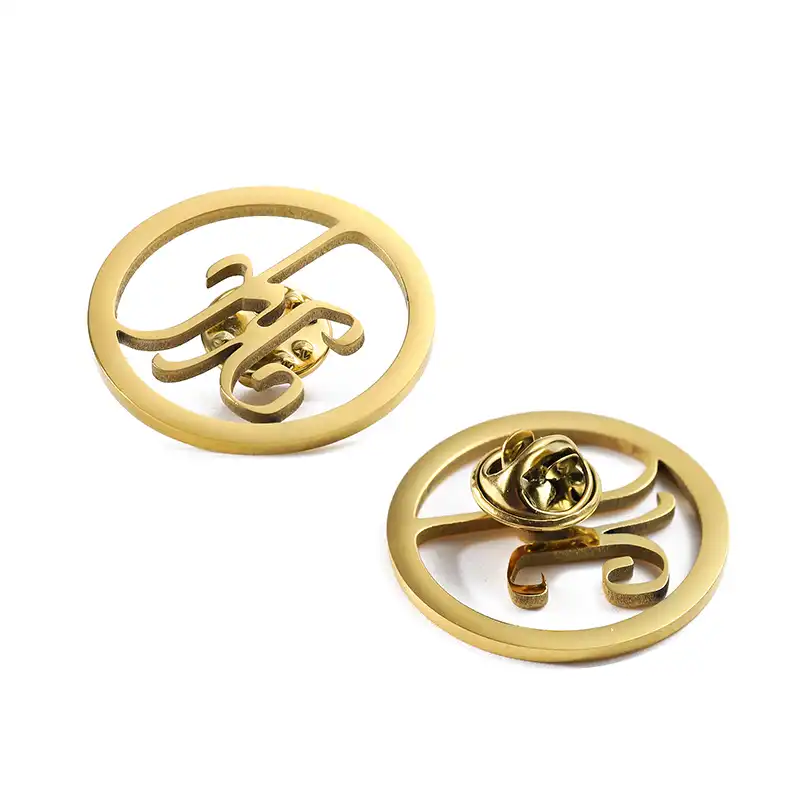
Minimalist shape is still the mainstream in 2026, echoing the aesthetic pursuit of “less is more”. Minimalist pins mostly adopt simple geometric shapes, such as circles, squares, triangles, and lines, without redundant decorations. They convey a sense of high-grade only through the texture of materials, the collocation of colors, and the smoothness of lines. For example, 「Cloud Dancer」 minimalist pins adopt simple circular or square shapes, paired with matte materials, with smooth edges and no complex patterns, but they can be adapted to various dressing scenarios, becoming a versatile item for commuting, leisure, and formal occasions; linear pins adopt slender metal lines, bent into simple shapes, such as waves and arcs, light and flexible, suitable for matching with shirts, scarves, bags, etc., adding a sense of detail.
The refinement of details is an important supplement to the minimalist shape. Although the overall shape of minimalist pins in 2026 is simple, they strive for perfection in details, such as the polishing of edges, the smoothness of lines, and the handling of interfaces. For example, the edges of metal pins are polished many times to present a delicate texture without burrs; the bending angle of linear pins is precise, the lines are smooth, and there are no abrupt turns; the interface adopts a hidden design, which is both beautiful and durable, avoiding the problem of abrupt and easy loosening of traditional pin interfaces.
In addition to minimalist shapes, special-shaped and three-dimensional shapes have also become popular trends in 2026, especially in IP co-branded, cultural and creative, and commemorative pins. Special-shaped shapes can better convey themes and emotions. Special-shaped pins have various shapes, such as animal shapes, plant shapes, letter shapes, and cartoon shapes. Combined with 3D printing technology, they can achieve more three-dimensional and precise shape effects. For example, the bear bean pins launched by 13DE MARZO in collaboration with POP MART adopt three-dimensional bear and small sweet bean shapes, with full details and lovely images. With a detachable design, they can be worn as pins or used as pendants, which are deeply loved by young groups; Taiwan’s Shuye brand’s rabbit’s foot fern pins adopt plant shapes, retaining the delicate texture and natural form of fern leaves, three-dimensional and full, conveying the design concept of nature and vitality.
In addition, the “detachable and combinable” shape design has also become a major innovation point in 2026. Many pins adopt modular design, divided into multiple detachable parts. Users can combine them into different shapes according to their own preferences to achieve “one pin for multiple uses”. For example, a combined pin is composed of multiple small pins, each with an independent shape and color. It can be worn alone or combined together to match different dressing scenarios; a detachable pin can be split into a pin and a pendant, and the pendant can be used as a necklace or keychain alone, improving the practicality and fun of the pin.
5. Functional Elements: Two-way Empowerment of Practicality and Decoration
In 2026, pin design is no longer limited to the single function of “decoration”, but moves towards the direction of “practicality + decoration” two-way empowerment. While retaining decorativeness, it adds more practical functions, improves the use value of pins, and meets the diverse needs of consumers.
The upgrading of basic practical functions is the foundation of pin function design in 2026. The “fixing clothes” function of traditional pins has been optimized. Designers improve the structure of pins, adopt a more firm spring design and a smoother needle tip, which not only ensures that the pin can firmly fix clothes, but also avoids the needle tip scratching clothes or skin. For example, safety pin design is widely used. The needle tip is hidden in the metal shell, which is safe to wear and not easy to scratch clothes. At the same time, the spring design is more firm and not easy to loose, suitable for various fabrics; magnetic pins get rid of the limitation of traditional needle tips, adopt magnetic design, do not need to pierce clothes, only need to be adsorbed on the surface of clothes, which is both firm and will not damage clothes, suitable for high-grade fabrics such as silk and wool.
The innovation of new practical functions has become a highlight of pin function design in 2026. Many pins integrate practical functions such as storage, lighting, and commemoration, improving the use value of pins. For example, storage pins are designed with small storage slots, which can place small accessories such as earrings and rings for easy carrying; lighting pins have built-in small LED lights, powered by batteries, which can be used for emergency lighting, suitable for night travel and outdoor scenarios; commemorative pins have built-in small chips, which can store text, pictures, audio and other information, such as commemorative photos and blessing words, becoming an important carrier for conveying emotions, suitable for commemorative scenarios such as weddings, birthdays, and graduations.
In addition, the “scenario-based functions” of pins have been further subdivided, and exclusive functions are designed for different use scenarios. For example, office pins are designed with a bookmark function, which can be used as a bookmark and take into account decorativeness; outdoor pins adopt waterproof and wear-resistant materials, with a built-in compass function, suitable for outdoor adventures; children’s pins adopt safe and non-toxic materials, designed with an anti-swallowing structure, and integrated with cartoon shapes, combining decoration and safety functions. According to the Industrial Research Network, the functions of pins will be further expanded in the future, such as being used to temporarily fix wound dressings in the medical field, combining memory metal and magnetic materials to achieve applications in more scenarios.
Chapter 2: Inventory of Popular Styles in 2026 Pin Design
Style is the external expression of design concepts and popular elements. In 2026, with the diversification of consumer demands and the integration of multiple cultures, pin design styles show a pattern of “coexistence of multiple styles and mutual integration”. Each style has its own unique design characteristics and target groups, covering minimalist, retro, natural, Guochao, IP co-branded and other major directions. The following will comprehensively analyze the popular styles of pin design in 2026, combining specific cases and market performance, to help you better grasp the style trends and meet the needs of different groups.
1. New Minimalist Style: Simplicity with Texture, Blank Space with Temperament
Against the background of the global minimalist revival, the new minimalist style has become the most mainstream style in 2026 pin design. Different from the “extreme simplicity” of previous years, the new minimalist style pays more attention to “texture and details”, advocating “less is more, but not less than enough”. It abandons redundant decorations and focuses on the expression of materials, lines and colors, creating a sense of high-grade and relaxation that conforms to the current aesthetic trend.
The core characteristics of the new minimalist style pins are: simple lines, pure colors, and high-quality materials. In terms of lines, they mostly adopt smooth geometric lines, such as straight lines, arcs, and circles, without complex curves and decorative patterns, highlighting the simplicity and clarity of the shape. For example, the new minimalist linear pins launched by the Danish brand Hay are made of slender recycled steel, bent into a simple arc shape, with a matte surface treatment, no redundant decorations, but they can add a sense of refinement to any outfit. The interface adopts a hidden design, which is both beautiful and durable, perfectly interpreting the design concept of “simplicity without losing texture”.
In terms of color, the new minimalist style pins mainly adopt neutral colors and low-saturation colors, such as 「Cloud Dancer」, light gray, off-white, and light brown. These colors are soft and not exaggerated, and can be easily matched with various outfits, suitable for commuting, leisure, formal occasions and other multiple scenarios. For example, the 「Cloud Dancer」 matte enamel pin launched by the Japanese brand Muji is based on pure white enamel, with a frosted texture on the surface, paired with a simple circular shape, which is simple and elegant, and can be matched with shirts, suits, sweaters and other clothes, becoming a must-have accessory for office workers.
In terms of materials, the new minimalist style pins focus on the use of high-quality and sustainable materials, such as recycled metal, matte enamel, and degradable resin. These materials not only have a good texture, but also conform to the environmental protection trend, which is deeply loved by young consumers. For example, the new minimalist pin launched by the American brand Patagonia uses 100% recycled aluminum as the raw material,经过 manual polishing to present a delicate matte texture, paired with a simple square shape, which is light and durable, and at the same time conveys the brand’s environmental protection concept. According to market research data, the sales volume of new minimalist style pins in 2026 increased by 45% compared with the previous year, becoming the most popular style among consumers aged 25-35.
2. Retro Revival Style: Nostalgic Texture, Classic Reincarnation
With the rise of nostalgia consumption, the retro revival style has once again become a hot trend in the fashion circle in 2026, and this trend has also been fully reflected in pin design. The retro revival style pins take classic elements of the 1950s-1990s as the design inspiration, integrate modern design concepts and craftsmanship, and reproduce the nostalgic texture while meeting the current aesthetic needs, creating a unique “retro and fashionable” style.
The core elements of retro revival style pins mainly include: retro colors, classic patterns, and traditional craftsmanship. In terms of colors, they mainly adopt retro colors such as caramel color, dark green, wine red, gilded gold, and coffee color, which can quickly bring people back to the nostalgic era and convey a strong sense of the times. For example, the retro carved pin launched by the French brand Chanel’s 2026 Autumn and Winter Collection uses gilded gold as the main color, paired with dark green enamel, and the surface is carved with classic camellia patterns, which has a strong retro charm and at the same time integrates modern inlay technology, making the pin more delicate and luxurious.
In terms of patterns, retro revival style pins mostly adopt classic retro patterns, such as floral patterns, checkered patterns, striped patterns, and retro logos. These patterns have a strong nostalgic atmosphere and can well reflect the retro style. For example, the retro floral pin launched by the British brand Burberry uses a classic checkered pattern as the background, paired with small floral patterns, made of wool and metal materials, which is full of retro flavor and suitable for matching with retro-style clothes such as tweed coats and midi skirts.
In terms of craftsmanship, retro revival style pins mostly adopt traditional craftsmanship such as enamel, carving, and inlay, which can better show the nostalgic texture of the pins. For example, the retro enamel pin launched by the domestic brand Shanghai Story uses traditional hard enamel craftsmanship, with a thick enamel layer and bright colors, and the surface is carved with retro patterns such as old street scenes in Shanghai, which is full of nostalgic feelings and has become a popular item among literary and artistic enthusiasts. In addition, the retro revival style pins also pay attention to the details of the design, such as the use of old-fashioned metal buckles, the polishing of the surface to simulate the sense of time, etc., which further enhances the retro atmosphere of the pins.
It is worth noting that the retro revival style in 2026 is not a simple copy of the classic, but a “retro innovation”. Designers integrate modern elements into the classic retro design, such as adding 3D printed details, using sustainable materials, etc., making the retro pins more in line with the current consumer demand. For example, the retro animal pin launched by the American brand Coach uses traditional carving craftsmanship to carve classic animal patterns, and at the same time uses 3D printing technology to add small details such as eyes and ears, making the pin more vivid and three-dimensional, and combining retro and modern perfectly.
3. Natural Minimalist Style: Integrating with Nature, Returning to Simplicity
Against the background of the deepening of global environmental protection concepts, people’s desire for nature is becoming stronger and stronger, and the natural minimalist style has become a popular style in 2026 pin design. The natural minimalist style pins take natural elements as the design inspiration, use natural and sustainable materials, and pursue a simple, natural and comfortable design effect, conveying the concept of “coexistence with nature”.
The core characteristics of natural minimalist style pins are: natural elements, sustainable materials, and simple shapes. In terms of natural elements, they mainly include plant elements, animal elements, and natural textures. Plant elements such as ferns, leaves, flowers, and branches are the most widely used. Designers restore the natural form of plants through 3D printing technology and manual carving, making the pins full of natural vitality. For example, Taiwan’s Shuye brand launched a series of plant-shaped pins, including rabbit’s foot fern, maple leaf, and daisy, which are made of recycled silver and natural resin, retaining the original texture of plants, and the shape is simple and natural, suitable for matching with casual clothes such as cotton and linen shirts.
Animal elements are also an important part of natural minimalist style pins, mostly adopting small animals with gentle images, such as rabbits, birds, and butterflies. The design is simple and lovely, without redundant decorations, highlighting the natural and pure beauty of animals. For example, the rabbit-shaped pin launched by the Japanese brand Uniqlo is made of degradable resin, with a simple and round shape, and the surface is printed with natural rabbit fur texture, which is cute and environmentally friendly, and has become a popular item among young girls.
In terms of materials, natural minimalist style pins mainly use natural and sustainable materials, such as natural pearls, shells, wood, bamboo, and recycled metals. These materials have a natural texture and warm touch, which can well reflect the natural style. For example, the shell pin launched by the Australian brand Billabong is made of natural shells,经过 simple polishing and processing, with a natural luster, paired with a simple metal pin, which is light and natural, suitable for matching with beachwear and casual clothes.
In terms of shape, natural minimalist style pins mostly adopt simple and natural shapes, avoiding complex decorations, and focusing on the expression of natural elements and material textures. For example, the leaf-shaped pin launched by the domestic brand Mijia is made of recycled copper, manually carved to restore the texture of leaves, with a simple and natural shape, and the surface is treated with a matte texture, which is both environmentally friendly and beautiful. According to market research, the natural minimalist style pins are particularly popular among consumers who pay attention to environmental protection and pursue a simple life, and their market share is increasing year by year.
4. Guochao New Chinese Style: Cultural Inheritance, Fashion Innovation
With the rise of national confidence and the popularity of Guochao culture, the Guochao New Chinese style has become a new bright spot in 2026 pin design. The Guochao New Chinese style pins take traditional Chinese cultural elements as the core, integrate modern fashion design concepts and craftsmanship, and realize the innovative inheritance of traditional culture, making traditional cultural elements glow with new vitality in modern pin design.
The core elements of Guochao New Chinese style pins mainly include: traditional Chinese patterns, cultural symbols, and intangible cultural heritage craftsmanship. In terms of traditional Chinese patterns, they mainly include dragon and phoenix patterns, cloud patterns, flower and bird patterns, traditional Chinese paintings, and seal characters. These patterns are full of traditional cultural connotation, and after modern design processing, they are more in line with the current aesthetic needs. For example, the dragon and phoenix pattern pin launched by the domestic brand Li-Ning uses traditional dragon and phoenix patterns as the design inspiration, simplifies and abstracts the patterns, uses recycled metal and enamel materials, and the color collocation is bright and fashionable, which not only retains the traditional cultural charm, but also has a strong modern sense.
Cultural symbols are also an important part of Guochao New Chinese style pins, such as traditional Chinese instruments, ancient architecture, traditional customs, etc. These cultural symbols can well reflect the unique charm of Chinese culture and become a carrier for cultural communication. For example, the ancient architecture pin launched by the Haining Jinyun Chaocheng Cultural and Creative Store takes the Tang Dynasty polo field as the design prototype, uses Chinese core-filled button craftsmanship and zinc alloy materials, restores the scene of Tang Dynasty polo sports, and at the same time integrates modern fashion elements, making the pin both cultural and fashionable.
In terms of craftsmanship, Guochao New Chinese style pins mostly adopt intangible cultural heritage craftsmanship such as Chinese core-filled button craftsmanship, enamel craftsmanship, and filigree inlay craftsmanship, which not only inherits traditional craftsmanship, but also improves the texture and collection value of the pins. For example, the filigree inlay pin launched by the domestic brand Chow Tai Fook uses traditional filigree inlay craftsmanship, with delicate filigree and bright gemstones, and the surface is carved with traditional cloud patterns, which is exquisite and luxurious, and has high collection value. In addition, Guochao New Chinese style pins also pay attention to the integration of modern technology, such as using 3D printing technology to realize complex traditional patterns, improving production efficiency and design accuracy.
With the continuous development of Guochao culture, Guochao New Chinese style pins are not only popular in the domestic market, but also gradually enter the international market, becoming a window for Chinese cultural communication. For example, the Guochao New Chinese style pins launched by the domestic brand Anta have been exported to Europe, America, Southeast Asia and other regions, and are deeply loved by foreign consumers, which not only promotes the development of the pin industry, but also spreads Chinese traditional culture.
5. IP Co-branded Style: Emotional Link, Trendy Expression
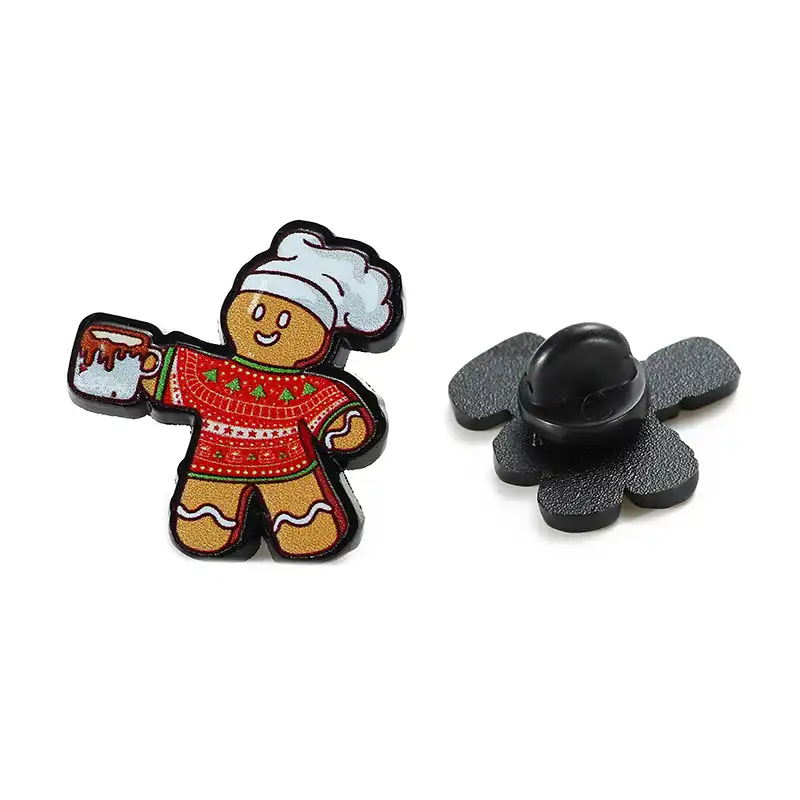
In 2026, the trend of IP co-branding in the accessory industry is becoming more and more obvious, and IP co-branded pins have become a popular style among young consumers. IP co-branded pins take popular IPs (such as anime, games, movies, cartoons, and Internet celebrities) as the design core, integrate the image and elements of IPs into pin design, and rely on the influence of IPs to attract consumers, realizing the emotional link between consumers and products.
The core characteristics of IP co-branded pins are: strong IP recognition, cute or cool shapes, and collectible value. In terms of IP types, they mainly include anime IPs, game IPs, cartoon IPs, and cultural IPs. Anime IPs such as One Piece, Naruto, and Detective Conan are the most widely used. Designers restore the classic characters and scenes of the IPs through 3D printing technology and enamel craftsmanship, making the pins full of IP characteristics and highly recognizable. For example, the One Piece co-branded pin launched by the Japanese brand Bandai restores the classic characters such as Luffy and Zoro, with vivid images and full details, which is deeply loved by One Piece fans.
Game IPs are also an important part of IP co-branded pins, such as Honor of Kings, Genshin Impact, and League of Legends. The pins take the characters and props in the game as the design inspiration, and the shape is cool and fashionable, which is suitable for young game players. For example, the Genshin Impact co-branded pin launched by miHoYo uses the characters in the game as the core, made of 3D printed resin and metal materials, with a three-dimensional shape and bright colors, which has high collectible value.
Cartoon IPs and cultural IPs are also popular in IP co-branded pins. For example, the Disney co-branded pin launched by Disney uses classic cartoon characters such as Mickey Mouse and Donald Duck, with a cute shape and bright colors, suitable for children and young girls; the Forbidden City cultural IP co-branded pin launched by the Forbidden City Cultural and Creative Store takes the cultural elements of the Forbidden City as the design inspiration, such as palace architecture, cultural relics, and imperial concubines’ costumes, which is full of cultural connotation and has high collection value.
In addition, IP co-branded pins in 2026 also pay attention to the innovation of design and functions, such as adopting detachable, combinable, and luminous designs, improving the practicality and fun of the pins. For example, the 13DE MARZO and POP MART co-branded bear bean pins adopt a detachable design, which can be worn as pins or used as pendants, and the eyes of the bear are made of luminous materials, which are more fashionable and interesting at night. According to market data, the sales volume of IP co-branded pins in 2026 accounted for 30% of the total pin sales, becoming an important growth point of the pin market.
6. French Lazy Style: Casual Elegance, Unintentional Refinement
French lazy style, which advocates casualness, elegance and comfort, has become a popular style in 2026 pin design, especially among female consumers. The French lazy style pins focus on “unintentional refinement”, abandoning the deliberate pursuit of perfection, and pursuing a casual and natural design effect, which can add a sense of elegance and laziness to the outfit.
The core characteristics of French lazy style pins are: soft lines, gentle colors, and casual shapes. In terms of lines, they mostly adopt soft arcs and curved lines, avoiding sharp lines, which can well reflect the casual and elegant temperament. For example, the French lazy style pearl pin launched by the French brand Sezane uses natural baroque pearls as the main body, paired with slender metal lines, the shape is casual and natural, without redundant decorations, and can be matched with French-style clothes such as floral dresses and linen shirts.
In terms of colors, French lazy style pins mainly adopt gentle and soft colors, such as off-white, light pink, light blue, and beige. These colors are soft and not exaggerated, and can well set off the casual and elegant temperament of the outfit. For example, the light pink enamel pin launched by the French brand Maje is based on light pink enamel, with a matte surface treatment, paired with a simple circular shape, which is gentle and elegant, suitable for matching with casual and elegant outfits.
In terms of materials, French lazy style pins mainly use materials with warm texture, such as natural pearls, matte enamel, and soft metal. These materials have a warm touch and can well reflect the casual and elegant style. For example, the French lazy style pin launched by the French brand Sandro uses natural pearls and matte silver, the shape is casual and natural, and the surface is treated with a simple polishing, which is both elegant and casual, and has become a popular accessory for French-style outfits.

Chapter 3: Market Insights and Practical Suggestions for 2026 Pin Design
With the continuous innovation and development of pin design, the pin market in 2026 is showing a prosperous trend, with continuous growth in market scale and increasingly diversified consumer demands. For designers, brands, and foreign trade practitioners, grasping the design trends and market rules is the key to winning the market. This chapter will combine market data and industry insights to put forward practical suggestions for relevant practitioners, helping them better adapt to the market changes and achieve better development.
1. Market Characteristics and Consumer Demand Analysis in 2026
According to the data released by the Industrial Research Network, the global pin market scale in 2026 is expected to reach 8.5 billion US dollars, with a year-on-year growth of 12%. The market shows three obvious characteristics: first, the market is further segmented, and pins of different styles, materials, and functions are targeted at different consumer groups, such as new minimalist style for commuters, IP co-branded style for young people, and Guochao New Chinese style for cultural lovers; second, the demand for personalization and customization is increasing, and more and more consumers are willing to customize exclusive pins according to their own preferences and needs, such as customizing names, photos, and logos on pins; third, the integration of environmental protection concepts is deepening, and sustainable pins have become a new growth point of the market, and consumers are more willing to pay for environmentally friendly and high-quality pins.
From the perspective of consumer demand, the main consumer groups of pins in 2026 are young people aged 18-35, accounting for 70% of the total consumers. This group has the characteristics of pursuing personalization, fashion, and environmental protection, and pays more attention to the design sense, texture, and emotional value of pins. In addition, the demand for pins in the corporate gift market is also increasing. More and more enterprises choose custom pins as employee benefits, customer gifts, and event souvenirs, which not only conveys the corporate culture, but also has a certain commemorative value. For example, many Internet companies customize IP co-branded pins as employee benefits, which are deeply loved by employees; many cultural and tourism enterprises customize cultural and creative pins as souvenirs, which are popular among tourists.
2. Practical Suggestions for Designers
For designers, grasping the popular elements and style trends is the basis for creating excellent pin works. At the same time, they also need to pay attention to the integration of practicality and emotional value, and create pins that meet consumer needs. First, focus on the integration of sustainable materials and innovative craftsmanship, and actively use recycled metals, degradable resins and other environmentally friendly materials, and combine 3D printing, digital carving and other modern technologies to improve the quality and creativity of pins; second, pay attention to the integration of cultural elements, integrate traditional cultural elements, IP elements, and natural elements into the design, and create pins with cultural connotation and emotional value; third, pay attention to the subdivision of scenarios, design pins suitable for different scenarios according to the needs of different consumer groups, such as commuting, dating, outdoor, and commemoration; fourth, pay attention to the refinement of details, and improve the texture and user experience of pins through the polishing of edges, the handling of interfaces, and the matching of colors.
3. Practical Suggestions for Brands and Foreign Trade Practitioners
For brands and foreign trade practitioners, grasping the market trends and consumer demands is the key to expanding the market. First, position the brand accurately, according to the market demand and their own advantages, focus on a certain style or field, such as focusing on Guochao New Chinese style, IP co-branded style, or sustainable pins, and form their own brand characteristics; second, strengthen the innovation of products, launch new products according to the popular trends, and continuously update the product line to meet the changing consumer demands; third, pay attention to the customization service, provide personalized customization services for consumers and enterprises, such as customizing logos, patterns, and text, and improve the competitiveness of products; fourth, strengthen the promotion and marketing, use social media, e-commerce platforms, and exhibitions to promote products, and expand the brand influence. For foreign trade practitioners, they need to pay attention to the preferences of the international market, such as the preference for minimalist style and natural style in European and American markets, the preference for cute and IP co-branded style in Southeast Asian markets, and adjust the product design and marketing strategy according to the regional characteristics.
Chapter 4: Conclusion
2026 is a year of innovation and development for pin design. With the changes of the times and the upgrading of consumer demands, pin design has ushered in a new round of development opportunities. The core popular elements such as color, material, craftsmanship, shape, and function are constantly innovating and integrating, and the popular styles such as new minimalist style, retro revival style, natural minimalist style, Guochao New Chinese style, IP co-branded style, and French lazy style are competing for beauty, forming a diverse and prosperous market pattern.
For designers, brands, and foreign trade practitioners, 2026 is both an opportunity and a challenge. Only by accurately grasping the popular trends, focusing on product innovation and quality improvement, and meeting the personalized and diversified needs of consumers, can we stand out in the fierce market competition and achieve better development. At the same time, we also need to pay attention to the inheritance and innovation of traditional culture, the practice of environmental protection concepts, and let the small pin carry more cultural connotation and emotional value, and glow with new vitality in the new era.
Whether you are a designer who pursues creativity, a brand that wants to expand the market, a foreign trade practitioner who focuses on cross-border sales, or a fashion enthusiast who loves pins, I hope this article can bring you inspiration and help. Let us work together to explore the new possibilities of pin design and create more excellent pin works that conform to the times and meet the needs of consumers.
PRODUCT CATEGORIES
Do you want to have unique metal crafts?
Let's connect ASAP.
We are a professional manufacturer of custom metal crafts, we can create exquisite metal artworks for you according to your needs and preferences.