Metal Craft Blog
How to Customize High-Quality Metal Keychains?
Table of Contents
1. Introduction
In today’s era of personalized consumption, metal keychains are no longer merely small objects for holding keys. They have evolved into carriers of personal style, tools for conveying brand value, and commemorative items for special events. Customizing a high-quality metal keychain holds extraordinary significance, whether it’s for showcasing individual taste, promoting a brand for a company, or commemorating important events for an organization.
This article will provide an in-depth exploration of the key aspects of customizing high-quality metal keychains, including material selection, design conception, production processes, quality control, and packaging presentation—unveiling the secrets behind creating premium custom metal keychains.
2. Material Selection: Laying the Foundation for Quality
(1) Stainless Steel
Outstanding Features
Stainless steel stands out for its exceptional durability. It possesses strong rust-resistance, corrosion-resistance, and oxidation-resistance, allowing it to maintain its shine and integrity under various conditions. Its naturally silver-white luster can be finely polished to a dazzling gloss or left with a matte finish to satisfy different aesthetic preferences.
Importantly, stainless steel has low allergenicity, making it safe for frequent contact even for individuals with sensitive skin. This greatly broadens its applicability.
Cost Considerations
From a cost perspective, stainless steel is advantageous, particularly for bulk customization. Compared to precious metals, it is more affordable, making it a popular choice for large-scale orders such as corporate promotional gifts or employee giveaways.
(2) Aluminum
Unique Advantages
Aluminum is lightweight, making keychains highly portable. Its excellent malleability allows for intricate and delicate designs. Through anodizing, aluminum can achieve vibrant colors while improving hardness and scratch resistance, effectively preventing daily wear.
Anodized aluminum keychains come in a range of colors—from classic silver and black to bright, lively tones—providing designers with broad creative freedom to suit various styles and themes.
Cost Analysis
Aluminum is relatively inexpensive, making it an ideal choice for those with budget constraints who still desire quality and customization. With thoughtful design and finishing, aluminum keychains can convey premium appeal and uniqueness.
(3) Brass
Characteristic Charm
Brass emits a warm, distinctive golden hue, giving keychains an elegant, classical aura. Its relatively high density provides a substantial feel in hand, reflecting refinement and luxury. Brass also exhibits some corrosion resistance and develops a unique patina over time, adding a sense of aged charm.
Cost Considerations
Brass prices fall between aluminum and precious metals, with costs varying based on alloy purity. Higher-purity brass is slightly more expensive but offers richer color and superior quality, suitable for projects demanding high standards.
(4) Silver
Luxury Attributes
Silver keychains symbolize elegance and refinement. Commonly made of 92.5% sterling silver, it is alloyed with other metals to enhance strength. Silver possesses a captivating shine and can be polished to a mirror-like reflection. It also has natural antibacterial properties, an added health benefit for frequently touched keychains.
Cost Evaluation
Silver is relatively expensive, with prices influenced by market fluctuations. Sterling silver keychains are better suited for high-end custom orders, limited editions, or premium gifts, conveying exclusivity and sophistication.
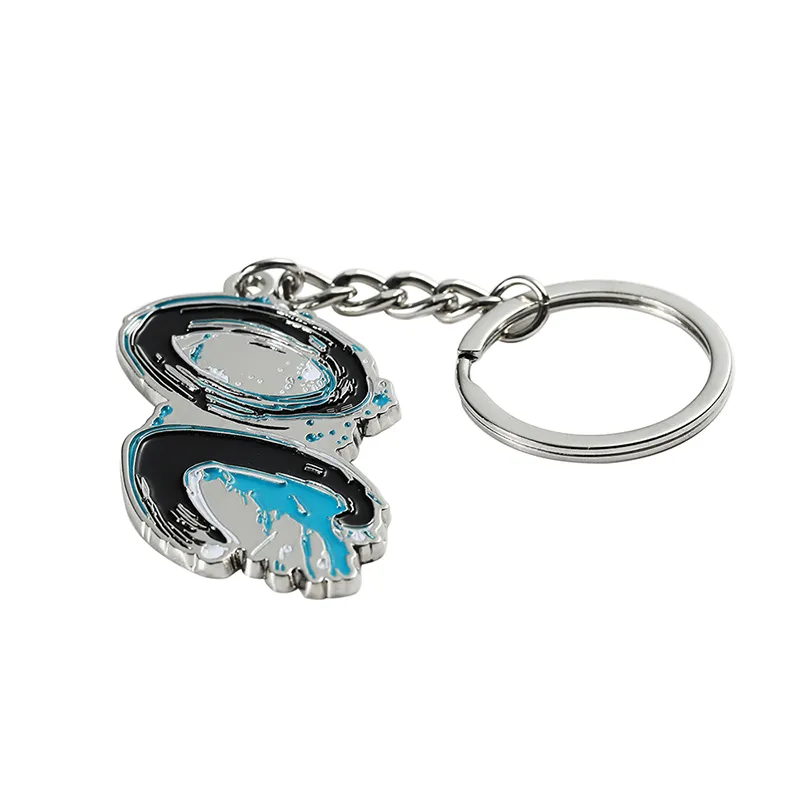
3. Design Conception: Giving the Keychain a Soul
(1) Define Purpose
Corporate Branding
When customizing keychains for a company, designs should align closely with the brand image. Logos, primary colors, and core slogans should be thoughtfully integrated. For instance, a tech company might opt for sleek lines and modern geometric shapes with signature brand colors to highlight innovation and technological sophistication.
Event Commemoration
For commemorative events, key design elements include date, location, and thematic patterns. A music festival keychain, for example, might incorporate the festival logo, year, and stage shapes, allowing attendees to relive the memorable experience.
(2) Identify Target Audience
Younger Demographic
Younger consumers are drawn to trends and pop culture. Designs for this audience can use bright colors, trendy patterns, and popular anime, gaming, or movie characters. For example, keychains based on popular anime characters can appeal instantly to young enthusiasts.
Mature Professionals
Professionals tend to prefer elegant, understated, and meaningful designs. Simple monograms, classic patterns, or subtle brand marks convey sophistication without being flashy, aligning with professional lifestyles and tastes.
(3) Thoughtful Shape Selection
Classic Shapes
Round and rectangular keychains are timeless. Round shapes offer smooth surfaces that integrate well with many design styles, while rectangular ones provide larger areas for intricate graphics or text.
Unique Shapes
Creative shapes can make keychains stand out. A bakery could use a cake-shaped keychain, or an outdoor club could use a tent or hiking boot shape. Unique shapes attract attention and clearly convey a theme or brand identity.
(4) Integrating Text and Graphics
Text Design
Legibility is crucial. Fonts should match the overall style. Serif fonts work for traditional or formal designs, while sans-serif fonts suit modern, minimalist aesthetics. Text content should be concise and targeted, such as brand names, slogans, personalized messages, or key dates.
Graphic Design
Graphics bring personality and vitality. Vector graphics are preferred for scaling without loss of quality. Techniques like gradients, textures, and shadows add depth and realism. A marine-themed keychain, for instance, might depict shimmering waves and swimming fish for immersive visual appeal.
4. Production Process: Crafting the Details
(1) Stamping
Principle
Stamping uses a custom metal die to press designs into metal sheets under high pressure, creating raised or recessed patterns.
Advantages
- Suitable for mass production.
- High efficiency with consistent results.
- Works well for simple shapes and bold designs.
Limitations
- High upfront die cost.
- Less suitable for intricate, fine details.
(2) Laser Engraving
Process
High-energy lasers etch designs onto metal surfaces. Computer-controlled paths allow precise, complex patterns.
Advantages
- Extremely precise.
- Ideal for small-batch or personalized designs.
- Cost-effective without molds.
Limitations
- Shallow engraving depth.
- Slower than stamping for mass production.
(3) Casting
Process
Molten metal is poured into molds (often silicone or plaster), cooled, and polished to form keychains.
Features
- Produces highly detailed, three-dimensional designs.
- Suitable for complex shapes and textures.
- Supports multiple metals, including precious metals.
Challenges
- Longer production time.
- Requires skilled craftsmanship.
- Higher cost, especially for small batches.
5. Surface Finishing: Enhancing Visual and Tactile Appeal
(1) Plating
Common Types
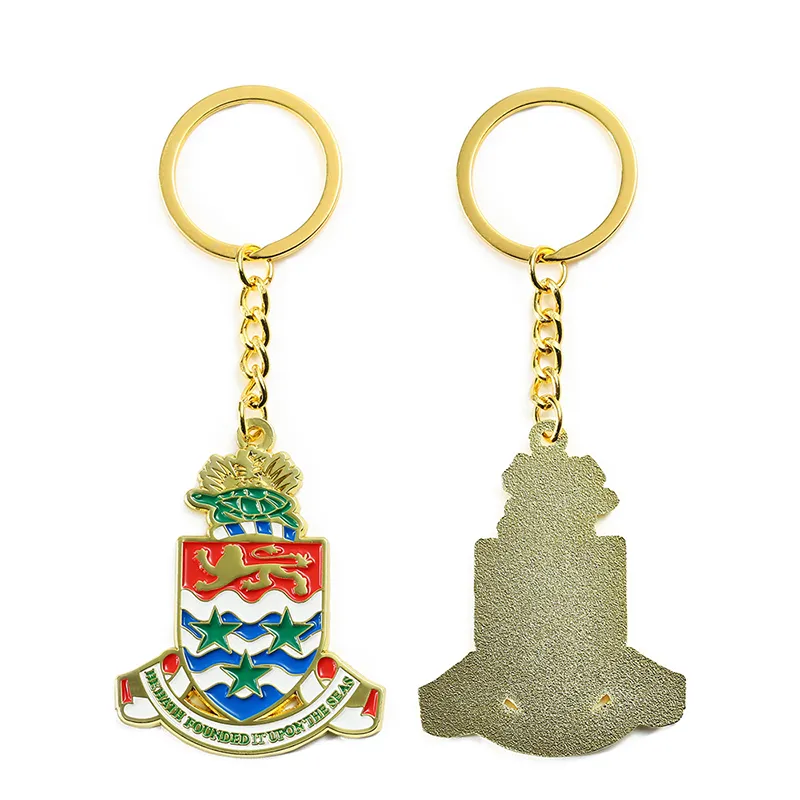
Gold, silver, and nickel plating improve appearance and protect underlying metal.
Benefits
Enhances aesthetics, aligns with branding, and prevents corrosion. Gold plating conveys luxury; nickel adds durability and smoothness.
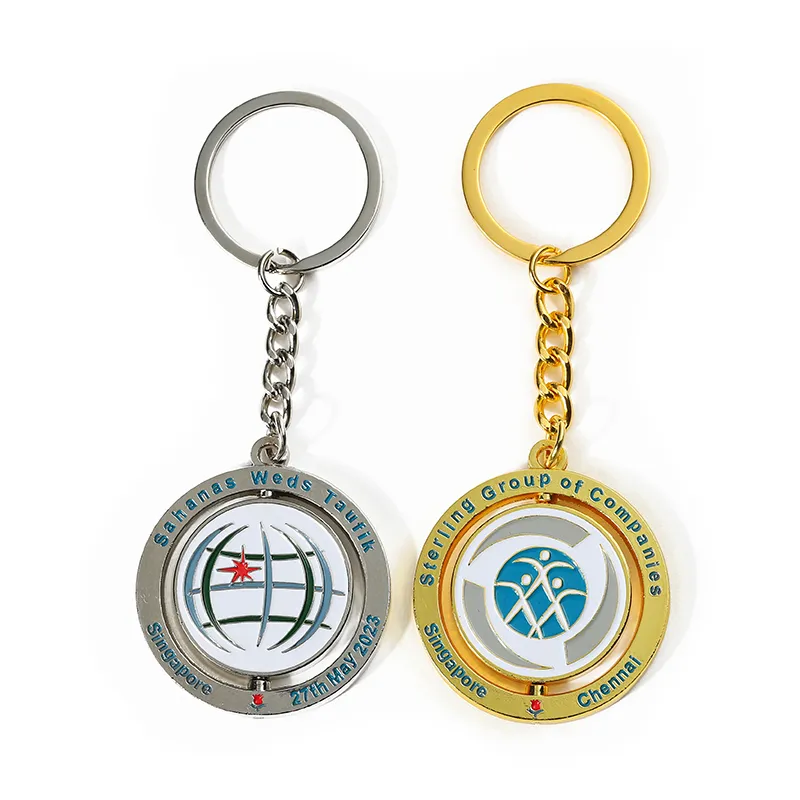
(2) Enamel
Process
Colored glass-like enamel is applied and baked onto metal.
Advantages
- Vibrant, durable colors.
- Protects metal surfaces.
- Adds artistic appeal and depth to designs.
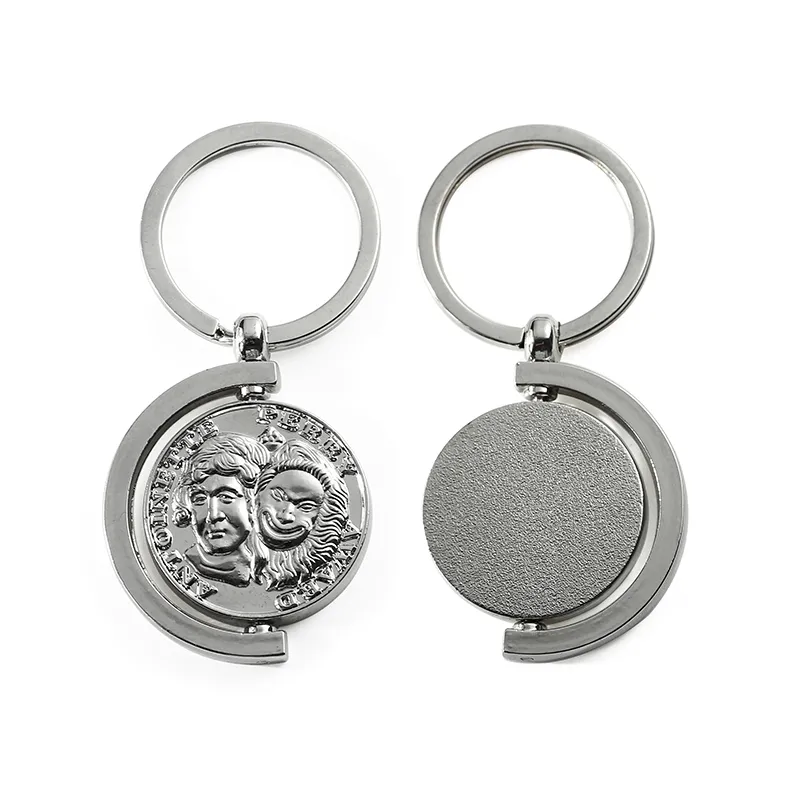
(3) Polishing and Buffing
Method
Grinding removes burrs; polishing increases gloss and smoothness. Automated or manual methods ensure a refined, comfortable feel.
Effect
Smooth, shiny surfaces enhance visual appeal and tactile quality while reducing dirt accumulation.
6. Quality Control: Ensuring Consistency
(1) Raw Material Inspection
- Verify metal purity and composition.
- Check consistency across batches for color, texture, and hardness.
(2) Production Monitoring
- Ensure design accuracy during stamping or laser engraving.
- Test assembly connections, especially for multi-component keychains.
(3) Final Inspection
- Check for scratches, dents, bubbles, and coating issues.
- Test functional performance (keyring operation, tool components).
7. Packaging and Presentation: Enhancing the Experience
(1) Packaging Options
Simple Pouches
Soft cloth or velvet bags protect keychains while adding tactile elegance. Can feature logos for branding.
Deluxe Boxes
Custom boxes with cushioned inserts provide premium presentation, suitable for high-end gifts or corporate promotions.
Blister Packaging
Transparent plastic showcases the keychain clearly, often with printed backing for retail display.
PRODUCT CATEGORIES








FACTORY DIRECT · SINCE 1996
Made to your design
Pins, medals, coins and keychains from our own factory. Send an idea and get a free design proof.
- ✓ MOQ 50 pcs
- ✓ Free design proof
- ✓ 12–15 days production
Reply within 24 hours · No sign-up