Metal Craft Blog
Home » Metal Craft Blog » Hard Enamel vs Soft Enamel Pins: Which One Is Better for Your Brand?
Hard Enamel vs Soft Enamel Pins: Which One Is Better for Your Brand?
Table of Contents
In the world of custom brand merchandise, few items blend versatility, memorability, and affordability quite like enamel pins. These tiny, portable accessories have become a staple for businesses, influencers, nonprofits, and creative brands alike—serving as brand ambassadors, marketing tools, and collectible keepsakes that customers proudly display on backpacks, jackets, hats, and more. But when it comes to choosing the right type of enamel pin for your brand, one question consistently arises: Hard Enamel vs. Soft Enamel Pins—Which one is better for your brand’s goals, audience, and budget?
The answer isn’t a simple “one size fits all.” Both hard enamel and soft enamel pins have unique strengths, weaknesses, and ideal use cases that align with different brand identities and objectives. Whether you’re launching a limited-edition collection, creating employee swag, designing a promotional giveaway, or building a line of collectible merchandise, understanding the key differences between these two popular enamel pin types is critical to making an informed decision that enhances your brand’s perceived value, resonates with your audience, and delivers a return on investment.
Chapter 1: What Are Enamel Pins, and Why Do Brands Love Them?
Before diving into the differences between hard and soft enamel pins, let’s start with the basics: What exactly are enamel pins, and why have they become such a beloved brand merchandise option? Enamel pins are small, metal-based accessories that feature colored enamel (a glass-like material) applied to a die-struck metal base. They’re typically finished with a metal plating (such as gold, silver, nickel, or black nickel) and often include a clutch back or magnetic back for easy attachment to clothing, bags, or other items.
Enamel pins have exploded in popularity over the past decade for several key reasons—all of which make them an ideal choice for brands looking to connect with their audience:
- Affordability: Compared to other custom merchandise (like hoodies, hats, or jewelry), enamel pins are relatively low-cost to produce, especially in bulk. This makes them accessible for brands of all sizes—from startups and small businesses to large corporations and nonprofits.
- Versatility: Enamel pins can be designed in virtually any shape, size, or color, making them highly customizable to match your brand’s logo, colors, and messaging. They work for a wide range of use cases, including promotions, giveaways, employee recognition, event souvenirs, and collectible lines.
- Memorability: Unlike generic promotional items (like pens or keychains), enamel pins are visually striking and often have a “collectible” appeal. Customers are more likely to keep and display them, turning every pin into a walking advertisement for your brand.
- Brand Loyalty: Enamel pins create a sense of community and belonging. When customers wear your brand’s pin, they’re not just using an accessory—they’re showing their support for your brand, which builds loyalty and word-of-mouth marketing.
- Portability: Pins are small, lightweight, and easy to ship, making them perfect for online brands, international giveaways, or event swag. They also take up minimal storage space, which is a plus for brands with limited inventory capacity.
But not all enamel pins are created equal. The two most common types—hard enamel and soft enamel—differ significantly in their manufacturing process, appearance, and performance. These differences directly impact how your brand is perceived, how long the pins last, and how much they cost to produce. Let’s take a deep dive into each type to understand what sets them apart.
Chapter 2: Hard Enamel Pins: The Premium, Polished Choice
2.1 What Are Hard Enamel Pins?
Hard enamel pins—also known as “cloisonné” pins (though technically, true cloisonné uses a different process)—are the premium option in the enamel pin world. They’re known for their smooth, polished finish, vibrant colors, and durability, making them a popular choice for brands that want to convey luxury, quality, and attention to detail.
Hard enamel pins get their name from the enamel material used and the curing process. The enamel is a high-temperature glass-based material that, when heated to around 800–900°C (1472–1652°F), melts and hardens into a smooth, glossy surface. Unlike soft enamel, hard enamel fills the recessed areas of the pin and is then polished down to be flush with the metal lines (called “die lines”) that outline the design. This creates a sleek, flat surface where the metal lines act as a border between colors, giving the pin a clean, professional look.
2.2 How Hard Enamel Pins Are Made (Step-by-Step Manufacturing Process)
To fully appreciate the quality of hard enamel pins, it’s important to understand their manufacturing process. While the exact steps may vary slightly by manufacturer, here’s a detailed breakdown of how hard enamel pins are created:
- Design Finalization: The process starts with your brand’s design. This design is digitized and prepared for die striking, ensuring that all details (including color boundaries, text, and logos) are clear and compatible with the hard enamel process. It’s important to note that hard enamel pins work best with bold, simple designs—intricate details or very small text may be lost during the polishing process.
- Die Striking: A metal die (usually made of steel) is created from the digitized design. This die is used to stamp the design onto a metal base (typically copper, brass, or zinc alloy). The stamping process creates raised metal lines (die lines) that outline the different color sections of the pin.
- Metal Plating: Before enamel is applied, the die-struck metal base is plated with a metal finish (such as gold, silver, nickel, black nickel, or rose gold). This plating not only enhances the pin’s appearance but also protects the metal from rust and wear.
- Enamel Application: Using a small tool (like a syringe or brush), colored enamel is applied to the recessed areas of the pin (the areas between the raised die lines). Each color is applied one at a time, and the pin is heated (cured) in a kiln after each color is applied. This ensures that each color sets properly and doesn’t bleed into adjacent sections.
- Polishing: Once all enamel colors are applied and cured, the pin is polished using a buffing wheel or abrasive material. This polishing process removes any excess enamel and smooths the surface of the pin, making the enamel flush with the raised metal lines. The result is a smooth, glossy finish where the metal lines stand out as crisp borders between colors.
- Quality Control & Finishing: The final step involves inspecting the pin for any defects (such as uneven enamel, color bleeding, or scratches). If the pin passes quality control, it’s fitted with a clutch back (or magnetic back) and packaged for shipping.
2.3 Key Characteristics of Hard Enamel Pins
Hard enamel pins have several distinct characteristics that set them apart from soft enamel pins—and make them a premium choice for brands:
- Smooth, Glossy Finish: The most noticeable feature of hard enamel pins is their smooth, polished surface. The enamel is flush with the metal lines, creating a flat, glossy finish that feels sleek to the touch. This gives the pin a high-end, professional look that’s perfect for brands wanting to convey quality.
- Vibrant, Long-Lasting Colors: Hard enamel is made from high-quality, glass-based material that holds color exceptionally well. The colors are bright, vibrant, and resistant to fading, even with regular wear and exposure to sunlight. This makes hard enamel pins ideal for brands with bold, recognizable color schemes.
- Durability: Hard enamel is extremely durable—far more so than soft enamel. It’s resistant to scratches, chipping, and wear, making hard enamel pins suitable for everyday use. They can withstand being tossed in a bag, worn on a jacket, or even exposed to minor moisture without damage.
- Crisp Metal Lines: The raised metal lines (die lines) on hard enamel pins are crisp and defined, creating clear boundaries between colors. This makes the design look clean and professional, even for simple or bold designs.
- Weight: Hard enamel pins are typically heavier than soft enamel pins because they use more enamel and a thicker metal base. This weight adds to the premium feel of the pin and makes it feel more substantial in the hand.

Chapter 3: Soft Enamel Pins: The Versatile, Cost-Effective Choice
3.1 What Are Soft Enamel Pins?
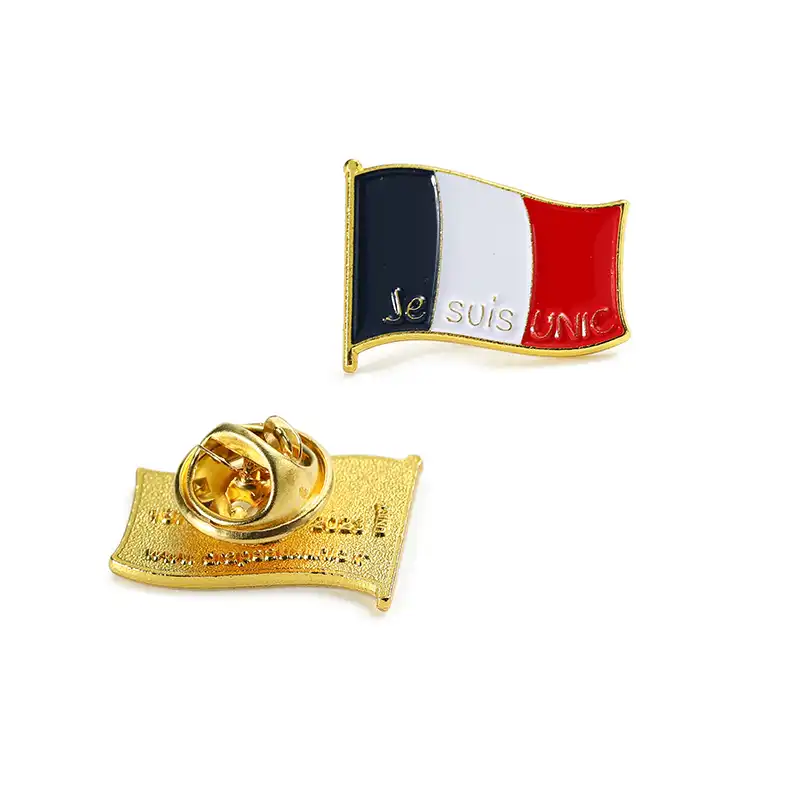
Soft enamel pins—also known as “epoxy enamel” or “soft cloisonné” pins—are the most common and cost-effective type of enamel pin. They’re known for their textured, dimensional appearance, versatility, and affordability, making them a popular choice for brands, startups, and organizations looking to create high-quality merchandise without breaking the bank.
Unlike hard enamel pins, soft enamel pins have a textured surface where the enamel is slightly recessed below the raised metal lines. The enamel is applied to the recessed areas of the pin but is not polished down to be flush with the metal. Instead, it’s cured once (or twice) and left slightly raised, creating a dimensional, tactile feel. Many soft enamel pins are also coated with a clear epoxy resin to protect the enamel and give it a glossy finish.
3.2 How Soft Enamel Pins Are Made (Step-by-Step Manufacturing Process)
The manufacturing process for soft enamel pins is simpler and faster than hard enamel, which is why they’re more affordable. Here’s a detailed breakdown of how soft enamel pins are created:
- Design Finalization: Like hard enamel pins, the process starts with your brand’s design. Soft enamel pins can accommodate more intricate designs than hard enamel, so you can include small details, text, or complex patterns without worrying about them being lost during manufacturing.
- Die Striking: A metal die is created from the digitized design and used to stamp the design onto a metal base (typically copper, brass, or zinc alloy). This stamping process creates raised metal lines (die lines) that outline the different color sections of the pin—just like hard enamel pins.
- Metal Plating: The die-struck metal base is plated with a metal finish (gold, silver, nickel, etc.) to enhance appearance and protect the metal.
- Enamel Application: Colored enamel is applied to the recessed areas of the pin using a syringe or brush. Unlike hard enamel, all colors are applied at once (or in a few batches) and cured in a kiln once (or twice) at a lower temperature (around 700–800°C / 1292–1472°F). This simplifies the process and reduces production time.
- Epoxy Coating (Optional): Many soft enamel pins are coated with a clear epoxy resin to protect the enamel from scratches, chipping, and fading. The epoxy also gives the pin a glossy finish, similar to hard enamel, but the textured, dimensional feel of the enamel still remains.
- Quality Control & Finishing: The pin is inspected for defects, fitted with a clutch back or magnetic back, and packaged for shipping. The quality control process is less rigorous than hard enamel, as minor imperfections (like slight color bleeding) are more common and acceptable in soft enamel pins.
3.3 Key Characteristics of Soft Enamel Pins
Soft enamel pins have several distinct characteristics that make them a versatile and popular choice for brands:
- Textured, Dimensional Surface: The most noticeable feature of soft enamel pins is their textured surface. The enamel is slightly recessed below the raised metal lines, creating a dimensional feel that’s tactile and visually interesting. When you run your finger over the pin, you can feel the raised metal lines and the recessed enamel, which adds depth to the design.
- Versatile Design Options: Soft enamel pins can accommodate more intricate designs than hard enamel. Small details, fine lines, and tiny text are preserved because there’s no polishing step to smooth them out. This makes soft enamel pins ideal for brands with complex logos, detailed artwork, or text-heavy designs.
- Glossy or Matte Finish: Soft enamel pins can be finished with a clear epoxy (for a glossy look) or left uncoated (for a matte finish). The epoxy coating protects the enamel and gives it a similar shine to hard enamel, while the matte finish offers a more understated, vintage look.
- Lightweight: Soft enamel pins are lighter than hard enamel pins because they use less enamel and a thinner metal base. This makes them more comfortable to wear for extended periods and easier to ship in bulk.
- Color Variety: Soft enamel pins can be produced in a wide range of colors, including pastels, neons, and metallic shades. The enamel is more flexible in terms of color matching, making it easier to match your brand’s exact color palette.
3.4 Pros of Soft Enamel Pins for Brands
Soft enamel pins offer several advantages that make them a great choice for brands of all sizes—especially those on a budget or with complex designs:
- Affordability: Soft enamel pins are significantly cheaper to produce than hard enamel pins. The simpler manufacturing process (fewer curing steps, no polishing) reduces costs, making them ideal for brands with tight budgets or large production runs (e.g., giveaways, promotional items).
- Design Versatility: Soft enamel pins can handle intricate, detailed designs that would be lost in the hard enamel polishing process. This makes them perfect for brands with complex logos, detailed artwork, or text-heavy designs (e.g., band merch, anime pins, nonprofit logos).
- Faster Production Time: The manufacturing process for soft enamel pins is faster than hard enamel—typically 1–2 weeks shorter. This makes them a great choice for brands that need pins quickly (e.g., event swag, limited-time promotions).
- Tactile, Dimensional Appeal: The textured surface of soft enamel pins is unique and engaging. Customers often prefer the tactile feel of soft enamel, which can make the pin more memorable and desirable. This is especially true for collectible pins, where texture adds to the overall appeal.
- Flexible Finish Options: Soft enamel pins can be finished with epoxy (glossy) or left uncoated (matte), giving brands more control over the final look. This flexibility allows you to match the pin’s finish to your brand’s aesthetic (e.g., matte for a vintage brand, glossy for a modern brand).
Chapter 4: How to Choose Between Hard Enamel and Soft Enamel Pins for Your Brand
Now that you understand the key differences between hard and soft enamel pins, how do you choose the right one for your brand? The decision ultimately comes down to four key factors: your brand’s identity and goals, your audience, your budget, and your design. Let’s break down each factor to help you make an informed choice.
4.1 Factor 1: Your Brand’s Identity & Goals
Your brand’s identity and goals should be the foundation of your decision. Ask yourself: What message do you want your pin to convey? What do you want customers to think of when they see or wear your pin?
- Choose Hard Enamel If:
- Your brand positions itself as premium, luxury, or high-end(e.g., luxury fashion, high-end skincare, luxury jewelry).
- Your goal is to create long-lasting, collectible merchandise that customers will cherish for years (e.g., limited-edition collaborations, anniversary pins).
- You want to convey attention to detail and quality(e.g., executive recognition pins, client gifts).
- Choose Soft Enamel If:
- Your brand is affordable, approachable, or trendy(e.g., startups, indie brands, band merch, anime/manga brands).
- Your goal is to create promotional items or giveaways to increase brand awareness (e.g., event swag, social media contests).
- You want to produce large quantities without breaking the bank (e.g., employee swag, customer loyalty rewards).
4.2 Factor 2: Your Audience
Your audience’s preferences and behavior should also play a role in your decision. Think about who your customers are and what they value in a pin:
- Choose Hard Enamel If Your Audience:
- Values quality and durability(e.g., collectors, professionals, luxury consumers).
- Is willing to pay more for premium merchandise(e.g., high-income customers, brand loyalists).
- Prefers a sleek, polished look(e.g., corporate clients, fashion-conscious consumers).
- Choose Soft Enamel If Your Audience:
- Values affordability and variety(e.g., students, young adults, casual consumers).
- Loves intricate, detailed designs(e.g., anime fans, gamers, art lovers).
- Wears pins everyday and prioritizes comfort (e.g., backpackers, fashion enthusiasts).
4.3 Factor 3: Your Budget
Budget is often a deciding factor for brands—especially small businesses and startups. Here’s how to align your budget with your pin choice:
- Choose Hard Enamel If: You have a higher budget and are willing to invest in premium merchandise. Hard enamel pins cost 20–50% more than soft enamel, so they’re best for small to medium production runs (e.g., 100–500 pins) where quality is more important than quantity.
- Choose Soft Enamel If: You have a tight budget or need to produce large quantities (e.g., 1,000+ pins). Soft enamel pins are more affordable, so you can get more pins for your money—making them ideal for giveaways, promotions, or large-scale swag campaigns.
Pro Tip: If you love the look of hard enamel but can’t afford the full cost, consider a “hybrid” option—hard enamel for key parts of the design (e.g., your logo) and soft enamel for the rest. This can help you balance quality and cost.
4.4 Factor 4: Your Design
Your design’s complexity and style will also determine which type of pin is best. Here’s how to match your design to the right enamel type:
- Choose Hard Enamel If Your Design Is:
- Bold and simple (e.g., a logo with clean lines, minimal colors).
- Free of tiny details or small text (since these may be lost during polishing).
- Focused on color vibrancy and a polished finish (e.g., a brand with a strong color identity).
- Choose Soft Enamel If Your Design Is:
- Intricate and detailed (e.g., a design with small text, fine lines, or complex patterns).
- Text-heavy (e.g., a band name, quote, or slogan).
- Dimensional or tactile (e.g., a design that benefits from the textured feel of soft enamel).


Chapter 5: Real-World Examples: Brands Using Hard vs. Soft Enamel Pins
To help you visualize how hard and soft enamel pins work in real-world scenarios, let’s look at some examples of brands using each type—and why they made that choice.
5.1 Example 1: Luxury Fashion Brand (Hard Enamel Pins)
A high-end fashion brand like Gucci or Louis Vuitton might use hard enamel pins for their merchandise. Here’s why: Their brand identity is built on luxury, quality, and attention to detail—values that align perfectly with hard enamel pins. A hard enamel pin with their iconic logo would have a smooth, polished finish that reflects their premium positioning. These pins would be sold as limited-edition collectibles or given as gifts to high-value clients, reinforcing the brand’s exclusivity and quality.
5.2 Example 2: Indie Band (Soft Enamel Pins)
An indie band with a loyal fan base might use soft enamel pins for their merch. Here’s why: Indie bands often have intricate, art-driven designs (e.g., album art, band logos with detailed illustrations) that would be lost in hard enamel’s polishing process. Soft enamel allows them to preserve those details while keeping production costs low—critical for small bands with limited budgets. These pins would be sold at concerts, online, or as part of merch bundles, appealing to fans who love the tactile, dimensional feel of soft enamel.
5.3 Example 3: Startup Tech Company (Soft Enamel Pins)
A startup tech company might use soft enamel pins for their employee swag and promotional giveaways. Here’s why: Startups often have tight budgets and need to produce large quantities of swag to distribute at events, conferences, and to employees. Soft enamel pins are affordable, fast to produce, and can accommodate their logo (even if it’s slightly intricate). They’re also lightweight and easy to ship, making them perfect for a tech company that attends conferences across the country.
5.4 Example 4: Nonprofit Organization (Hard Enamel Pins)
A nonprofit organization might use hard enamel pins for their donor recognition program. Here’s why: Donor recognition pins need to be durable and meaningful—something donors will keep and display for years. Hard enamel pins are long-lasting and have a premium feel, which makes donors feel valued and appreciated. The nonprofit might create different tiers of pins (e.g., gold-plated hard enamel for major donors, silver-plated for mid-level donors) to recognize different levels of support, using the pin’s quality to reflect the donor’s impact.
Chapter 6: Final Verdict: Hard Enamel vs. Soft Enamel Pins
So, which is better for your brand—hard enamel or soft enamel pins? The truth is, there’s no “better” option—only the option that’s better for your brand’s unique goals, audience, budget, and design. To summarize:
Choose Hard Enamel Pins If: You want a premium, durable pin that conveys quality and luxury. Hard enamel is ideal for limited-edition collectibles, executive recognition, corporate gifts, and brands that position themselves as high-end. It’s perfect for bold, simple designs and audiences that value durability and polished aesthetics.
Choose Soft Enamel Pins If: You want an affordable, versatile pin that can handle intricate designs. Soft enamel is ideal for promotions, giveaways, large bulk orders, and brands that are approachable or trendy. It’s perfect for detailed designs and audiences that value texture, variety, and affordability.
Remember: The best enamel pin for your brand is the one that aligns with your values, resonates with your audience, and helps you achieve your goals. Whether you choose hard or soft enamel, a well-designed pin will serve as a powerful brand ambassador—helping you connect with customers, build loyalty, and stand out in a crowded market.
Chapter 7: Frequently Asked Questions (FAQs) About Hard Enamel vs. Soft Enamel Pins
To wrap up, we’ve answered some of the most common questions brands have about hard and soft enamel pins. If you have additional questions, feel free to reach out to your enamel pin manufacturer for more guidance.
Q1: Are hard enamel pins worth the extra cost?
A: It depends on your brand’s goals. If you’re looking for a premium, long-lasting pin that conveys quality, then yes—hard enamel pins are worth the extra cost. They’re more durable, have a higher perceived value, and are ideal for collectibles or high-end merchandise. However, if you’re on a tight budget or need to produce large quantities, soft enamel pins are a great, cost-effective alternative.
Q2: Can soft enamel pins be as durable as hard enamel pins?
A: No—soft enamel pins are inherently less durable than hard enamel. However, you can improve their durability by adding an epoxy coating, which protects the enamel from scratches and chipping. Even with epoxy, soft enamel pins won’t be as durable as hard enamel, but they’ll still last for years with proper care.
Q3: Can I use the same design for both hard and soft enamel pins?
A: You can, but you may need to adjust the design. Hard enamel pins require simpler designs with bold lines, so if your design has intricate details, you’ll need to simplify it for hard enamel. Soft enamel pins can handle the original, detailed design without adjustments.
Q4: How long do enamel pins last?
A: Hard enamel pins can last 10+ years with proper care—they’re resistant to scratches, chipping, and fading. Soft enamel pins (with epoxy) can last 5–7 years, while uncoated soft enamel pins may last 3–5 years. To extend the life of your pins, avoid exposing them to excessive moisture, sunlight, or rough handling.
Q5: What’s the minimum order quantity (MOQ) for enamel pins?
A: MOQs vary by manufacturer, but most require a minimum of 100–200 pins per design. Some manufacturers offer lower MOQs (50–100 pins) for an additional cost. Soft enamel pins often have lower MOQs than hard enamel pins, making them a better choice for small brands or limited-edition runs.
Q6: Can I get a custom shape for my enamel pin?
A: Yes—both hard and soft enamel pins can be made in custom shapes. However, custom shapes may increase the cost and production time, especially for hard enamel pins. It’s best to work with your manufacturer to design a custom shape that’s compatible with the enamel type you choose.
Conclusion
Enamel pins are a powerful, versatile tool for brands looking to connect with their audience, build loyalty, and increase brand awareness. Whether you choose hard enamel or soft enamel, the key is to select a pin that aligns with your brand’s identity, goals, and audience.
Hard enamel pins offer a premium, polished finish that’s perfect for high-end brands and collectible merchandise, while soft enamel pins are affordable, versatile, and ideal for promotions, giveaways, and intricate designs. By understanding the key differences between these two types of pins—and using the tips and framework in this guide—you can confidently choose the perfect enamel pin for your brand.
Remember: A well-designed enamel pin is more than just an accessory—it’s a walking advertisement for your brand, a symbol of community, and a keepsake that customers will cherish for years. So take the time to choose the right type of enamel pin, and watch as it helps your brand stand out and connect with your audience in meaningful ways.
PRODUCT CATEGORIES










FACTORY DIRECT · SINCE 1996
Made to your design
Pins, medals, coins and keychains from our own factory. Send an idea and get a free design proof.
- ✓ MOQ 50 pcs
- ✓ Free design proof
- ✓ 12–15 days production
Reply within 24 hours · No sign-up