Metal Craft Blog
Home » Metal Craft Blog » A badge, containing the essence of thousands of years and the warmth of human life
A badge, containing the essence of thousands of years and the warmth of human life
Table of Contents
Badges are all around us in life, yet they often go unnoticed. A badge might be a school emblem pinned to the chest, holding the memories of youth; a commemorative medallion engraving an unforgettable journey; an honor badge embodying the sweat and glory of hard work; or a tiny brooch adding an exquisite touch to everyday outfits.
Few people take the time to delve into the past of this small trinket, which weighs less than 50 grams. Where did it come from, and how did it weave its way into our lives to become a carrier of practicality, commemoration, honor and aesthetic value all at once? Today, let us step into the world of badges, lift the veil of time, explore the thousand-year stories and profound meanings behind this small object, and unlock all its secrets.
I. Origin: The Roots of Badges Lie in the Folds of Civilization
The history of badges is far more ancient than we imagine, and their emergence was an inevitable product of human civilization’s development—they came into being when people needed to identify their identities, distinguish ethnic groups, convey information, place their faith, or display their social status. Tracing back to their origins, we can travel through millennia and see their most primitive, unadorned forms.
1. Ancient Embryos: The First Expression from Identification to Belief
The embryonic forms of badges appeared as early as the Neolithic Age. Back then, human productivity was low, and ethnic communities were the core of survival, making “identification” the key to distinguishing groups and uniting strength. Archaeologists have unearthed stone flakes carved with simple patterns, polished animal bones, and ornaments strung with shells at Neolithic sites across the globe. Worn on the body, these objects were not only symbols of ethnic belonging but also the embodiment of primitive beliefs.
The painted pottery unearthed from Yangshao Culture sites in China is etched with abstract geometric patterns and animal motifs—these were not random drawings, but tribal “totem symbols”, the oldest form of badges. Tribal members painted these totems on their clothes and utensils, even carving them into their skin, to declare their identity, tell friend from foe, and pray for the totem’s protection.
The embryonic badges of ancient Egypt were more tangible. The ancient Egyptians worshipped deities and attached great importance to social distinction: pharaohs wore precious adornments carved with images of Horus the falcon god and Wadjet the cobra god, symbols of both power and identity; ordinary nobles wore ornaments with family patterns, while commoners could only use simple, unadorned trinkets. This disparity was the earliest manifestation of the badge’s core function—identity identification.
In addition, ancient badges were often part of sacrificial ritual objects. During sacrificial ceremonies, the totemic stone badges worn by tribal chieftains were regarded as a “medium for communicating with the gods”, carrying people’s wishes for good harvests, favorable weather and the prosperity of their clans, and laying the foundation for the cultural connotations of badges in later ages.
2. Development in Ancient Times: From Noble Exclusivity to Universal Popularity
With the progress of civilization and the division of social classes, the functions of badges expanded steadily. From their initial role as ethnic identifiers and vessels of faith, they gradually evolved into symbols of noble status and credentials of power, and later spread among the common people, becoming objects that combined practical use with decoration.
In China’s Shang and Zhou dynasties, the development of badges reached its first peak. Known then as “tally symbols” and “official seals”, they were mainly made of bronze, with exquisite shapes and intricate patterns. They were used to identify noble status, transmit government decrees, and dispatch troops. Artifacts such as the jade gui and jade zhang(ceremonial jade tablets) had strict regulations on length, pattern and material for nobles of different ranks, serving as a “visual embodiment” of social order at that time.
During the Spring and Autumn and Warring States Periods, as feudal lords vied for hegemony, the “credential function” of badges grew increasingly important, giving birth to the “tiger tally”. Split into two halves, one held by the monarch and the other by military commanders, a tiger tally could only be used to dispatch troops when the two halves were joined together. Shaped mostly like a tiger and inscribed with details such as the number and scope of troops to be sent, it was the supreme symbol of power in that era. The Yangling Tiger Tally preserved in the National Museum of China, a relic of Emperor Qin Shi Huang’s reign, is inscribed with the words: “The tally for military forces— the right half is held by the emperor, the left in Yangling”, bearing witness to the might of the Qin Dynasty and its rigorous military management system.
In the Qin and Han dynasties, the variety of badges expanded further. In addition to power credentials like tiger tallies and jade tablets, decorative badges for women such as “flower hairpins” and “step shakers” emerged, crafted from gold, silver, jade and pearls with magnificent designs. These were not only symbols of identity but also a reflection of the aesthetic standards of the time. Furthermore, “title seals” served as credentials for noble ranks, allowing those who wore them to display their status and enjoy special privileges.
The Sui and Tang dynasties brought social prosperity, and the development of badges entered a diversified phase—no longer limited to nobles and officials, they began to spread among the common people. Nobles wore badges made of gold, silver and jade, adorned with auspicious patterns such as peonies and lotus flowers; commoners used copper and iron badges with simple, unassuming designs, primarily for decoration. Meanwhile, “imperial examination badges” appeared: successful candidates in the imperial exams, including jinshi and juren, wore exclusive badges to display their knowledge and honor, laying the groundwork for the honor badges of later times.
Western badges followed a similar developmental path. In ancient Greece, badges were used to identify city-state affiliation; in ancient Rome, they became exclusive to nobles and the military, with nobles wearing family crests and the military bearing legion emblems. In medieval Europe, the development of badges reached its zenith, and “heraldry” emerged as a formal discipline. Each noble family had a unique coat of arms, with strict rules governing its patterns, colors and shapes, serving as a symbol of family honor. For example, the British royal coat of arms features lions and unicorns, while the coat of arms of France’s Bourbon Dynasty is centered on the fleur-de-lis.
3. Evolution in Modern Times: From Symbols of Power to a Universal Vessel
In the modern era, social changes and the spread of democratic ideas brought a dramatic shift in the function of badges—no longer the exclusive possession of nobles and the powerful, they gradually became accessible to all, with their functions expanding to commemoration, honor, advocacy and more, evolving into a popular cultural carrier.
The development of modern Chinese badges is closely intertwined with modern Chinese history. After the Opium Wars, Western culture and craftsmanship were introduced to China, breaking the traditional mold of tally symbols and official seals and giving rise to badges with distinct modern characteristics. In the late Qing Dynasty, “official badges” were redesigned as metal emblems pinned to the chest, engraved with officials’ ranks and positions for clearer and more convenient identification.
After the 1911 Revolution and the founding of the Republic of China, badges became an important tool for spreading revolutionary ideas and identifying revolutionary identity. Badges such as the “National Emblem of the Republic of China” and “Revolutionary Army Badge” emerged, with simple designs featuring main motifs like five-pointed stars, conveying the ideals of democracy, freedom and equality. The Republican period also saw a proliferation of commemorative badges: after the death of Dr. Sun Yat-sen, the “Sun Yat-sen Commemorative Medallion”, engraved with his portrait and the phrase “All under Heaven are Equal”, became a symbol of remembrance for him and a carrier of revolutionary spirit.
The development of modern Western badges was closely linked to the Industrial Revolution and democratic revolutions. The Industrial Revolution drove advancements in metal smelting and printing technology, reducing the cost of badge production and boosting efficiency, making badges accessible to the general public. Badges took on a diverse range of functions at this time: there were “professional badges” for doctors, police officers and other professions; “event commemorative medallions” for the Olympic Games, World Expos and other major events; and “charity and public welfare badges” for anti-war, environmental protection and other causes. The first modern Olympic Games held in Athens in 1896 issued the first Olympic commemorative medallion, featuring an olive branch as its main design, marking the beginning of the modern era of commemorative badges.
II. Classification: Each Badge Represents a Unique Identity and Meaning
After thousands of years of development, badges have evolved into a diverse array of types. Each type differs in function, material, and design style, embodying distinct meanings. Categorized by their purposes, they mainly fall into five types, covering various aspects of life, each boasting its own unique charm.
1. Identity-Identifying Badges: Your Exclusive “Name Card”
As the oldest and most fundamental type of badge, identity-identifying badges serve the core function of identity recognition, enabling people to quickly distinguish individuals, groups, occupations, or statuses. Characterized by simple designs and clear markings, they are usually engraved with relevant characters, patterns, or symbols.
School emblems are the most common identity-identifying badges. Nearly every school has its own exclusive emblem, designed to integrate the school motto, educational philosophy, and historical culture. For instance, the Peking University emblem, designed by Lu Xun, features the seal script characters “Peking University” in a circular shape, exuding simplicity and grandeur. The Tsinghua University emblem, surrounded by olive branches, symbolizes peace and unity. Beyond being a form of identity verification, school emblems also foster students’ sense of belonging and identification with their school.
Occupational badges act as identity markers for professionals across various industries. Engraved with professional symbols, names, or related patterns, their materials and designs are tailored to the characteristics of the respective occupations. For example, police badges are shield-shaped, engraved with the national emblem and the word “Police”, symbolizing the safeguarding of justice. Doctor badges are marked with the Red Cross, representing the commitment to healing the wounded and rescuing the dying. Lawyer badges are adorned with a balance, signifying fairness and impartiality. All these badges reflect the professionalism and sense of honor of those in the profession.
Ethnic group badges are used to identify different ethnic groups, tribes, or communities. Incorporating ethnic totems and cultural customs, they feature distinctive designs that are unique to the group. These badges not only serve as identity identifiers but also serve as a means to unify group strength and pass down cultural heritage. Membership badges are identity symbols for members of associations, organizations, or clubs. Designed in line with the organization’s purposes and philosophy, they are simple and exquisite, used to distinguish members from non-members and highlight member privileges.
2. Honorary and Commendatory Badges: Testaments to Sweat and Glory
Honorary and commendatory badges are used to recognize excellence, reward achievements, and highlight honor. Their core function is to convey honor and record the sweat and efforts invested. These badges are typically crafted from precious materials, featuring exquisite designs and magnificent patterns, and are often engraved with the name of the commendation, level, and year. As such, they hold significant commemorative and collectible value.
Orders represent the highest level of honorary badges, awarded to individuals who have made extraordinary contributions in various fields. Mostly made of precious metals such as gold, silver, and platinum, they are of great artistic value in design. For example, China’s Medal of the Republic has a five-pointed star as its centerpiece, surrounded by auspicious clouds and peonies. The U.S. Medal of Honor, with an eagle as its main motif, is bestowed upon soldiers who display exceptional bravery in battle.
Medals rank second only to orders and have broader applications. They are awarded to outstanding individuals in various activities, work, and competitions, usually made of gold, silver, or bronze. Examples include gold, silver, and bronze medals in sports competitions, “Outstanding Worker Medals” in the workplace, and “Three Good Student Medals” at schools. These medals not only stand as testaments to honor but also serve as recognition and encouragement for one’s efforts.
Honor badges have a wider scope of application, honoring both individuals and collectives. For example, the “Bravery Honor Badge” highlights courage and responsibility, the “Outstanding Collective Honor Badge” unites collective strength, and the “Lifetime Achievement Honor Badge” recognizes lifelong contributions, covering various forms of outstanding performance and achievements.
3. Commemorative and Collectible Badges: Freezing Time and Preserving Memories
Commemorative and collectible badges are created to mark significant historical events, figures, festivals, and activities. Their core function is to serve as a commemoration, freezing moments in time and preserving memories, while also holding certain collectible value. These badges are characterized by unique designs and profound commemorative significance, usually engraved with the commemorative theme, time, and location.
Commemorative medals for historical events capture key moments in history and pass down historical memories. Examples include the “70th Anniversary of the Founding of the People’s Republic of China Commemorative Medal” and the “70th Anniversary of the Victory of the Chinese People’s War of Resistance against Japanese Aggression Commemorative Medal”, each bearing witness to a distinct period of history. Commemorative medals for historical figures are used to honor their contributions and carry forward their spirits, such as the “Sun Yat-sen Commemorative Medal”, the “Mao Zedong Commemorative Medal”, as well as foreign examples like the “Napoleon Commemorative Medal” and the “Einstein Commemorative Medal”.
Festival commemorative medals enhance the festive atmosphere and preserve holiday memories. For instance, Spring Festival commemorative medals are engraved with zodiac signs and auspicious characters; Mid-Autumn Festival medals feature the moon and jade rabbits; and National Day medals depict five-pointed stars and Tiananmen Square. Event commemorative medals are important souvenirs for events. Olympic and World Expo commemorative medals, for example, come in regular and precious metal editions. Commemorative medals from concerts, exhibitions, and other events also serve as reminders of people’s participation.
Tourist commemorative medals incorporate local scenic spots and cultural elements, showcasing regional characteristics. Examples include medals featuring Beijing’s Tiananmen Square, Xi’an’s Terracotta Army, and Suzhou’s classical gardens. These medals not only preserve travel memories but also serve as a medium for promoting local culture, making them a popular choice among tourists for collection.
4. Decorative Badges: Adorning Life and Expressing Individuality
Decorative badges are used to accessorize clothing, bags, hats, and other items. Their core function is decoration, offering diverse designs, innovative styles, and a wide range of materials to meet different aesthetic preferences. As one of the most beloved types of badges among contemporary young people, they have no strict hierarchical or functional restrictions, focusing primarily on aesthetics and individuality.
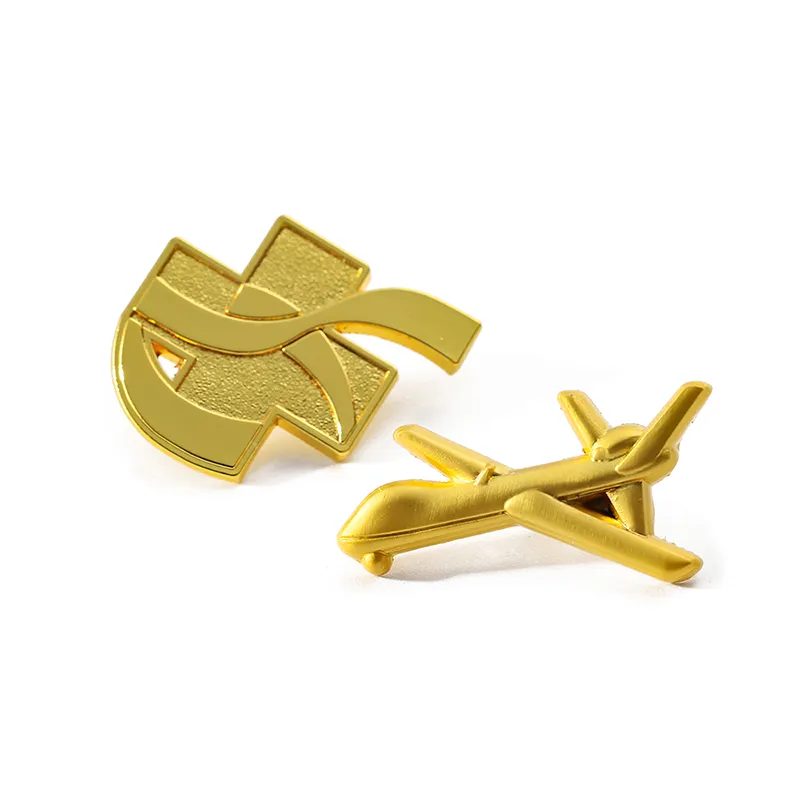
Brooch badges are small and delicate, suitable for wearing on shirts, suits, scarves, and more. They come in a variety of styles, including cute, minimalist, retro, and artistic, and are made from materials such as metal, enamel, and acrylic. Bag badges are slightly larger, featuring innovative and personalized designs, and can be attached to the surface of bags. They are commonly made of metal, acrylic, or leather. Hat badges are small and simple, mostly crafted from metal or acrylic, with minimalist and sporty styles, ideal for baseball caps and peaked caps. Clothing badges can be either sewn or pinned on, available in diverse shapes and made from materials like metal, enamel, and embroidery, with styles ranging from retro and trendy to ethnic.
5. Promotional and Public Welfare Badges: Conveying Ideas and Spreading Warmth
Promotional and public welfare badges are designed to promote public welfare concepts, spread positive energy, and call attention to public welfare causes. Their core function is promotion, featuring simple yet striking and compelling designs. Mostly issued by public welfare organizations or government departments, these badges are either distributed free of charge or sold at low prices, with the proceeds mostly dedicated to public welfare initiatives.
Environmental public welfare badges primarily use green as their color scheme, with designs often incorporating plants, animals, and environmental protection symbols, advocating for a low-carbon lifestyle and the protection of ecological balance. Anti-war public welfare badges mainly adopt white and blue colors, with patterns such as doves of peace and olive branches, expressing the aspiration for peace. Public welfare assistance badges are mainly red, featuring designs like hearts and hands, calling for attention to left-behind children and support for elderly people in poverty. Health public welfare badges mostly use blue and green, with designs including health symbols and sports patterns, encouraging active exercise and a smoke-free lifestyle.

III. Craftsmanship: Forged with Dedication, Every Badge a One-of-a-Kind Work of Art
An exquisite badge is the product of a unique design, profound connotation, and masterful craftsmanship. From the ancient techniques of polishing and carving to modern stamping, enameling, and printing, badge-making craftsmanship has evolved ceaselessly. Each technique boasts its own strengths, and when forged with heartfelt dedication, every badge becomes an irreplaceable work of art.
1. Traditional Craftsmanship: Centuries of Dedication Passed Down
Traditional craftsmanship forms the foundation of badge-making, a legacy of dedication spanning a thousand years. It primarily includes carving, casting, and chiseling, all emphasizing handcraftsmanship. These labor-intensive and time-consuming processes yield badges with exquisite shapes and intricate patterns, endowing them with immense artistic and collectible value.
Carving is the oldest badge-making technique, used even in ancient times to create the earliest badge prototypes. It involves engraving patterns and characters onto stone, jade, metal, and other materials using specialized tools, divided into intaglio (sunken) and relief (raised) carving. It demands exceptional skill from artisans, a mastery exemplified by the bronze badges of the Shang and Zhou dynasties and the jade badges of ancient China.
Casting was a common technique for crafting ancient metal badges, falling into two categories: mold casting and lost-wax casting. Mold casting involves melting metal and pouring it into a mold, with the finished piece polished and carved once cooled. Lost-wax casting, a more refined method, produces badges with precise shapes and seamless joints. This technique was widely used to make ancient tiger tallies and noble title seals.
Chiseling is a handcrafted metalworking process. It begins with shaping a metal sheet into a basic form, then hammering chisels to create three-dimensional patterns and reliefs. It requires extraordinary control of touch and force from artisans, and was the go-to technique for making ancient gold and silver badges, resulting in pieces with delicate, richly layered three-dimensional patterns.
2. Modern Craftsmanship: Innovative Efficiency and Precision
Advancements in modern industrial technology have spurred innovations in badge-making, giving rise to efficient, precise, and convenient modern techniques. These methods prioritize mass production, reducing costs and boosting efficiency while upholding quality and aesthetics, catering to the diverse demands of different audiences.
Stamping is the most widely used modern technique for metal badges, suitable for copper, iron, zinc alloy, and other materials. The process starts with computer-aided design to create a mold, then a stamping machine presses the metal sheet into the basic badge shape. The finished product is refined through polishing, electroplating, and coloring, resulting in badges with precise contours, smooth edges, and strong three-dimensionality. This technique is commonly used for school emblems, police badges, and regular Olympic commemorative medals.
Enameling involves melting enamel powder and filling it into the recesses of a metal badge, which is then fired at high temperatures to form a smooth, vivid surface. It is divided into cloisonné enameling, baked enamel, and imitation enamel. Cloisonné, a traditional Chinese craft, is reserved for high-end badges; baked enamel features a simple process and affordable pricing, making it widely applicable; imitation enamel mimics the effect of true enamel, mostly using zinc alloy as the base material, and is ideal for mid-range badges.
Printing is used for crafting flat badges, suitable for acrylic, fabric, metal, and other materials, and is split into screen printing and digital printing. Screen printing is perfect for mass-producing badges with bright colors and simple patterns; digital printing eliminates the need for mold making, offering flexible and fast design capabilities, and is ideal for small-batch, customized badges.
Electroplating is a crucial step in metal badge-making: it enhances luster, wear resistance, and corrosion resistance, and can alter the badge’s color, with gold, silver, and copper being the most common finishes. Epoxy doming is used to protect the surface of flat badges, boosting their luster and wear resistance while elevating their overall texture.
3. Craftsmanship Comparison: The Collision and Fusion of Traditional and Modern
Traditional craftsmanship prioritizes artisanal dedication, yielding badges of high artistic and collectible value, but its labor-intensive, high-cost nature makes it unsuitable for mass production. Modern craftsmanship, by contrast, offers efficiency, precision, and low costs for mass production, meeting diverse needs yet lacking the warm, human touch of handcraftsmanship.
In contemporary badge-making, traditional and modern techniques converge and integrate. Many high-end badges are first shaped using modern stamping, then their patterns are carved with traditional chiseling; the final piece is colored with enameling and brightened with electroplating, combining the precision and efficiency of modern methods with the artistic dedication of traditional craftsmanship. Meanwhile, traditional techniques are also evolving—for example, cloisonné enameling has been revitalized by blending it with modern design concepts.
IV. Culture: Behind the Badge, the Accumulation of Time and Inheritance of Spirit
A small badge is never merely an object. It carries historical memories, cultural connotations, and spiritual legacies, acting as a “silent language” that tells stories and conveys spirits. Badges from different countries, ethnic groups, and eras bear distinct cultural meanings, reflecting the social customs, aesthetic tastes, and values of their time.
1. Chinese Badge Culture: Understated Elegance and Auspicious Implications
Chinese badge culture has a long and rich history, forming a unique character defined by understated subtlety and auspicious symbolism. It emphasizes the harmony of “form and spirit”, and embodies the Chinese people’s yearning for a better life, pursuit of honor, and commitment to cultural inheritance.
Auspicious symbolism lies at the core of Chinese badge culture: dragon and phoenix patterns signify prosperity and harmony; peonies represent wealth and flourishing fortune; lotus flowers stand for integrity and uprightness; plum blossoms symbolize perseverance and resilience; fish patterns denote an abundance of blessings year after year; and bat patterns embody the wish for boundless good fortune. Chinese badge culture also places great emphasis on expressing honor and responsibility. From the ancient noble title seals and tiger tallies to modern orders and medals, every badge condenses the sweat and efforts of its wearer, and embodies their honor and duty.
Furthermore, Chinese badge culture is imbued with the essence of cultural inheritance. Many badge designs incorporate elements of calligraphy, painting, traditional patterns, and historical stories, infusing traditional culture into every piece and making badges an important carrier of cultural communication.
2. Western Badge Culture: Bold Individuality and Celebrated Honor
In contrast to the understated nature of Chinese badge culture, Western badge culture exalts bold individuality and prominent honor, focusing on distinct identification and personalization. Every Western badge bears a vivid character and unique meaning, reflecting the aesthetic tastes and values of Western societies.
Honor and social status are the core of Western badge culture. From the noble coats of arms of the Middle Ages to modern orders, badges have strict hierarchical distinctions that highlight the wearer’s identity and honor. Western badge culture also emphasizes the expression of individuality and freedom, featuring a diverse range of design styles and unique shapes. Many badges are custom-made to the wearer’s preferences, showcasing their personal taste and character.
In addition, Western badge culture is deeply rooted in history and inheritance. Many badges are closely linked to historical events, figures, and religious culture—for example, medieval coats of arms document the feudal noble system and religious traditions, while Olympic commemorative medals pass down the Olympic spirit from generation to generation.
3. Contemporary Badge Culture: Diverse Fusion and Life-Centric Relevance
The globalization of the modern era has fostered the exchange and fusion of different cultures, and badge culture has embraced this diversity. At the same time, rising living standards have made badges an increasingly integral part of daily life, enriching their cultural connotations with endless variety.
Diverse fusion is a hallmark of contemporary badge culture, with Chinese and Western design concepts, craftsmanship, and cultural elements learning from one another, making badge culture more colorful and vibrant than ever. Secondly, it is deeply life-centric: contemporary badges are no longer the exclusive privilege of nobles and the powerful, but have entered the lives of ordinary people. Integrating practicality, commemoration, decoration, and collectibility, they are closely intertwined with daily life.
Finally, contemporary badge culture is defined by personalization and customization. Custom badges featuring personal portraits, couples, families, and more have become a trend, carrying the bonds of family, love, and friendship. Enterprises and social organizations also commission custom exclusive badges for brand promotion and team cohesion, making badges an important carrier of corporate and organizational culture.


V. Collection: How to Preserve Badges and Turn Each One into an Eternal Memory
With the popularization of badge culture, collecting badges has become a beloved pastime. Badges blend commemorative, artistic and collectible value, carrying time, memories and emotions within them. Collecting badges is not merely acquiring works of art, but preserving stories and heartfelt feelings. Yet many collectors face challenges in defining their collection focus, authenticating badges and preserving them properly. Below is a detailed guide to these key aspects, helping you build a meaningful badge collection.
1. Defining Your Collection Focus: Choose Badges That Align with Your Tastes
Badges come in an immense variety, so it is essential to define a clear focus before starting a collection and avoid blind following—this is the key to making your collection meaningful and sustainable.
Historical commemorative badges are ideal for history enthusiasts and lovers of traditional culture. Including medals honoring historical events and figures, these badges hold great historical and collectible value. Honorary and commendatory badges, such as orders and medals, suit collectors pursuing high-end pieces. They boast exceptional honor and artistic value, but their rarity and high price make them a challenging collectible.
Sports commemorative badges are perfect for sports fans, covering those from the Olympic Games, Asian Games, World Cup and other major events. Precious metal sports badges in particular offer significant potential for appreciation and collection. Decorative badges cater to young people who value individuality: affordable, diverse and easy to collect, they are a popular entry point for new collectors. Custom personalized badges are for those who prioritize emotional expression. Though they have limited economic value, their uniqueness gives them an irreplaceable sentimental worth.
2. Authentication Tips: Discern Authenticity and Quality with a Keen Eye
The core of badge collecting is distinguishing genuine, high-quality pieces from counterfeits to avoid being misled. Here are practical authentication techniques:
Examine the material: Badges made from different materials have distinct textures, weights and lusters—these physical traits are the first clue to verifying authenticity and quality. Inspect the craftsmanship: Genuine high-quality badges feature exquisite, meticulous craftsmanship with no obvious flaws; counterfeits are crudely made, often with burrs, chipped paint, air bubbles and other defects. Check the markings: Authentic badges usually bear clear markings for the manufacturer, production year, material and anti-counterfeiting features; counterfeits often have no markings at all, or blurry, incorrect ones. Evaluate the price: Premium badges made from precious materials and fine craftsmanship come with a corresponding price tag; counterfeits use cheap materials and shoddy workmanship, and their prices are far below the market average—never fall for bargains that seem too good to be true.
3. Preservation Methods: Care for Your Badges to Extend Their Lifespan
Meticulous preservation is the only way to maintain a badge’s luster and quality, prolong its lifespan and preserve its collectible value. Here are proven preservation practices:
Prevent oxidation: Metal badges are prone to tarnish and rust. Store them in airtight containers with desiccants to keep the environment dry; for precious metal badges, a thin coat of anti-rust oil or protective agent can be applied for extra protection. Avoid abrasion: Prevent scratches and dents by storing each badge individually in a soft protective pouch, and handle all pieces with care to avoid friction and impact. Control the storage environment: Keep badges in a dry space with a relative humidity of 50%-60%. Avoid exposure to high temperatures, direct sunlight and extreme temperature fluctuations. Perform regular maintenance: Wipe badges gently with a soft, dry cloth to remove dust and dirt; for slightly oxidized metal badges, clean with a specialized metal cleaner and reapply a protective agent afterward. Organize by category: For larger collections, sort badges by material, type and theme. Always keep the original packaging boxes and instruction manuals, as they add to the collection’s completeness and value.
Collecting badges is more than curating a set of exquisite trinkets—it is preserving moments in time, cultural heritage and emotional bonds. By mastering the right collection focus, authentication skills and preservation methods, and caring for each badge with dedication, you can turn these small, story-filled objects into timeless treasures. In doing so, you ensure the thousand-year-old culture and human warmth embodied in badges are passed down from generation to generation.
VI. Conclusion
A tiny badge condenses thousands of years of civilization and human warmth, serving as a silent carrier that engraves time and conveys spirit. From the totems of ancient tribes to the diverse badges of the modern age, their forms, craftsmanship and functions have evolved endlessly, forming a multifaceted system that encompasses identity, honor, commemoration and more, blending age-old artisanal dedication with cutting-edge modern innovation.
Badges hold the distinct cultural connotations of both Chinese and Western civilizations, and embody personal emotions and the memories of an era. Collecting badges is an act of guarding the gifts of time. Only by exploring their stories and caring for them with heartfelt dedication can we unlock the thousand-year-old secrets and warmth within these small objects, and ensure the culture and memories they carry are passed down to future generations forever.
PRODUCT CATEGORIES










FACTORY DIRECT · SINCE 1996
Made to your design
Pins, medals, coins and keychains from our own factory. Send an idea and get a free design proof.
- ✓ MOQ 50 pcs
- ✓ Free design proof
- ✓ 12–15 days production
Reply within 24 hours · No sign-up