









Custom Crafts Blog
Home » Custom Crafts Blog » How to Get Low-Cost Personalized Medals Without Sacrificing Craft Quality
How to Get Low-Cost Personalized Medals Without Sacrificing Craft Quality
Table of Contents
Personalized medals serve as timeless tokens of recognition for sports competitions, corporate events, school ceremonies, charity galas, and various commemorative occasions. For event organizers, business owners, and institutional administrators, customized medals are indispensable for honoring achievements, motivating participants, and preserving precious event memories. However, a common industry dilemma plagues most bulk buyers: premium personalized medals often come with high production costs, while ultra-low-priced options frequently suffer from flawed craftsmanship, faded finishes, blurry engravings, and fragile structures. Many buyers mistakenly believe that low cost must equal poor quality, and high quality inevitably requires a bloated budget. This misconception leads to unnecessary budget waste or subpar award products that ruin event reputation.
The truth is that obtaining high-quality, exquisitely crafted personalized medals at a low cost is completely achievable with scientific selection strategies, optimized design solutions, and standardized procurement processes. Cost savings for custom medals do not rely on cutting corners on materials, simplifying core craftsmanship, or abandoning personalized details. Instead, they depend on avoiding redundant premium configurations, selecting cost-effective production solutions, and cooperating with reliable manufacturers with streamlined supply chains. This comprehensive guide will break down practical, industry-verified methods to reduce personalized medal costs while fully preserving craft quality, helping every buyer maximize budget utilization and obtain high-value custom medals.
1. Debunk Core Misconceptions: Low Cost Does Not Mean Low Quality
Before exploring cost-saving strategies, it is essential to correct the universal misunderstanding in the custom medal industry. Most buyers’ wrong purchasing decisions stem from three stereotyped cognitions, which are the root causes of excessive budget expenditure or defective medal products.
First, many buyers assume that only high-priced materials can guarantee medal quality. In fact, the core quality indicators of personalized medals include surface flatness, pattern clarity, plating durability, edge smoothness, and structural firmness, rather than the rarity of raw materials. Some high-cost materials such as pure brass and pure silver are positioned for high-end collection-grade medals, while mainstream alloy materials can fully meet the quality requirements of 90% of event scenarios after standardized production and surface treatment.
Second, buyers often equate complex design with high-grade quality. Intricate 3D carvings, multi-color enamel filling, and hollow-out details do improve the visual richness of medals, but excessive complex designs will generate additional mold opening, production, and polishing costs. For most conventional events, minimalist and refined personalized designs can achieve excellent display effects and recognition value without redundant craft costs.
Third, many people believe that small-batch orders must have high unit prices and compromised quality. In the traditional custom medal market, small-batch orders usually face high mold opening fees and setup fees, leading to soaring unit costs. However, with the upgrading of factory production technology in recent years, many professional medal manufacturers have optimized small-batch production processes, launched stock mold customization services, and canceled hidden setup fees, enabling low-cost and high-quality small-batch customization.
True high-quality low-cost personalized medals refer to products with stable craftsmanship, clear personalized details, durable surface finishes, and no defective processes, rather than shoddy products cut from core craft links. All subsequent cost-saving strategies in this article are based on the premise of retaining core quality standards and personalized attributes.
2. Optimize Material Selection: Choose Cost-Effective Raw Materials Without Quality Loss
Raw material cost is the most fundamental component of personalized medal production cost, accounting for 40%–50% of the total production cost. Blindly pursuing high-end materials is the main reason for excessive budget expenditure. By matching the most suitable materials according to usage scenarios, buyers can effectively reduce costs while ensuring medal texture and durability.
Zinc alloy is the most cost-effective mainstream material for personalized medals and the preferred choice for most sports events, school competitions, and corporate ordinary awards. It has excellent ductility, can realize fine pattern embossing and personalized engraving, and features smooth surface and strong three-dimensional sense after polishing and plating. Compared with brass and stainless steel, zinc alloy has a lower raw material unit price and simpler production process, with no deformation or cracking during mass production. Qualified zinc alloy medals have firm plating layers, not easy to fade or oxidize, and can maintain a good appearance for more than 3–5 years under conventional storage conditions, fully meeting the daily use and commemorative needs of most scenarios.
Iron material is another ultra-cost-effective option suitable for low-budget, short-term use scenarios such as community activities, temporary student competitions, and small charity events. The cost of iron medals is 20%–30% lower than that of zinc alloy medals. With advanced electroplating and anti-rust treatment technology from regular manufacturers, iron medals can avoid rust and peeling problems within the service cycle. It is worth noting that buyers should avoid choosing unprocessed raw iron medals with low prices but no anti-rust treatment, which are prone to quality problems such as surface oxidation and blackening.
For high-end scenarios such as enterprise anniversary commemorations and high-level sports competitions requiring a heavy texture, buyers do not have to blindly choose pure copper or pure silver materials. High-quality thickened zinc alloy medals can simulate the heavy sense of copper medals through thickness optimization and surface matte treatment, with a cost 50% lower than pure copper medals, while the visual effect and hand feel are almost indistinguishable.
In terms of auxiliary materials, conventional polyester ribbons are fully qualified for most scenarios, with soft texture, bright color, and not easy to fade. There is no need to purchase high-density imported ribbons at a premium. Regular manufacturers’ matching ribbons have uniform color and firm stitching, which can perfectly match personalized medals without affecting the overall grade.

3. Simplify Design & Craft: Remove Redundant Premium Processes, Retain Core Personalization
Custom design and special craft processing are the main variables that affect medal customization costs. Many buyers pursue excessive craft details in order to improve the grade of medals, resulting in a substantial increase in customization costs, while these redundant processes do not bring practical value to product quality and personalized effects. Simplifying non-core crafts and optimizing design schemes is the most efficient way to reduce costs without sacrificing quality.
First, optimize medal specifications and shapes. Custom special-shaped medals require independent mold opening and manual trimming, which increases mold fees and processing costs. Standard round, square, and oval medal molds are stocked by most manufacturers, with no additional mold opening fees and mature production processes, stable yield, and fewer defective products. In terms of size, blindly pursuing oversized medals will significantly increase material consumption and transportation costs. For most events, 2.5–3 inches is the most golden size, which has a moderate visual effect and sufficient display space for personalized logos, texts, and patterns, avoiding material waste caused by oversized specifications.
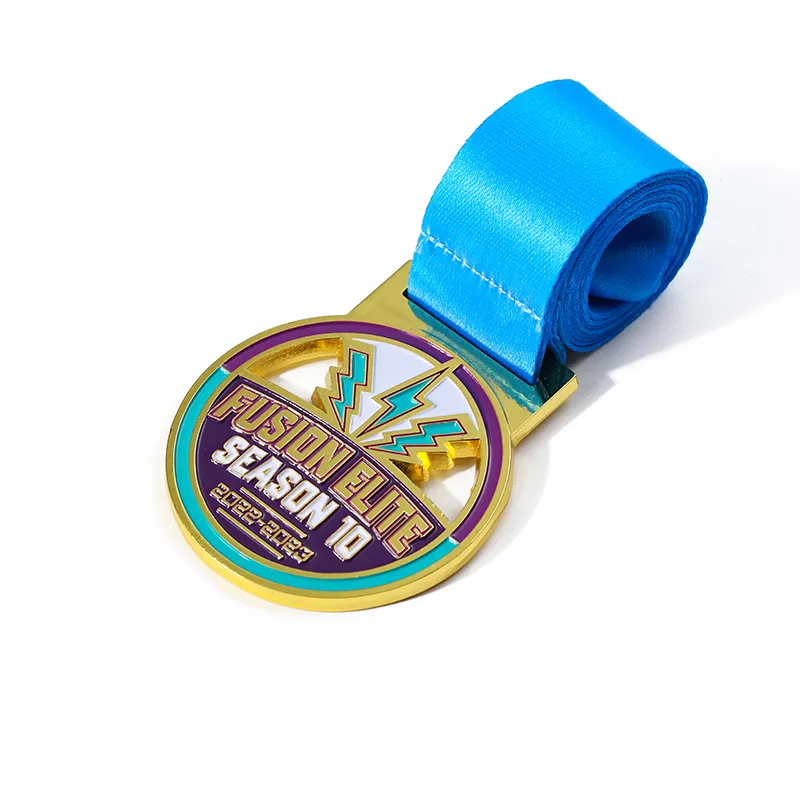
Second, balance enamel craftsmanship and cost. Full hard enamel and soft enamel multi-color filling are high-end crafts with bright colors and strong three-dimensional sense, but the cost increases linearly with the number of colors. For personalized medals that do not require extremely high color restoration, buyers can choose single-color or two-color enamel filling, or adopt printing + epoxy surface protection technology. The epoxy layer can form a transparent protective film on the medal surface, which not only improves the gloss and texture of the medal but also prevents pattern wear and color fading. The cost of this process is 30%–40% lower than multi-color enamel, with almost the same durability.
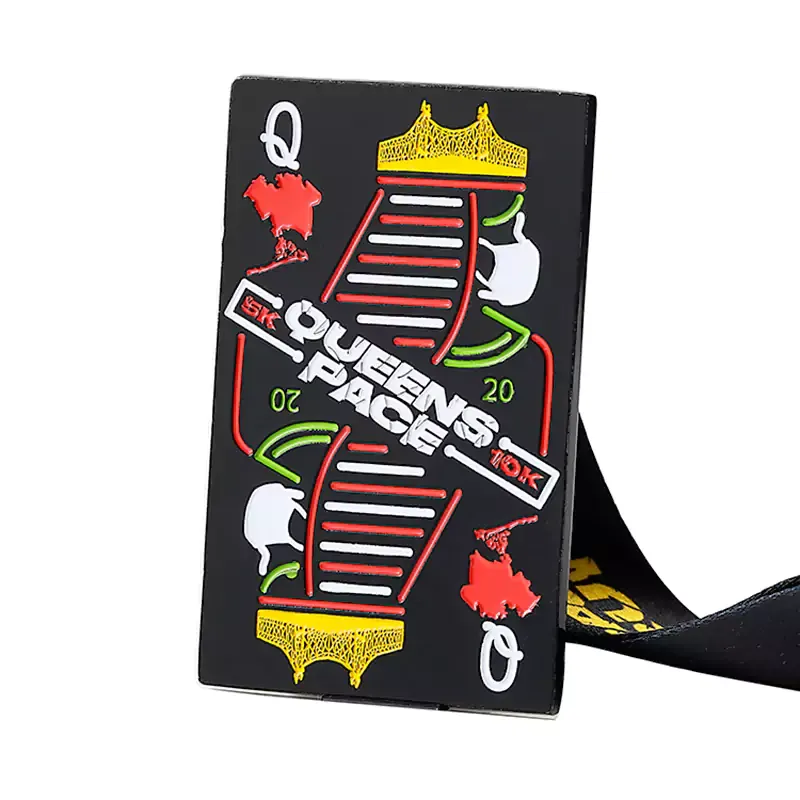
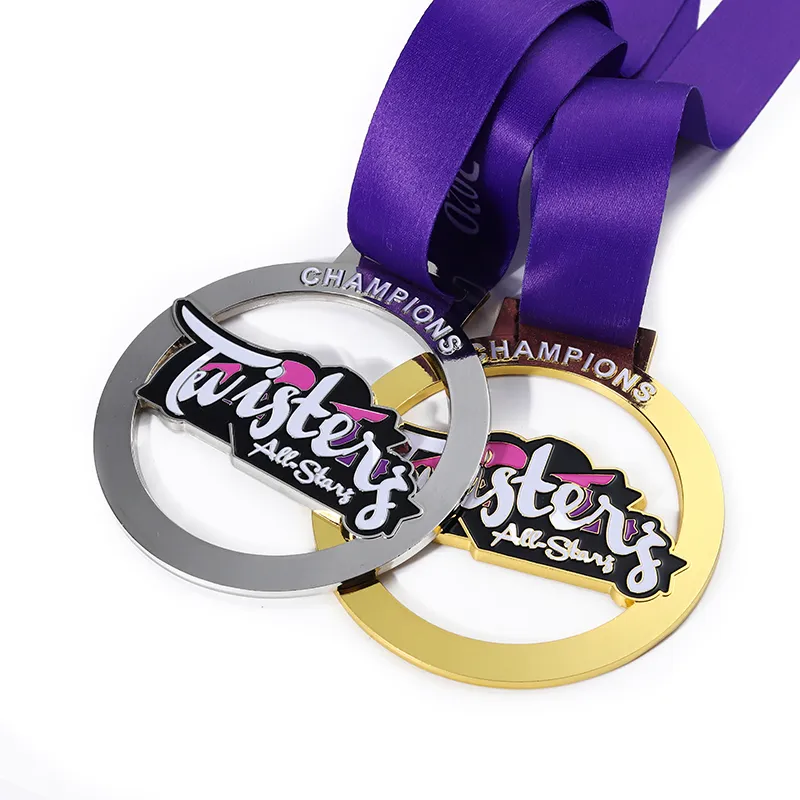
Third, reduce redundant three-dimensional and hollow-out designs. 3D deep carving and hollow-out details require complex mold making and manual polishing processes, with high production difficulty and high defective rate, leading to increased production costs. Conventional 2.5D embossing technology can realize layered pattern and text three-dimensional sense, with clear lines and strong stereoscopic effect, fully meeting personalized display needs. For text and logo personalization, plane precision engraving is more cost-effective than 3D carving, with clear and durable handwriting and no blurring after long-term use.
In addition, avoid personalized content redundancy. Too many texts, patterns, and complex border designs will increase design difficulty and production man-hours. Simplifying personalized content, retaining core information such as event name, date, logo, and award slogan, and adopting minimalist layout can not only reduce costs but also make the medal design more concise and high-grade, avoiding messy visual effects caused by excessive content.
4. Optimize Procurement Strategies: Reduce Comprehensive Costs Through Scientific Ordering
Many cost increases in personalized medal customization do not come from product craftsmanship and materials, but from unreasonable procurement timing, order quantity, and cooperation methods. Scientific procurement strategies can effectively reduce hidden costs such as mold fees, emergency fees, and logistics fees, and further improve cost performance on the premise of ensuring medal quality.
Ordering in advance is the most basic and effective cost-saving method. Most buyers will encounter emergency ordering scenarios, and manufacturers need to arrange overtime production and expedited processing, which will charge 20%–50% rush fees. Moreover, rushed production often leads to insufficient polishing, incomplete electroplating curing, and careless detail inspection, resulting in reduced medal quality. It is recommended to confirm the customization plan and place the order 15–20 days in advance of the event. Sufficient production cycle enables manufacturers to carry out standardized production, layer-by-layer quality inspection, and natural curing of the plating layer, ensuring stable medal quality while completely avoiding rush costs.
Reasonable use of scale advantages to reduce unit prices. Custom medal manufacturing has obvious economies of scale. The more the order quantity, the lower the unit mold amortization cost and production setup cost. For buyers with multiple event needs throughout the year, they can summarize the demand and place batch orders centrally. Many manufacturers will provide exclusive bulk discount policies for orders exceeding 100, 500, and 1000 pieces, with the unit price reduced by 10%–30% in turn. For small-batch demand, you can choose manufacturers with free stock mold services, which can completely waive independent mold opening fees and solve the problem of high unit price for small-batch customization.
Avoid hidden charging items and control comprehensive costs. Many low-price intermediaries and small workshops will set low unit prices but charge additional fees such as design fees, mold modification fees, packaging fees, and logistics fees. Regular professional medal manufacturers provide free design, free proofing, free conventional mold opening, and free neutral packaging services, with transparent and one-time quotation, no hidden consumption. Buyers should focus on the total comprehensive cost rather than the single unit price when comparing quotations, to avoid low unit price but high hidden cost leading to increased overall expenditure.
In addition, choosing factory direct sales cooperation can effectively reduce intermediate links. Trading companies and intermediaries will add 15%–25% service fees on the basis of factory prices. Directly cooperating with manufacturers with independent production workshops can not only obtain the most authentic factory prices but also communicate design and quality requirements directly with production technicians, avoiding quality deviation caused by information transmission errors.
5. Strict Quality Control: Key Standards to Ensure Zero Quality Compromise
The core of low-cost customization is cost reduction rather than quality reduction. After optimizing materials, crafts, and procurement, buyers need to master professional quality inspection standards to verify medal quality, ensuring that all cost-saving operations do not damage core product performance. The following five core quality indicators are the key criteria for judging high-quality low-cost personalized medals.
First, surface craftsmanship quality. High-quality personalized medals have smooth and flat surfaces without burrs, scratches, bubbles, and oxidation spots. The electroplating layer is uniform and firm, with no color difference, peeling, or fading. The pattern and text engravings are clear, with smooth lines and distinct layers, and no blurring or missing carvings. After epoxy treatment, the surface is smooth and transparent without impurities and bubbles, with strong wear resistance.
Second, edge processing quality. Many low-quality cheap medals have rough edges, burrs, and sharp corners, which are easy to scratch hands and damage ribbons. Qualified high-quality medals adopt full-circle chamfering and fine polishing technology, with smooth and round edges, no sharp corners, and comfortable hand feel, which is also an important detail that distinguishes formal factory products from workshop products.
Third, structural firmness. The connecting parts of the medal hanging ring and the main body are firm and not easy to fall off. The ribbon stitching is tight, with uniform needlework and no loose thread or off-line. The overall structure of the medal is stable, no deformation after slight extrusion, and strong durability.
Fourth, color durability. Qualified electroplating and coloring processes can ensure that the medal does not fade or oxidize under normal use and storage conditions. Buyers can conduct simple tests: gently wipe the medal surface with a wet cloth for dozens of times, no color falling off; place it in a dry environment for two weeks, no oxidation and blackening on the surface.
Fifth, personalized restoration accuracy. The customized logo, text, pattern, and size strictly conform to the design draft, with no deviation, missing printing, or wrong carving. The personalized information is accurately restored, which is the core value of customized medals and the key standard to ensure product quality.
It is recommended that buyers require manufacturers to provide digital pre-production proofs and physical sample confirmation before mass production. Digital proofs can verify the accuracy of design and personalized information, while physical samples can intuitively check material texture, craft effect, and color restoration. Only after confirming that the samples are qualified can mass production be started, which can completely avoid mass quality problems and rework losses.
6. Common Low-Cost Customization Mistakes to Avoid
In the process of pursuing low-cost personalized medals, many buyers fall into wrong cost-saving traps, resulting in serious quality problems and eventually higher comprehensive costs. Summarizing the common mistakes in the industry can help buyers avoid risks and achieve real high cost performance.
The first mistake is blindly pursuing ultra-low unit prices and ignoring core processes. Some buyers only compare unit prices and choose the lowest quotation, ignoring whether the manufacturer cuts corners on polishing, electroplating, and anti-rust treatment. The medals produced in this way have rough surfaces, easy fading and oxidation, and high defective rate, which need secondary customization, resulting in double cost waste.
The second mistake is abandoning standardized processes for cost saving. Individual buyers will ask manufacturers to cancel epoxy protection, edge polishing, and quality inspection links to reduce costs. These processes are the core guarantees of medal quality. Canceling them will directly lead to reduced product durability and poor appearance, completely losing the value of personalized customized medals.
The third mistake is unreasonable design simplification. Effective design simplification is to remove redundant crafts and useless details, rather than simplifying core personalized information and basic aesthetic design. Excessively crude design will make the medal look shoddy, fail to reflect the sense of ceremony of award recognition, and affect the overall effect of the event.
The fourth mistake is ignoring after-sales service and quality assurance. Low-cost small workshops often do not have perfect after-sales system, with no compensation for defective products and no rework service. Regular manufacturers provide free rework and replacement services for defective products, with long-term quality assurance. Although the unit price is slightly lower in small workshops, the hidden risk cost is extremely high.
7. Conclusion: Achieve High-Value Customization with Rational Cost Control
Customizing low-cost personalized medals without sacrificing craft quality is not a contradictory demand, but a scientific customization scheme based on industry experience and professional logic. The real cost saving is not to reduce product quality, but to eliminate redundant premium configurations, optimize unreasonable design and procurement schemes, and avoid unnecessary hidden costs.
By selecting cost-effective materials matching usage scenarios, simplifying redundant crafts while retaining core personalized details, adopting scientific advance ordering and bulk procurement strategies, and cooperating with formal manufacturers with transparent quotations and standardized processes, every buyer can obtain high-quality personalized medals with clear patterns, smooth craftsmanship, durable color, and stable structure at a low budget.
For event organizers and corporate purchasers, high-cost medals do not represent high recognition value. Exquisitely crafted, highly personalized, and cost-effective medals can not only save budget expenses but also deliver sincere recognition and honor to every participant and winner, realizing the maximum value of customized products. In the future personalized medal customization, adhering to the principle of “quality first, rational cost reduction” will help every project complete high-quality award configuration and create perfect event memory.
PRODUCT CATEGORIES
Do you want to have unique metal crafts?
Let's connect ASAP.
We are a professional manufacturer of custom metal crafts, we can create exquisite metal artworks for you according to your needs and preferences.