










Custom Crafts Blog
Home » Custom Crafts Blog » What Are Military Challenge Coins?
What Are Military Challenge Coins?
Table of Contents
In the intricate and time-honored culture of global military forces, small metal medallions known as military challenge coins stand out as unique and irreplaceable symbolic tokens. Unlike official military medals awarded for extraordinary combat feats or formal military decorations with standardized grading systems, military challenge coins are compact, exquisitely crafted commemorative coins carrying unit emblems, organizational mottos and exclusive military cultural elements. They are primarily circulated among active-duty service members, veterans and military-related personnel, serving as tangible carriers of military camaraderie, unit honor and spiritual inheritance.
For ordinary civilians, these coins may seem like ordinary metal collectibles with simple patterns; however, for military personnel, every scratch, carving and inscription on a challenge coin records unique military experiences, precious friendship and unforgettable collective memories. This article comprehensively explores the definition, historical origins, design characteristics, traditional usage rules, core functions, evolutionary process and cultural influence of military challenge coins, aiming to fully interpret the unique value and profound connotation of this special military cultural product.
Basic Definition and Core Attributes of Military Challenge Coins
Clear Definition
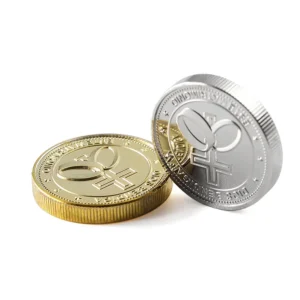
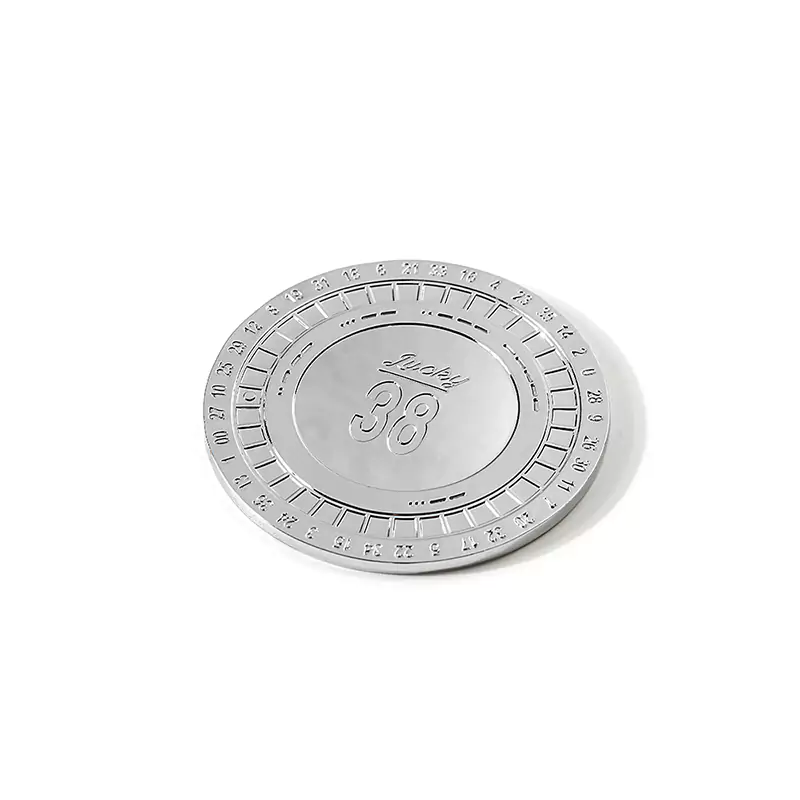
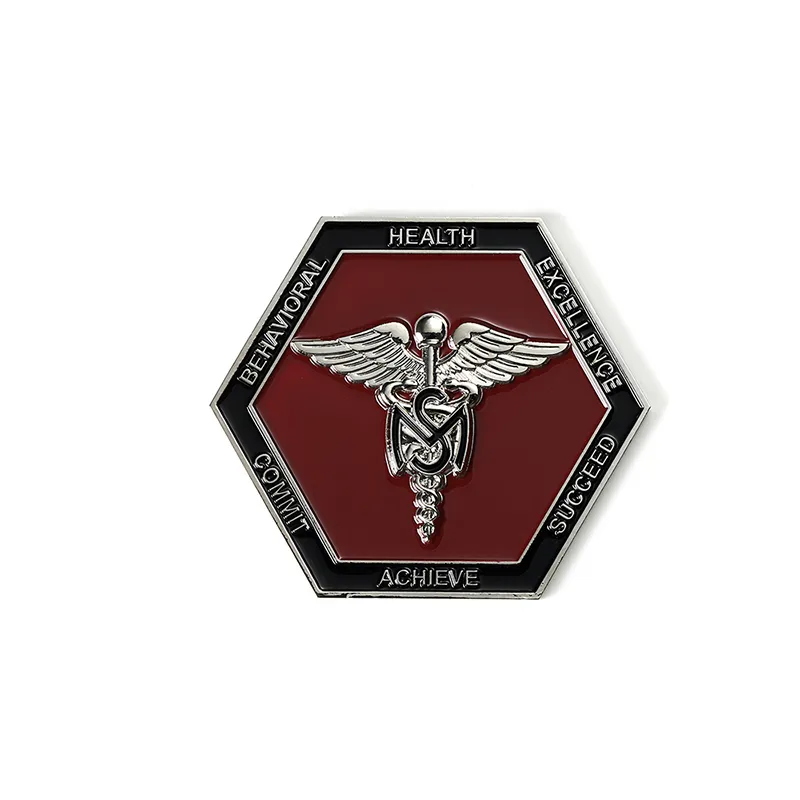
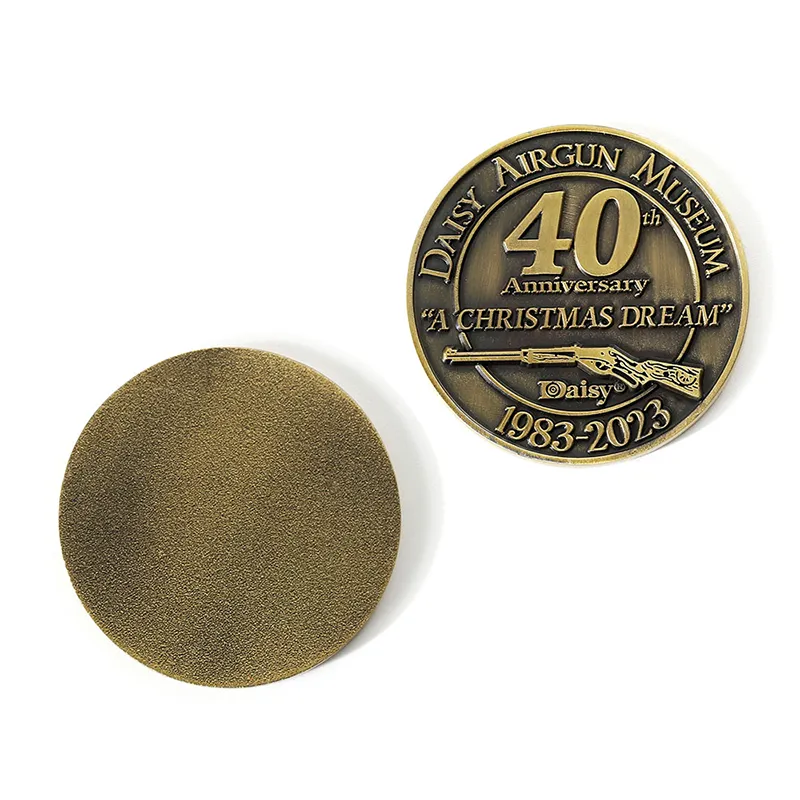
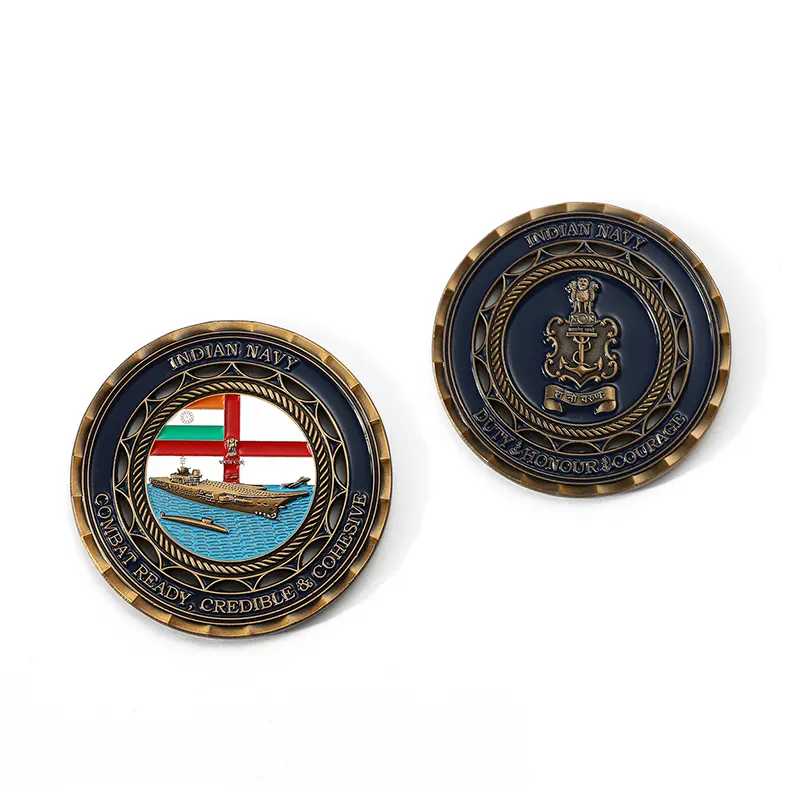
A military challenge coin, also referred to as a unit coin, commander’s coin or memorial military coin, is a small customized metal medallion specially produced for military units, military branches or specific military missions. Typically made of brass, copper, zinc alloy and other durable metal materials, most challenge coins are round with a diameter ranging from 1.5 to 3 inches, while a small number of coins adopt special shapes such as polygons and irregular silhouettes corresponding to military equipment. The surface of the coin is engraved with distinctive identification elements, including unit badges, military emblems, troop numbers, mission time, regional coordinates and inspiring mottos, forming exclusive visual marks for different military groups. Different from circulating legal tender, military challenge coins have no currency value and cannot be traded as money. Their core attributes lie in symbolism, exclusivity and collection nature, and they are never publicly sold as commercial commodities in the conventional sense.
Fundamental Attributes
First and foremost, military challenge coins have strong membership exclusivity. Each coin corresponds to an independent military unit or organization, and only members belonging to the unit are eligible to obtain the officially issued challenge coin. In the early stages of development, challenge coins even served as important identity certificates for military personnel in special environments to distinguish allies from enemies. Secondly, they possess spiritual symbolism. Every pattern and text on the coin is carefully designed to condense the unit’s combat philosophy, historical heritage and spiritual pursuit, representing the collective honor of the troop. Thirdly, these coins have emotional attachment. As portable personal keepsakes, military personnel usually carry challenge coins with them for a long time. The coins witness training, missions and growth, and become emotional carriers connecting individuals and troops. Finally, they have collectible and inheritance attributes. With unique design styles and issuing backgrounds, limited-edition challenge coins have high collection value among military enthusiasts and veteran groups, and some rare historical coins have become precious military cultural relics.
Historical Origins and Evolutionary Process
Controversial Origin Legends
The exact origin of military challenge coins has never been conclusively verified by official historical documents, and multiple widely circulated legends have laid a mysterious historical tone for this tradition. Among various origin stories, the most famous and widely recognized one dates back to World War I, involving American aviators in the early Army Air Service. During the war, a wealthy lieutenant in an American flying squadron spent his own money to customize a batch of exquisite bronze medallions for all members of the squadron. Each medallion was engraved with the unique emblem of the flying squadron, and soldiers kept the medallions in small leather pouches around their necks for safekeeping. Unfortunately, one young pilot was shot down during a combat mission and captured by German forces. Stripped of all his identification documents and military supplies, the pilot faced the risk of being mistakenly identified as a spy and executed. By chance, the German guards found the bronze medallion hanging around his neck. The exquisite military emblem on the medallion proved his identity as an official allied soldier, which helped him avoid the death penalty. After being released in a prisoner exchange, the pilot deeply realized the precious value of the medallion, and this story gradually spread in the military, laying the foundation for the tradition of carrying challenge coins.
In addition to the World War I aviator legend, there are other credible origin theories. Some historical records indicate that during World War II, the Office of Strategic Services (OSS) of the United States issued simple metal tokens to covert agents performing missions in Nazi-occupied France. These tokens were used as secret identification certificates to help agents identify reliable allies in complex enemy-occupied areas and avoid accidental injury. Another theory traces the prototype of challenge coins to ancient military customs. In ancient Roman legions, soldiers would be awarded specially cast metal tokens after completing combat missions. These tokens could be exchanged for food and supplies in the military camp, which was the embryonic form of modern military challenge coins in terms of reward attributes.
Modern Development and Popularization
After World War I and World War II, the challenge coin tradition was not terminated with the end of the war. Instead, it was inherited and continuously optimized by the U.S. military, gradually evolving into a standardized military cultural custom. During the Korean War, William “Buffalo Bill” Quinn, the colonel of the 17th Infantry Regiment, formally promoted the customized unit challenge coin system. He took the lead in issuing exclusive coins for the regiment to reward outstanding soldiers and strengthen the sense of belonging of troop members. Since then, the U.S. Army, Navy, Air Force, Marine Corps and Coast Guard have successively formulated their own challenge coin issuance standards.
In the late 20th century, military challenge coins broke the restriction of single troop issuance. Senior military officials, government leaders and even heads of state began to issue personalized challenge coins. For example, the President of the United States often customizes exclusive challenge coins during his term of office, which are presented to outstanding soldiers, visiting foreign military officials and distinguished guests as high-standard gifts. Entering the 21st century, this tradition has spread from the United States to NATO member states and many countries around the world. Military forces in Europe, Asia and other regions have begun to launch their own challenge coins, making it a shared cultural symbol in the global military field.
Design Characteristics and Production Standards
Material and Craft Selection
Military challenge coins have strict requirements on production materials to ensure durability and texture. Most conventional coins are made of high-purity brass and copper, with hard texture, oxidation resistance and long service life, which can be stored for decades without obvious damage. Some high-level customized coins use silver-plated, gold-plated or antique metal craftsmanship. The surface is polished, frosted and embossed to create a layered three-dimensional effect. In terms of technology, the mainstream production processes include die-casting, stamping, enamel coloring and laser engraving. Complex patterns such as military equipment, combat scenes and troop badges are presented on the coin surface through precise carving technology. The edge of the coin is mostly polished smoothly, and some coins are engraved with anti-counterfeiting lines or unique serial numbers to prevent counterfeiting.
Core Design Elements
The design of each military challenge coin follows the principle of one coin, one characteristic, and the elements are closely combined with the troop’s history and mission. The front of the coin is usually printed with the core identification logo, such as military branch emblems, unit badges and regional military marks. The back is engraved with unit mottos, establishment time, mission concepts or commemorative texts. For special mission troops such as special forces and peacekeeping forces, the coin surface will also be added with exclusive elements such as weapon silhouettes, mission landmarks and symbolic totems. In terms of color matching, military-style dark colors such as dark green, navy blue and gunmetal gray are the main tones, matched with gold and silver embellishments to highlight a solemn and tough military temperament. In addition, some commemorative challenge coins for major military events will add special marks such as event time and activity location to record important military moments.
Traditional Challenge Rules and Usage Scenarios
Classic Challenge Rules
The name of challenge coins originates from the unique military “challenge” tradition, which is an important part of the coin culture and has been passed down for a long time. The challenge rules are simple and universal among military personnel. At any time and any place, a soldier can initiate a coin challenge by tapping his own challenge coin on hard surfaces such as tables and walls to make a clear metal collision sound. After the challenge is initiated, all military personnel present must immediately take out their own unit challenge coins and place them on the designated position. Those who fail to take out the coin within the specified time will be punished. The most common punishment is to buy drinks for all the personnel participating in the challenge. If everyone successfully presents the coin, the challenger who initiates the activity needs to bear the consumption cost of the gathering.
To ensure the fairness of the challenge, there are clear supplementary rules. It is forbidden to deliberately leave the coin at home or in the dormitory to avoid the challenge; the coin must be carried on the body and cannot be stored in vehicles or luggage. In addition, damaged, counterfeit or non-officially issued coins are not recognized as valid certificates in the challenge. These simple and rigorous rules not only increase the fun of military leisure gatherings but also constantly remind soldiers to keep the sense of identity and belonging at all times.
Diversified Usage Scenarios
In modern military management, the usage scenarios of challenge coins have become increasingly diversified. First of all, they are used for military reward and recognition. Unit commanders often present challenge coins to soldiers with outstanding performance in training, missions and daily work. Compared with formal medals, challenge coins have lower issuance thresholds and more flexible awarding conditions, which are suitable for recognizing small achievements and daily progress of soldiers. Secondly, they are used for military exchanges and visits. When military leaders visit foreign troops or brother units, exchanging challenge coins has become a standard etiquette, symbolizing mutual respect and friendly cooperation between military forces.
Moreover, challenge coins serve as commemorative keepsakes for major events. Military forces will customize special coins for military drills, peacekeeping missions, disaster relief operations and troop reorganization to record important collective experiences. In addition, in veteran gatherings and military cultural activities, challenge coins are important communication tokens. Veterans carry their own coins to exchange and appreciate with each other, recalling military careers and inheriting military friendship. In recent years, some military museums have also included rare challenge coins in their collections to display military cultural development achievements.
Core Military and Cultural Value
Strengthen Unit Cohesion and Esprit de Corps
The most fundamental value of military challenge coins is to shape collective consciousness and enhance troop cohesion. Each soldier with the same unit coin shares the same collective identity. The unique patterns and mottos on the coin continuously strengthen the soldiers’ sense of honor and responsibility for the troop during daily carrying and viewing. In high-intensity training and dangerous combat missions, the challenge coin is like an invisible spiritual bond, reminding soldiers that they are not fighting alone, but a united collective. For new recruits, obtaining the official unit challenge coin marks their formal integration into the military family; for veteran soldiers, the worn coins carry years of military memories and unshakable collective feelings. This emotional connection cannot be replaced by any material reward, and it is an important spiritual support to maintain military combat effectiveness.
Record Military History and Inherit Military Culture
As a miniature military cultural carrier, challenge coins faithfully record the development trajectory of military units. Each batch of issued coins corresponds to a specific historical stage, reflecting the troop’s mission changes, equipment updates and personnel evolution. Many veteran troops with a long history have a complete set of challenge coins issued in different periods. By sorting out these coins, people can clearly trace the development process of the troop. At the same time, the totems and mottos on the coins inherit the military spirit of bravery, tenacity and dedication. In the inheritance from generation to generation of soldiers, these spiritual connotations are continuously passed down, forming a unique military cultural heritage.
Carry Emotions and Witness Growth
For individual military personnel, challenge coins are precious emotional sustenance. Every scratch and wear mark on the coin is left in training, missions and daily life, recording the growth track of soldiers from recruits to experienced veterans. Many soldiers regard challenge coins as amulets. They carry coins with them when performing dangerous missions, believing that the coins blessed by collective honor can bring them safety. After retiring from the military, challenge coins become the most precious military souvenir. Whenever veterans look at the coins, they can recall the passionate military years, comrade-in-arms friendship and unforgettable growth experiences, which have irreplaceable emotional value.
Modern Evolution and Development Trends
Expansion of Application Scope
In recent years, the application scope of military challenge coins has gradually broken through the traditional military field. Government public security departments, fire rescue teams, border defense agencies and other law enforcement and public welfare organizations have begun to launch customized challenge coins, drawing on military coin design concepts and usage rules to strengthen team cohesion. In addition, in the field of military culture dissemination, challenge coins have become popular cultural derivatives. Formal military-themed exhibitions and cultural activities often use customized coins as commemorative gifts to spread military culture to the public.
Optimization of Design and Technology
With the progress of modern industrial technology, the production technology of challenge coins is constantly upgraded. On the basis of traditional craftsmanship, new technologies such as inlaid gemstones, luminous coatings and hollow carving have been applied to coin production, making the appearance of coins more exquisite and unique. At the same time, the design elements are more diversified. In addition to traditional military patterns, modern elements such as high-tech military equipment and digital military logos are added to keep pace with the development of modern military forces. Some high-end challenge coins are also engraved with QR codes. By scanning the code, people can view the unit’s historical introduction and mission records, realizing the combination of physical coins and digital information.
Standardization of Management System
In order to avoid the disorderly production and malicious speculation of challenge coins, major military forces have gradually improved the management system of challenge coin issuance. The production qualification, issuance quantity, design approval and awarding standards of coins have clear official regulations. It is strictly prohibited to privately customize military-style coins for commercial sales, and counterfeiting of official military challenge coins is severely cracked down. The standardized management system not only maintains the solemnity and exclusivity of challenge coins but also promotes the healthy and sustainable development of this traditional military culture.
Conclusion
Military challenge coins are small in size but rich in connotation. From the simple bronze medallions in World War I to the exquisitely customized cultural tokens integrating modern technology, they have gone through a century of evolution and precipitation. Beyond the metal texture and exquisite patterns, challenge coins carry eternal military values: loyalty, unity, honor and perseverance. They are not only identity certificates for military personnel, rewards for outstanding achievements and carriers of comrade-in-arms friendship but also important symbols inheriting military culture and condensing military spirit. In the context of continuous changes in modern military forms, military challenge coins still maintain strong vitality. They cross national and regional boundaries, become a common cultural language in the global military field, and always witness the growth of every soldier and the development of every military unit. For a long time in the future, this time-honored military tradition will continue to be passed down, shining unique light in the military culture field with its profound historical heritage and noble spiritual connotation.
PRODUCT CATEGORIES
Do you want to have unique metal crafts?
Let's connect ASAP.
We are a professional manufacturer of custom metal crafts, we can create exquisite metal artworks for you according to your needs and preferences.