










Custom Crafts Blog
Home » Custom Crafts Blog » A Tiny Badge: Holding the Codes of Time and Culture
A Tiny Badge: Holding the Codes of Time and Culture
Table of Contents
From the totem tokens of ancient ancestors, to the status symbols of medieval nobility; from medals of honor on battlefields, to the trendy accessories sought after by young people today, the form of badges has evolved continuously over thousands of years, yet their essence of carrying emotions and conveying meaning has never changed. Within its tiny space, a badge condenses the vicissitudes of the times, the accumulation of culture, and records the exclusive stories of every individual and group. Today, let us step into the world of badges and unlock the myriad wonders behind this “tiny object”.
1. Origin and Evolution: From Totem Tokens to Civilizational Symbols – the Millennium Evolution of Badges
The origin of badges is far older than we imagine, with their rudiments dating back to the dawn of human civilization. Before ancient ancestors developed mature writing, they already knew to use simple patterns and symbols to mark ethnic groups and convey information – this was the most primitive form of badges.
As early as the Neolithic Age, ancestors polished jade, stone and animal bones into specific shapes and carved tribal totems on them to wear. These objects were both symbols of ethnic groups – used to distinguish different tribes and unite ethnic power – and expressions of the ancestors’ awe of nature and wishes for a better life. For instance, the fish patterns of Yangshao Culture and frog patterns of Majiayao Culture, simplified and carved on ornaments, were the earliest “rudiments of badges”. At this stage, badges had nothing to do with decoration; their core functions were “identification” and “belief”, serving as vital carriers for ancestors to understand the world and connect ethnic groups.
Entering slave and feudal societies, badges gradually evolved from “ethnic markers” to “symbols of status and power”. The “imperial seals” and “official tallies” in ancient China were important derivative forms of badges: the imperial jade seals of emperors and official seals of bureaucrats, engraved with exclusive patterns and official titles, were both certificates of power and manifestations of identity, accessible only to people of specific ranks – essentially a kind of “official badge”. In addition, ancient “waist tags” and “military tallies” also possessed the core functions of badges. Waist tags were used for entry and exit in imperial palaces and military camps, while military tallies were used to dispatch troops; the details of patterns and characters on them strictly followed the hierarchy system, with no transgression allowed.
Meanwhile, badges were also developing gradually in the Western world. In medieval Europe, feudal nobles created “heraldic emblems” – exclusive patterns carved on shields, armors and flags – to distinguish friend from foe in wars and highlight family glory. These were later simplified into wearable metal badges, pinned to lapels and hats, becoming symbols of noble status and family inheritance. The design of these heraldic emblems was highly elaborate: lions symbolized bravery, eagles stood for dignity, and roses represented nobility. Different combinations of patterns represented distinct family histories and honors, and even gave rise to a specialized “heraldry”, becoming an important part of medieval Western culture.
Since modern times, with social progress and the spread of democratic ideas, the “power attribute” of badges has gradually weakened, while the “commemorative attribute” and “honor attribute” have become prominent. During the French Revolution in the late 18th century, revolutionaries wore badges printed with slogans of liberty, equality and fraternity to express their political positions. In the 19th century, armies of various countries began awarding “medals of honor” to meritorious officers and soldiers as a testament to their achievements, a tradition that continues to this day. At the same time, the rise of the Industrial Revolution matured badge-making techniques and reduced production costs. Badges were no longer exclusive to nobles and officials, but entered the lives of ordinary people, becoming important objects for commemorating major events and marking group identities.
In modern society, the functions of badges have further diversified, extending from the original identification, power and honor to decoration, collection, social interaction and other fields. A tiny badge not only carries thousands of years of civilizational memories, but also adapts to the living needs of contemporary people, becoming an object with both cultural heritage and fashion appeal.
2. Classification: Infinite Varieties Within a Tiny Space
Badges come in a wide range of types, which can be categorized according to different classification criteria. Whether by purpose, material, craftsmanship or style, each category corresponds to a distinct badge form and carries unique meanings. Next, let us explore the diversity of badges from the most common classification dimensions.
(1) Classification by Purpose: From Practicality to Sentiment, Covering All Aspects of Life
Classification by purpose is the core and most life-oriented way of categorizing badges. Badges for different uses have different focuses in design, material and craftsmanship, precisely matching the needs of various scenarios.
1. Honorary Commendation Badges
The core function of this type of badge is to “commend honors”, awarded to individuals or collectives with outstanding performance in a certain field, job or activity, serving as a tangible embodiment of honor. Common honorary commendation badges include:
- Orders of Honor: The highest-specification honor badges, usually issued by states and militaries to recognize those who have made major contributions to the country, society and armed forces. Examples include China’s Order of the Republic and Order of August the First, as well as foreign honors such as the Victoria Cross and Purple Heart. These badges are made of exquisite materials with complex craftsmanship, designed in a solemn and dignified manner, symbolizing supreme honor.
- Medals: Lower in specification than orders of honor, they are generally used to commend individuals or collectives with excellent performance in specific jobs or activities, such as labor medals, outstanding employee medals, and sports meet medals. The design of such badges is usually related to the theme of commendation – for example, sports meet medals integrate sports elements, and labor medals incorporate labor-related patterns to highlight the significance of the recognition.
- Honor Badges: Mostly used in schools, enterprises, associations and other scenarios to recognize outstanding students, employees and members, such as “Three Good Students” badges, “Outstanding Employee” badges, and volunteer badges. These badges feature relatively simple, positive designs, affirming individuals’ efforts and dedication.
2. Commemorative and Collectible Badges
The core function of this type is “commemoration and collection“, used to mark major historical events, important figures and special activities. They are carriers of history and emotions, as well as popular items among collectors. Common ones include:
- Historical Event Commemorative Badges: Used to mark major historical events, such as National Day commemorative badges, badges commemorating the victory of the War of Resistance Against Japanese Aggression, Olympic Games commemorative badges, and World Expo commemorative badges. These badges usually integrate event-related elements with era-specific designs, serving not only as carriers of commemoration but also witnesses to history. For example, the Beijing Olympic Games commemorative badges incorporated the Olympic rings, Fuwa mascots and other elements, becoming cherished memories for countless people; badges commemorating the victory of the War of Resistance Against Japanese Aggression are engraved with patterns related to the war, carrying the nation’s memory and glory.
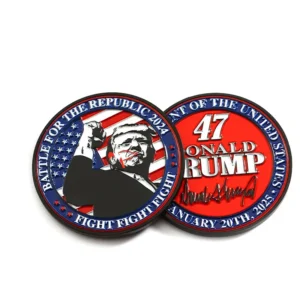
- Figure Commemorative Badges: Used to commemorate important figures, such as badges of great leaders and celebrities. They usually feature portraits of the figures, paired with their famous quotes or related patterns, as a tribute to the deceased. Badges of great leaders, for instance, are a carrier for people to express reverence and a hot item in the collection market.
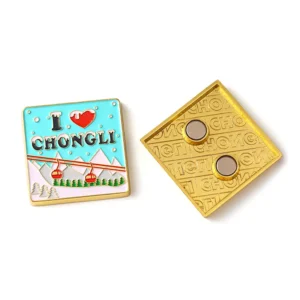
- Special Activity Commemorative Badges: Used to mark various special events, such as concert commemorative badges, exhibition badges and tourist souvenirs. With novel, distinctive designs tailored to the activity theme, they become an important way for participants to preserve memories. Tourist commemorative badges, for example, usually integrate local scenic spots and cultural elements; buying and wearing them is both a memento of the trip and an endorsement of local culture. Concert commemorative badges, incorporating elements of singers and shows, become “souvenirs of youth” treasured by fans.
(2) Classification by Material: Diverse Textures for Different Qualities
Material is the core factor determining a badge’s texture, appearance and durability. Badges of different materials vary in visual effect, touch and craftsmanship, adapting to different uses and scenarios. Common badge materials are divided into metal and non-metal categories, each with unique advantages.
1. Metal Badges
With excellent texture, strong durability and diverse craftsmanship, metal materials are the most common and mainstream choice for badges, widely used in identity marking, honorary commendation, commemoration and collection. Common metal materials include:
- Copper Badges: Copper is one of the most frequently used materials for badges, including brass, red copper and bronze. Soft and easy to carve and stamp, copper can accurately present detailed patterns of badges, with a warm texture. After oxidation treatment, it forms a unique retro luster, making it ideal for retro-style and commemorative badges. Many historical commemorative badges and retro school badges adopt copper to highlight a profound sense of age.
- Iron Badges: Lightweight and low-cost, iron badges are easy to mass-produce, suitable for cost-effective, bulk-distributed badges such as activity commemorative badges and association badges. However, iron is prone to rust, so it usually requires electroplating and painting to improve durability and aesthetics.
- Zinc Alloy Badges: Zinc alloy has moderate hardness and a low melting point, easy to cast, capable of presenting complex patterns and shapes with delicate texture and smooth appearance. It is suitable for 3D badges, embossed badges and other highly detailed designs. Zinc alloy badges also have good durability, resistant to rust and fading after treatment, widely used in corporate badges and honor badges.
- Stainless Steel Badges: High in hardness, corrosion-resistant and rust-proof, stainless steel boasts extreme durability and a concise, clean appearance, suitable for long-wearing, damage-resistant badges such as professional badges and outdoor activity commemorative badges. Its high hardness makes carving and stamping difficult, so it is generally used for simply designed badges.
- Precious Metal Badges: Made of gold, silver, platinum and other precious metals, these badges are expensive and premium in texture, usually used for high-specification commemorative badges and honor badges (e.g., badges for major national events and high-end orders of honor). They carry commemorative significance and also possess certain collection and value-preserving potential, making them treasures for collectors.
2. Non-Metal Badges
Though less common than metal badges, non-metal badges are popular in decorative matching for their light weight, novelty and rich colors, and fit special scenarios. Common non-metal materials include:
- Enamel Badges: Enamel features bright, glossy colors that do not fade easily, with a delicate texture, perfect for exquisitely designed, colorful decorative and high-end commemorative badges. Enamel craftsmanship includes cloisonné, flat-fill enamel and pierced enamel, each with distinct visual effects: cloisonné has delicate lines, flat-fill enamel features uniform colors, both highly ornamental.
- Acrylic Badges: Light, transparent and colorful, acrylic is easy to print and cut with low cost, suitable for cartoon badges, streetwear brand badges and decorative badges. With a fresh, smart look and light weight, they cause no pressure when worn on clothes and backpacks, making them one of young people’s favorite decorative badge materials.
- Fabric Badges: Soft and comfortable with diverse colors, fabric badges are usually made via embroidery and printing, suitable for casual, cute styles such as cartoon embroidered badges and canvas badges. They have a gentle texture, comfortable to wear, washable and durable, ideal for matching casual clothes and canvas bags.
- Resin Badges: Transparent and glossy, resin is easy to pour and shape, capable of presenting complex shapes and details with rich colors, and can create gradient and transparent effects. It is suitable for 3D badges, cartoon badges and commemorative badges. Resin badges have a transparent, high-value look with moderate cost, a beautiful and cost-effective choice.
(3) Classification by Craftsmanship: Ingenuity Reflected in Every Detail
Craftsmanship directly determines a badge’s appearance, details and texture. Even badges of the same material and design will present completely different effects with different craftsmanship. Common badge techniques each have unique characteristics, embodying distinct ingenuity.
- Stamping Process: The most common and basic badge craftsmanship, mainly used for metal badges. Metal sheets are stamped into badge shapes and patterns by a stamping machine. Simple, efficient and suitable for mass production, it creates clear lines and contours with a firm texture. The surface of stamped badges can be treated with electroplating, painting, wire drawing and other processes to enhance aesthetics and durability, widely applied to identity marking and activity commemorative badges.
- Enamel Craftsmanship: A traditional high-end technique, divided into cloisonné, flat-fill enamel and pierced enamel. Cloisonné involves bending fine copper wires into patterns, welding them to the badge base, filling enamel glaze, and firing at high temperatures, resulting in delicate lines, bright colors and excellent texture, suitable for high-end commemorative and honor badges. Flat-fill enamel directly fills enamel glaze into grooves of the badge base, firing and polishing to a smooth finish with uniform colors, ideal for colorful, simply shaped badges. Pierced enamel creates hollow patterns on the badge, filled with glaze and fired, combining transparency and ornamentation for an exquisite look.
- Casting Process: Mainly used for metal badges, especially those with complex shapes and strong 3D effects. Molten metal is poured into molds and cooled to form, accurately reproducing intricate patterns and 3D structures with heavy texture and full details. The surface can be polished, electroplated, oxidized and treated otherwise to improve appearance, suitable for high-end commemorative and embossed badges.
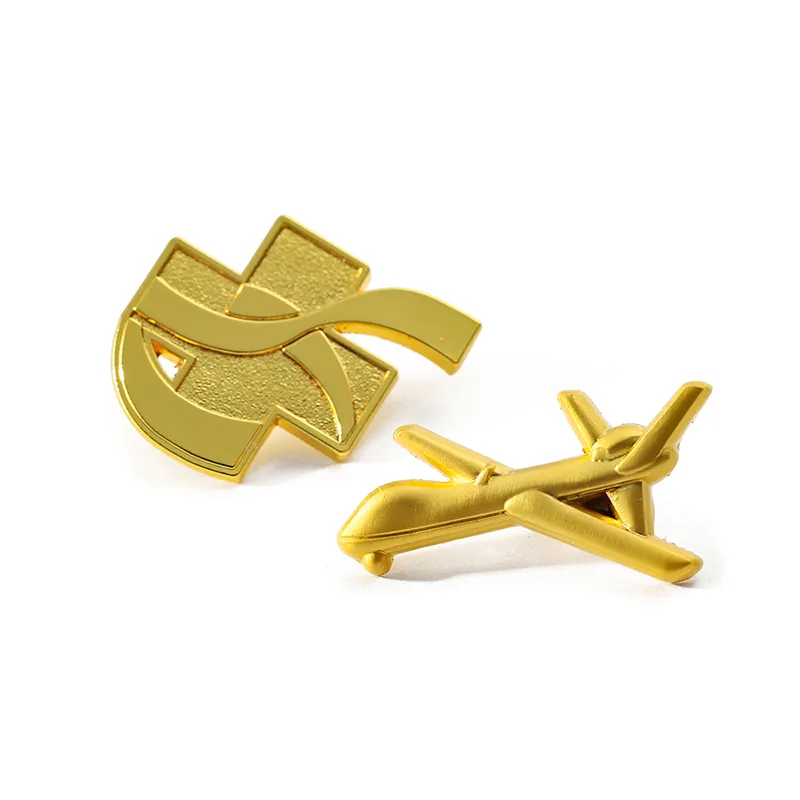

3. Craftsmanship: How Much Ingenuity Goes into the Making of a Badge
A tiny badge may seem simple, but it requires multiple complex procedures, each polished with ingenuity to achieve the final exquisite effect. Whether metal or non-metal, stamped or enamel, every badge’s production embodies the care and perseverance of craftsmen. Next, take the most common metal enamel badge as an example to reveal its production process and experience the ingenuity and details within.
Step 1: Design and Finalization – Sculpting the Soul of the Badge
Design is the soul and the first step of badge-making, directly determining the final effect. The design process combines the badge’s purpose, material and craftsmanship to outline its shape, patterns, characters and colors, ensuring the scheme meets requirements and adapts to subsequent production techniques.
First, the designer clarifies the badge’s use and positioning: is it an identity marker, a commemorative collectible, a high-end honor badge or an ordinary decorative badge? Different positionings correspond to different design styles: identity badges need to be concise and solemn, commemorative badges should have a sense of the times and connotation, and decorative badges require novelty and personality.
Then the designer sketches to determine the shape, patterns and characters. Commemorative badges integrate event-related elements, identity badges incorporate professional or group patterns, and decorative badges adopt current trendy elements for personalized designs. Details such as font and size of characters, line and proportion of patterns, and color matching are adjusted repeatedly to ensure overall coordination and beauty.
After the sketch is confirmed, the designer digitizes it into a precise design drawing, marking dimensions, materials, craftsmanship, color parameters and other indicators for subsequent production. Once the design is finalized, the next step – mold making – begins.
Step 2: Mold Making – Precisely Reproducing Design Details
Molds are core tools for badge-making, especially metal badges; mold precision directly determines the presentation of badge details. The mold-making process must accurately reproduce every detail in the design drawing to ensure perfect restoration of the badge’s shape, patterns and characters.
First, according to the design drawing, suitable mold material (usually steel) is selected, and patterns and characters are precisely carved on the mold via a computer engraving machine. This process demands extreme precision, especially for tiny characters and complex patterns; careful operation is required to avoid deviations that would compromise the badge’s final effect.
After carving, the mold is ground and polished to remove burrs and flaws, ensuring a smooth, flat surface. It is then debugged to test precision and compatibility, guaranteeing accurate reproduction of design details during stamping or casting. Once debugged, the process moves to material cutting and shaping.
Step 3: Material Cutting and Shaping – Creating the Badge Prototype
The core of this step is to cut, stamp or cast selected materials (copper, zinc alloy, etc.) into the preliminary shape of the badge, namely the “base” of the badge.
For stamped badges, metal sheets are first cut to the appropriate size per the badge’s dimensions, then placed into the mold and stamped by a stamping machine. Stamping pressure must be precisely controlled: excessive pressure deforms or damages the metal sheet, while insufficient pressure fails to reproduce the mold’s patterns and characters clearly. After stamping, the badge prototype takes shape, with the designed patterns and character outlines visible on the surface.
For cast badges, metal is first melted into liquid, poured into the prepared mold, and left to cool and solidify. The mold is then opened to take out the prototype, which is trimmed and polished to remove excess edges and burrs, ensuring a neat shape and clear details.
Step 4: Surface Treatment – Enhancing Texture and Aesthetics
The badge prototype has a rough, colorless surface and requires surface treatment to improve texture, aesthetics and durability. There are many surface treatment methods, selected based on the badge’s material, craftsmanship and design needs.
Common treatments include electroplating, painting, oxidation, grinding and polishing. Electroplating, the most widely used, coats the badge with a metal layer (gold, silver, nickel, chromium, etc.) to enhance luster and texture, while preventing rust and corrosion. Painting sprays a layer of paint on the surface for diverse color effects, suitable for colorful badges. Oxidation treatment is mainly used for copper badges, forming an oxide film on the surface to create a retro luster and a sense of age. Grinding and polishing remove burrs and flaws, making the surface smoother and improving touch and visual effect.
Step 5: Color Filling (Exclusive to Enamel Badges) – Endowing the Badge with Vitality
Enamel badges require an additional color-filling step after surface treatment, one of the core and most complex procedures for this type. Color filling demands precise control of glaze color and dosage to ensure uniform, full colors consistent with the design drawing.
First, corresponding enamel glazes are prepared per the color requirements of the design. Enamel glaze comes in a wide range of colors, resistant to fading, creating bright, full color effects. Then, fine tools are used to fill the glaze accurately into the grooves of the badge prototype. Glaze dosage must be moderate: excess causes overflow and distorts the badge shape, while insufficient leads to uneven, dull colors.
After filling, the badge is fired in a high-temperature furnace. Temperature and duration are precisely controlled, generally between 800-900°C, with firing time adjusted according to the badge’s size and thickness. After high-temperature firing, the enamel glaze solidifies and bonds tightly with the badge base, presenting bright, smooth colors. Uneven colors or flaws require re-filling and firing until the desired effect is achieved.
Step 6: Grinding, Polishing and Quality Inspection – Ensuring Qualified Quality
Enamel badges undergo further grinding and polishing after color filling and firing. This process removes excess glaze and surface flaws, making the surface smoother and flatter, colors more uniform and glossy, and patterns and lines clearer.
After polishing, the final quality inspection begins. Inspectors check every badge rigorously: verifying clear shapes, patterns and characters, uniform colors matching the design, no burrs or flaws on the surface, and qualified durability. Unqualified badges are reworked, repaired or discarded directly to ensure every finished product meets quality standards.
Step 7: Accessory Installation – Completing the Final Product
Qualified badges are fitted with accessories to enable wearing and display. Common badge accessories include safety pins, magnets, keychains and lanyards, selected based on the badge’s purpose and needs.
Badges worn on lapels are usually fitted with sturdy, durable safety pins to prevent falling off. Badges for backpacks can use either pins or magnets, the latter being more convenient without damaging clothes or bags. Keychain badges are equipped with keychain accessories for easy carrying.
With accessories installed, a complete badge is finished. From design finalization to the finished product, every procedure is polished with ingenuity and every detail controlled precisely. This perseverance and care endow the tiny badge with unique texture and charm.
4. Culture: Tiny Badges Carrying Profound Sentiments and Era Memories
Badges are never mere simple objects; they are cultural carriers holding profound sentiments, era memories and national spirit. From ancient totem tokens to modern decorative badges, from national orders of honor to personal collectible souvenirs, every badge carries a story, an emotion and cultural connotation.
(1) Badges as Tangible Expressions of Identity and Honor
From ancient times to the present, badges have been closely linked to identity and honor, serving as their tangible expressions. Ancient official tallies and waist tags symbolized bureaucrats’ identity and power; the badge one wore denoted one’s rank and status, reflecting social order and hierarchy. Modern military, police and school badges represent professional identity and honor; wearers carry not just a badge, but responsibility and commitment.
Honor badges materialize “honor”, affirming the efforts and dedication of individuals and collectives. An order of honor carries the recipient’s meritorious deeds and glory, as well as the recognition and respect of the country and society. An outstanding employee medal bears the staff’s hard work, as well as the enterprise’s encouragement and expectation. These badges are a source of pride for wearers and a spiritual incentive, inspiring more people to pursue excellence and forge ahead.
(2) Badges as Witnesses to History and the Times
Commemorative badges are the best witnesses to history and the times. Each one is engraved with a specific period of history, records a distinct era, and carries the memories and sentiments of a generation.
For example, badges commemorating the victory of the War of Resistance Against Japanese Aggression are engraved with historical elements of the war, carrying the Chinese nation’s spirit of resistance against invasion and brave struggle, witnessing that arduous yet glorious period and reminding future generations to remember history and cherish peace. National Day commemorative badges record the development and changes of New China; each annual badge corresponds to the achievements and glory of a different era, a microcosm of social progress. Olympic Games commemorative badges capture wonderful moments of the Games, carrying sportsmanship and national glory, witnessing the rise and development of Chinese sports.
Small as they are, these badges carry profound history and era memories. Spanning time, they pass down stories of history and eras to later generations, becoming a bond connecting the past and the future.


5. Contemporary Value: Badges Never Outdated, but Increasingly Vibrant
In the fast-paced contemporary society, many traditional objects have been gradually forgotten, but badges have never become obsolete. Instead, with diverse functions and unique charm, they have grown more vibrant, integrated into all aspects of contemporary life and demonstrated brand-new contemporary value.
(1) An Important Carrier for Personalized Expression
Contemporary young people pursue individuality and selfhood, and decorative badges have become a vital carrier for them to express personality and showcase themselves. Young people can choose badges of different styles and patterns according to their preferences, match them on clothes, backpacks and hats to create a unique dressing style, and express their aesthetic pursuits and life attitudes.
For instance, cartoon lovers can wear cartoon badges to show a cute, lively personality; retro enthusiasts can choose retro badges for a calm, restrained temperament; trend followers can wear streetwear brand badges to highlight a fashionable, individual attitude. Many merchants also offer custom badge services, allowing young people to turn their favorite patterns, characters and photos into exclusive badges, making them a “personal label” of individuality.
(2) A Communication Tool for Brands and Groups
For enterprises, associations, brands and other groups, badges are not only tools for marking identity and enhancing cohesion, but also a low-cost, high-effect communication medium. Corporate badges integrate the company logo and culture; worn by employees, they boost a sense of belonging and inadvertently promote the brand in daily life. Association badges feature group characteristics; worn by members, they mark identity and attract like-minded people. Brand badges, as peripheral products given to consumers, enhance brand identity and achieve secondary communication through consumers’ wearing.
Many streetwear brands launch their own brand badges as peripherals, popular among young people. Wearing these badges is not only decoration, but also recognition and promotion of the brand. Many enterprises produce activity commemorative badges for participants, who wear them to preserve memories and promote the enterprise for free.
(3) A Hot Item in the Collection Market
With improved living standards, collecting has become a hobby for more and more people. Badges, with unique cultural connotations, exquisite craftsmanship and limited circulation, have become a hot category in the collection market, sought after by an increasing number of enthusiasts.
Collecting badges brings visual enjoyment and an understanding of the history and culture behind them. Meanwhile, some rare, high-end badges have certain collection and value-preserving potential. Badges for major national events, precious metal badges and ancient badges, due to their scarcity and cultural value, have seen rising prices in the collection market year by year, becoming treasures for collectors. In addition, badge collection has a low threshold: people of all ages can choose suitable badges according to their interests and financial capacity, enjoying the pleasure of collecting.
6. Conclusion: A Whole World Within a Tiny Space
A tiny badge, only a few centimeters in diameter, carries thousands of years of civilizational memories, is engraved with stories of the times, and holds the emotions and sentiments of countless people. From the totem tokens of ancient ancestors to medieval noble heraldic emblems; from national orders of honor to young people’s decorative badges; from complex enamel craftsmanship to simple stamping techniques, the form of badges keeps evolving, but their essence of carrying meaning and conveying emotions remains unchanged.
They are symbols of identity, witnesses to honor, carriers of history, repositories of emotions, and an important tool for contemporary people to express individuality and spread culture. In the fast-paced modern society, badges integrate into every aspect of our lives with unique charm, reminding us that seemingly trivial objects often hold the deepest sentiments and most precious memories.
Perhaps you are wearing a badge right now – it could be your school or company badge, a collectible souvenir, or a favorite decorative badge. Every badge has its own story and meaning. Unassuming and quiet, it tells tales of time, highlights the charm of culture, and carries our sentiments and love within its tiny space.
May we all understand the stories behind every badge, cherish the emotions they hold, and let these tiny objects continue to span time, convey warmth and showcase their charm.
PRODUCT CATEGORIES
Do you want to have unique metal crafts?
Let's connect ASAP.
We are a professional manufacturer of custom metal crafts, we can create exquisite metal artworks for you according to your needs and preferences.