Metal Craft Blog
A Lifetime Within a Small Space: The Cultural Code and Time Imprints of Custom Challenge Coins
Table of Contents
In the long river of human civilization, currency is not merely a medium of commodity exchange; it also carries historical memory, cultural meaning, and emotional attachment. Custom commemorative coins, as a special branch of currency culture, transcend the purely practical attributes of ordinary money through their personalized designs, exquisite craftsmanship, and profound symbolic significance. They have become important carriers for engraving time, conveying emotions, and expressing value. From the reward tokens bestowed by ancient kings and nobles, to modern corporate brand commemorations and personal life-milestone memorials, custom commemorative coins have always built a unique bridge between history and reality. This article offers a comprehensive interpretation of this special cultural product—one that combines artistic value with emotional warmth—by exploring its historical evolution, cultural connotations, production techniques, application scenarios, and industry development.
The Historical Evolution of Custom Commemorative Coins: From Symbols of Power to Tokens for All
The origins of custom commemorative coins can be traced back to ancient civilizations, and their development is closely intertwined with political, economic, and cultural changes in human society. In their early stages, commemorative coins were far beyond the reach of ordinary people and instead symbolized power and status.
In ancient Egypt, pharaohs ordered the minting of metal coins bearing their portraits and inscriptions as rewards for meritorious officials and as manifestations of supreme royal authority. These coins were usually made of precious materials such as gold and silver. Although the craftsmanship was relatively simple, the imagery and inscriptions were rich in religious and political symbolism, making them important physical records of dynastic history. In ancient Greece, city-states minted commemorative coins engraved with mythological figures or scenes of war, serving both as offerings to the gods and as displays of civic strength. A classic example is the Athenian “owl coin,” which features the goddess Athena on the obverse and an owl—her sacred symbol—on the reverse. While it functioned as circulating currency, it also became an iconic emblem of Athenian civilization. Certain special editions of the owl coin were created specifically to commemorate major religious festivals or military victories, combining refined craftsmanship with the cultural ideals and aspirations of the time, and standing as examples of early military commemorative coins.
With the advent of the modern era, the Industrial Revolution and the spread of democratic ideas gradually transformed custom commemorative coins from aristocratic exclusives into objects accessible to the wider public. From the nineteenth century onward, European and American countries began to mint commemorative coins extensively to mark major historical events, outstanding individuals, and sporting competitions. Examples include France’s 1889 Eiffel Tower completion commemorative coin and the United States’ 1900 Paris World Expo commemorative coin. These coins not only became treasured collectibles but also served as important vehicles for disseminating national culture. During this period, advances in stamping and engraving techniques significantly enhanced the quality of commemorative coins, making their designs more elaborate, details clearer, and materials more diverse.
Since the twentieth century, the application of custom commemorative coins has expanded even further, becoming an important means for governments, enterprises, social organizations, and individuals to express emotions and convey values. Especially after World War II, as the global economy recovered and cultural exchange intensified, commemorative coin design placed greater emphasis on personalization and artistry. Beyond their commemorative function, such coins evolved into unique cultural commodities and investment collectibles. Today, custom commemorative coins have fully shed their original identity as symbols of power and have become emotional tokens and cultural carriers that anyone can participate in and own. Their historical evolution vividly reflects the progress of human civilization itself.
The Cultural Connotations of Custom Commemorative Coins: The Integration of Symbols, Emotion, and Value
The enduring appeal of custom commemorative coins lies in their rich cultural connotations. Each coin is far more than a simple metal object; it is an organic fusion of symbols, emotions, and values, carrying people’s memories of history, their appreciation of emotion, and their hopes for the future.
Symbolic Records of History and Events
Custom commemorative coins function as “miniature archives” of history. Many significant historical events and milestones have been permanently recorded through these coins. With concise yet meaningful imagery and inscriptions, complex historical narratives are condensed into a small space, becoming important physical references for future generations. For example, coins minted to commemorate major national events typically feature national emblems, country names, or era designations on the obverse, while the reverse depicts key historical scenes, landmark buildings, or core values through relief, coloring, and other techniques. Such coins possess high artistic value and stand as important cultural symbols documenting a nation’s development.
Beyond national events, many important regional and industry-specific occasions are also preserved through custom commemorative coins. International events such as the Olympic Games, the FIFA World Cup, and World Expos regularly issue exclusive commemorative coins. These coins not only serve as mementos of the events themselves but also act as vital media for global cultural exchange. Through symbolic expression, they enable historical moments to transcend the limits of time and space and be passed down permanently.
Carriers of Emotion and Memory
Custom commemorative coins are tangible expressions of emotion, transforming people’s deepest feelings, memories, and expectations into physical objects that can be touched, treasured, and preserved. In personal life, such coins are often used to mark important milestones—births, coming-of-age ceremonies, weddings, golden anniversaries, and birthdays—becoming meaningful tokens of family affection, romantic love, and friendship.
For instance, commemorative coins customized by parents for a newborn child may be engraved with the child’s name, birth date, footprints, or handprints. These coins are not only blessings for new life but also precious keepsakes that accompany the child’s growth. Wedding commemorative coins customized by couples, featuring photographs, wedding dates, and vows, engrave a romantic love story in metal and become irreplaceable emotional anchors in married life.
In collective contexts, custom commemorative coins serve as important bonds that unite group emotions and preserve shared memories. Corporate anniversary coins engraved with company logos, development histories, and core values can be distributed as employee benefits to strengthen a sense of belonging, or given to clients as tokens of gratitude. Graduation commemorative coins bearing school emblems, mottos, graduation years, and class images witness friendships among graduates and carry cherished memories of youth. Military retirement commemorative coins engraved with military insignia, unit numbers, and years of service become invaluable mementos of a soldier’s career, embodying the deep camaraderie among comrades-in-arms. Through their unique emotional attributes, these coins transform abstract feelings into concrete objects, becoming irreplaceable treasures in people’s hearts.
Media for Cultural and Value Transmission
Custom commemorative coins are also messengers of culture and values. In the design process, they often incorporate traditional patterns, calligraphy, seal carving, and painting, infusing national cultural genes into the coins and achieving a balance between inheritance and innovation. Many commemorative coins further integrate modern design concepts and fashion elements, allowing traditional culture to gain new vitality in the contemporary era.
In addition to cultural transmission, custom commemorative coins convey specific value systems. Coins issued by the state typically promote patriotism, collectivism, and core societal values; corporate commemorative coins express business philosophies, social responsibility, and brand spirit; and individually customized coins reflect personal beliefs, value pursuits, and attitudes toward life. Through their circulation and display, these values subtly influence people’s thoughts and behaviors, serving as important carriers of positive social energy. Moreover, custom commemorative coins often possess economic value. Those made from precious materials, featuring exquisite craftsmanship and limited issuance, frequently have high collectible and investment potential, making them popular items in the collectors’ market. The combination of economic, cultural, and emotional value gives custom commemorative coins their distinctive and enduring appeal.

The Craftsmanship of Custom Commemorative Coins: A Journey from Design to Finished Piece
The creation of a custom commemorative coin is a perfect union of artistic design and meticulous craftsmanship. From the initial concept to the final delivery, the process involves multiple complex stages, each reflecting the dedication and skill of designers and artisans. The production process not only determines the coin’s appearance but also directly affects its artistic and collectible value.
Design: The Soul of a Custom Commemorative Coin
Design is the core element of a custom commemorative coin, shaping its theme, artistic style, and cultural meaning. Designers typically follow principles such as a clear theme, profound symbolism, balanced composition, and feasible craftsmanship, ensuring that the coin conveys its core message while maintaining high aesthetic quality.
The design process usually begins with in-depth communication. Designers work closely with clients to understand the purpose of the coin, its usage scenario, target audience, thematic elements, material preferences, and size specifications. For example, a corporate anniversary coin must emphasize the company’s brand identity, development history, and core values, while a wedding commemorative coin should incorporate symbols of love and personalized details such as the wedding date. Based on this understanding, designers develop initial concepts, including obverse and reverse patterns, inscriptions, and color schemes.
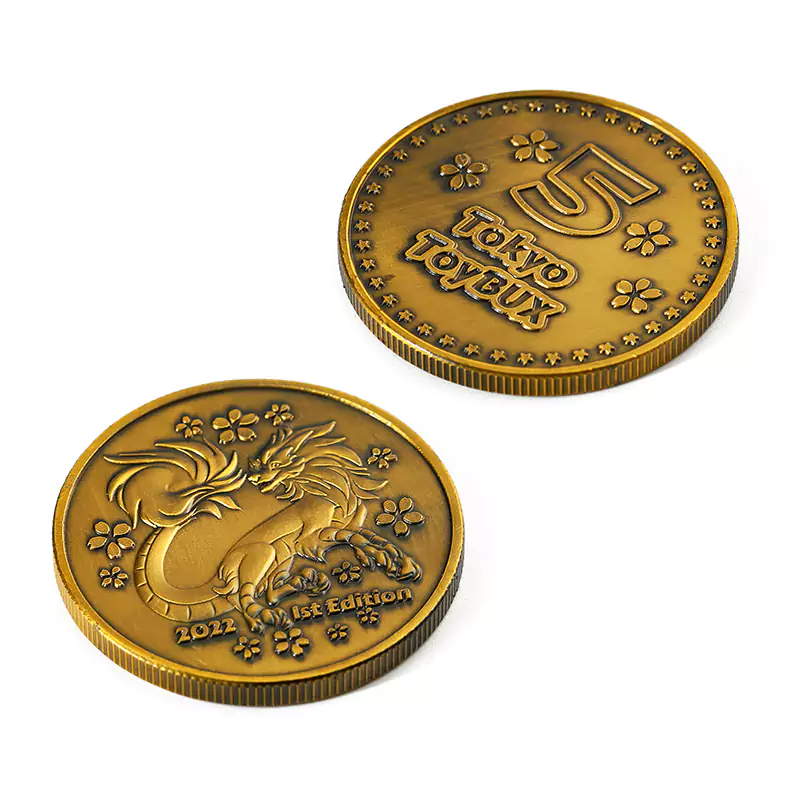
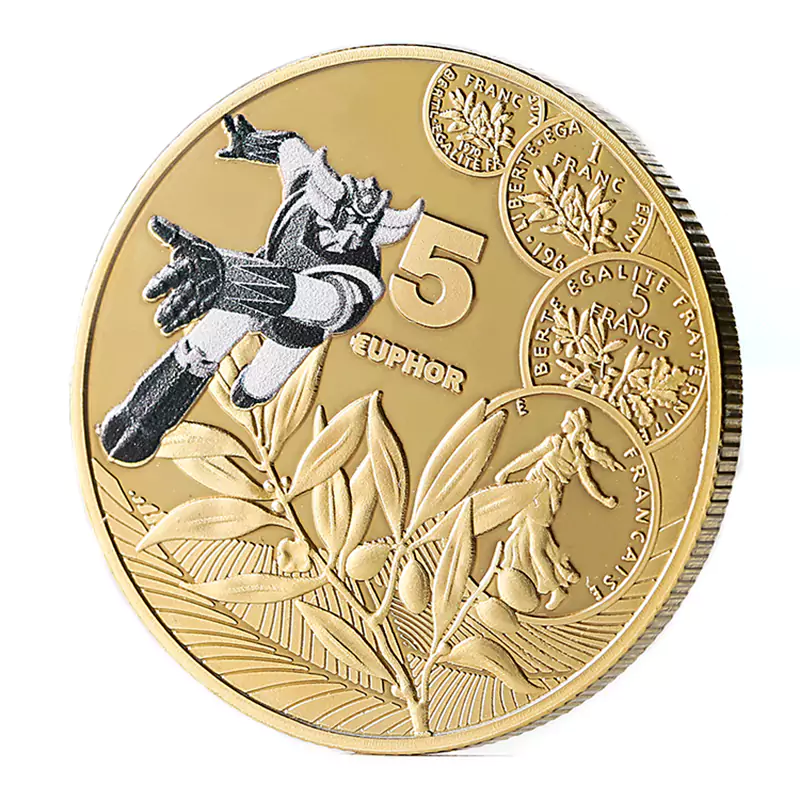
Pattern design is a key focus. Techniques such as relief, line engraving, painting, and sandblasting are commonly used, with careful attention to both fine detail and overall visual harmony. Historical commemorative coins must faithfully reproduce historical scenes, characters, and architectural details, while auspicious-themed coins emphasize symbolic meaning, smooth lines, and bright colors. Inscriptions—typically including the commemorated subject, date, blessings, and the name of the commissioning party—must be clear, readable, and stylistically consistent with the overall design. After the initial design is completed, it is revised through client feedback until finalized. For particularly complex projects, renderings or prototype samples are produced to verify the feasibility of the chosen techniques.
Material Selection: The Foundation of Quality and Value
Material selection for custom commemorative coins is diverse, and different materials directly influence the coin’s appearance, cost, durability, and value. Common materials can be divided into three main categories: precious metals, base metals, and special materials.
Precious metals—including gold, silver, and platinum—are the premium choice. Gold coins are soft in texture, brilliant in color, and highly resistant to oxidation, symbolizing nobility and eternity, and are favored for high-end commemoration and investment. Silver coins are harder, bright in appearance, cost-effective, and excellent for detailed pattern expression, making them one of the most popular materials for mass customization. Platinum coins are prized for their rarity and wear resistance, commanding higher prices and catering to luxury customization needs. The value of precious-metal coins depends not only on market prices but also on design quality, craftsmanship, and issuance volume.
Base metals such as copper, iron, aluminum, and zinc alloy are widely used for large-scale customization. Copper offers a hard texture, antique coloration, and strong durability, making it suitable for retro-style coins. Iron is low-cost and easy to process but requires surface treatments to prevent oxidation. Aluminum is lightweight and brightly colored but less durable. Zinc alloy combines low cost, high hardness, and excellent moldability, making it one of the most widely used base-metal materials today. Surface treatments such as gold or silver plating, painting, and enameling are commonly applied to enhance appearance and corrosion resistance.
Special materials include ceramics, crystal, and acrylic, which offer distinctive visual effects for specific themes. Ceramic coins convey a classical elegance suited to traditional cultural themes; crystal coins are highly transparent and lustrous, ideal for engraving photos and inscriptions; acrylic coins are lightweight, impact-resistant, and richly colored, making them suitable for gifts and souvenirs.
Production and Manufacturing: The Perfect Expression of Craftsmanship
The manufacturing process of custom commemorative coins is intricate and involves multiple stages, each requiring strict quality control.
Mold Making: Molds are the core tools in coin production, and their precision determines the clarity and detail of the final design. Using computer-aided engraving, the design is converted into a digital model, which is then carved into mold steel to create concave and convex forms corresponding to the coin’s pattern. Complex relief designs require layered carving to achieve depth and dimensionality. After completion, molds undergo trial stamping and refinement until they meet design standards.
Material Preparation and Melting: Selected materials are melted into ingots. Precious metals are often processed using vacuum melting to ensure purity and uniformity, while base metals undergo conventional melting to remove impurities and improve formability. The ingots are then rolled or drawn into sheets or wires of the required specifications.
Stamping and Forming: Metal sheets or wires are placed into the mold and subjected to high pressure in stamping machines, forming the coin’s shape and imprinting patterns and inscriptions. Precise control of pressure and speed ensures uniform thickness, sharp details, and clean edges. Multi-layer or composite coins require additional composite stamping processes.
Surface Treatment: Surface treatment enhances both appearance and durability. Common techniques include electroplating, painting, enameling, sandblasting, and polishing. Electroplating improves gloss and wear resistance; painting adds vivid color; enamel processes—both soft and hard enamel—fill recessed areas with glaze and are fired at high temperatures, producing bright, durable colors; sandblasting creates a matte texture that contrasts with polished areas, enhancing three-dimensionality; polishing results in a smooth, lustrous finish.
Quality Inspection and Packaging: Finished coins undergo rigorous quality inspection to check pattern clarity, dimensional accuracy, material purity, and surface finish. Defective products are reworked or discarded. Qualified coins are then packaged according to customer requirements, such as in gift boxes, brocade cases, or transparent holders. High-end commemorative coins may also include certificates of authenticity and informational booklets to enhance their collectible and gift value.
Conclusion
A custom commemorative coin is a work of art within a small space and a spiritual bond that transcends time. From ancient symbols of royal authority to treasured keepsakes embraced by the public, such coins engrave the contours of history, carry sincere emotions, and embody the warmth of craftsmanship. Their rich cultural meaning makes each coin a unique “specimen of time,” preserving both grand narratives of national development and delicate personal memories. With ongoing technological innovation and increasingly diverse demands, custom commemorative coins continue to flourish in the realms of commemoration, collection, and cultural inheritance. More than tangible metal objects, they are cultural carriers that connect past and future, link individuals and communities, and shine enduringly within the long story of human civilization.
PRODUCT CATEGORIES












FACTORY DIRECT · SINCE 1996
Made to your design
Pins, medals, coins and keychains from our own factory. Send an idea and get a free design proof.
- ✓ MOQ 50 pcs
- ✓ Free design proof
- ✓ 12–15 days production
Reply within 24 hours · No sign-up