Blog de Artesanato em Metal
Hold two challenge coins of the same size side by side and they can feel completely different. One is heavy and dense, with crisp lettering and a bright gold shine. The other is lighter, sculpted in deep relief, with darkened recesses and colored enamel. Both are “metal coins,” but they were made from different base metals and finished in different ways. Those choices decide how a coin looks, how it feels in the hand, how it wears over time and what it costs.
Hesank has been making custom metal crafts in Wenzhou, China since 1996, and coins are one of our core products. This guide explains what challenge coins are actually made of: the base metals, the plating finishes, the color and surface effects, and how to choose the right combination for your project. The short answer: most custom challenge coins are made of zinc alloy or brass, with copper and iron as alternatives, and the gold, silver or antique look comes from electroplating over that base metal.
Are Challenge Coins Solid Metal?
Yes. A custom challenge coin is a solid piece of metal, not a hollow shell or a plastic core. What changes from coin to coin is which metal is used for the body and which finish is plated on top. A “gold” coin is almost never solid gold; it is a zinc alloy or brass coin with a gold-colored plating. The same is true for silver, nickel, antique bronze and black finishes.
This matters for two reasons. First, the base metal sets the weight, the level of detail and the kind of shapes that are possible. Second, the plating sets the color and much of the durability. You choose them together, but they are separate decisions.
The Four Common Base Metals
| Metal | Usual process | Feel | Melhor para |
|---|---|---|---|
| Liga de zinco | Die casting | Medium weight | 3D relief, cut-outs, irregular shapes, most event and commemorative coins |
| Latão | Die striking | Heavy and dense | Classic unit and recognition coins with crisp text |
| Cobre | Die striking | Heavy, slightly softer | Antique copper and bronze looks, traditional commemoratives |
| Ferro | Estamparia | Firm, cost-effective | Large promotional runs with simple flat designs |
Zinc alloy: the most versatile choice
Zinc alloy is the metal behind most custom coins made today. It is cast rather than pressed: molten alloy is injected into a steel mold, so it can fill deep relief, undercuts and holes that a press could never form. That makes it the natural choice for sculpted portraits, vehicles, buildings, mascots, cut-out shapes and coins with an unusual outline. It is lighter than brass at the same size, which most people do not notice unless the coin is meant to be carried every day. If a quote does not name a metal, it is very likely zinc alloy.
Brass: the traditional heavy coin
Brass is dense and takes plating very well, which is why it has long been the standard for coins that are handled often, such as unit coins and executive recognition coins. Brass coins are usually die struck: a solid blank is pressed between engraved steel dies, producing sharp edges on small lettering and fine lines. The relief is shallower than on a casting, but the detail is very crisp and the coin feels substantial.
Copper: for warm antique finishes
Copper strikes cleanly and is a natural base for copper and antique bronze finishes, where the darker tones settle into the recesses and the raised areas are polished bright. It is a good choice for anniversary and commemorative pieces that should look classic rather than shiny.
Iron: the budget option
Iron is used for stamped coins in large quantities where cost is the main concern. With good plating it looks and wears well. Its limits are design depth and shape freedom rather than quality, so it suits simple, flat designs best.
The base metal and the production process go together. If you want to understand the trade-off between pressing and casting in more detail, read our guide to die struck vs die cast challenge coins.
Plating: Where the Color Comes From
After the coin is formed and polished, it is electroplated. The plating gives the coin its color and protects the surface. Common options include:
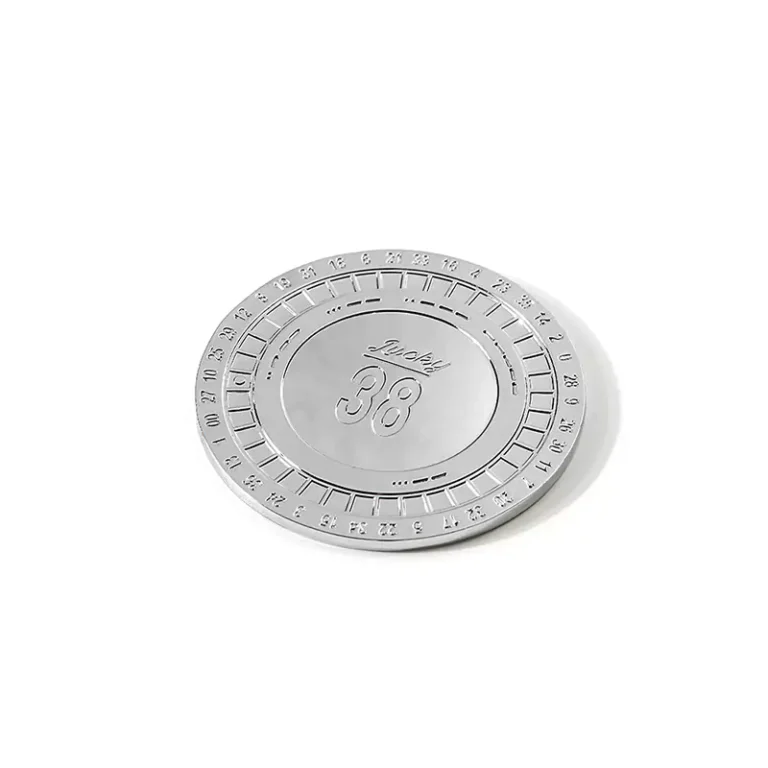
- Polished gold, silver and nickel. Bright, mirror-like finishes. They suit clean designs and make enamel colors stand out.
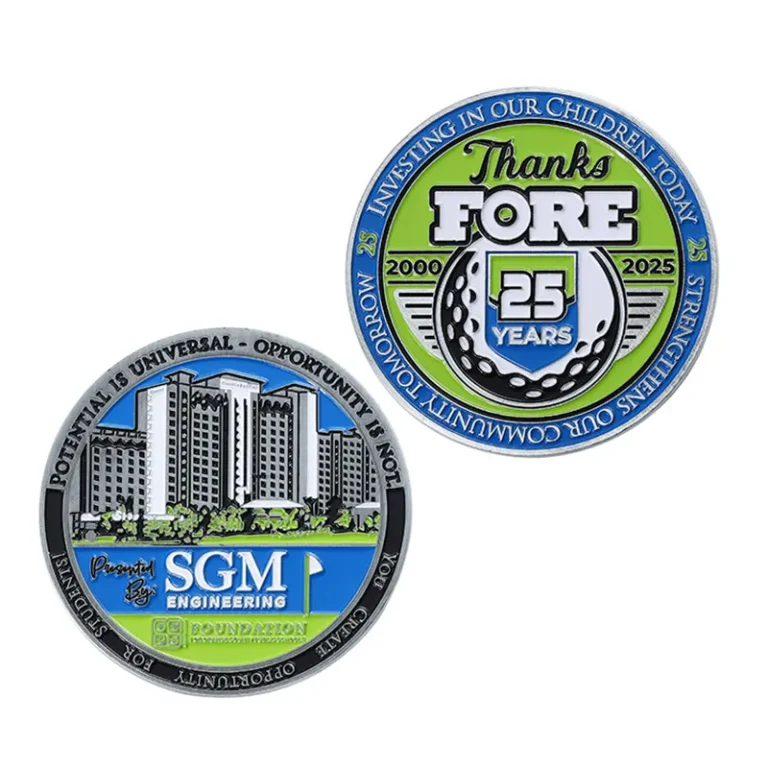
- Antique gold, antique silver and antique bronze. The coin is plated, then darkened and polished back so the recesses stay dark and the raised areas shine. This is the classic look for military and commemorative coins, and it makes 3D relief much more visible.
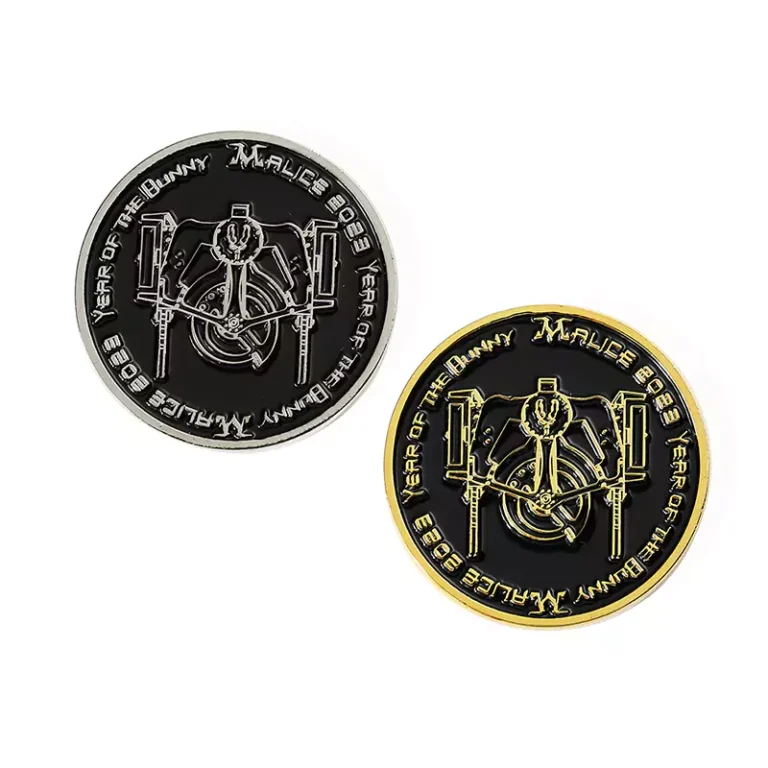
- Black nickel. A dark, gunmetal finish that pairs very well with bright enamel colors.
- Copper. A warm reddish tone, often combined with an antique treatment.
- Dual plating. Two metal colors on one coin, for example gold on the design and silver on the background. It adds production steps, so it takes longer and costs more per piece.
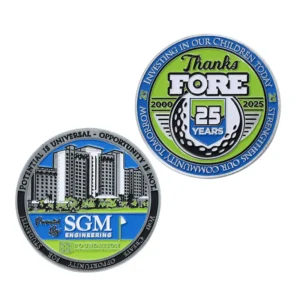
The coins below show how the finish changes the character of a design:
Color and Surface Effects
Beyond plating, a coin’s surface can carry color and texture in several ways. Most of these can be combined on one coin.
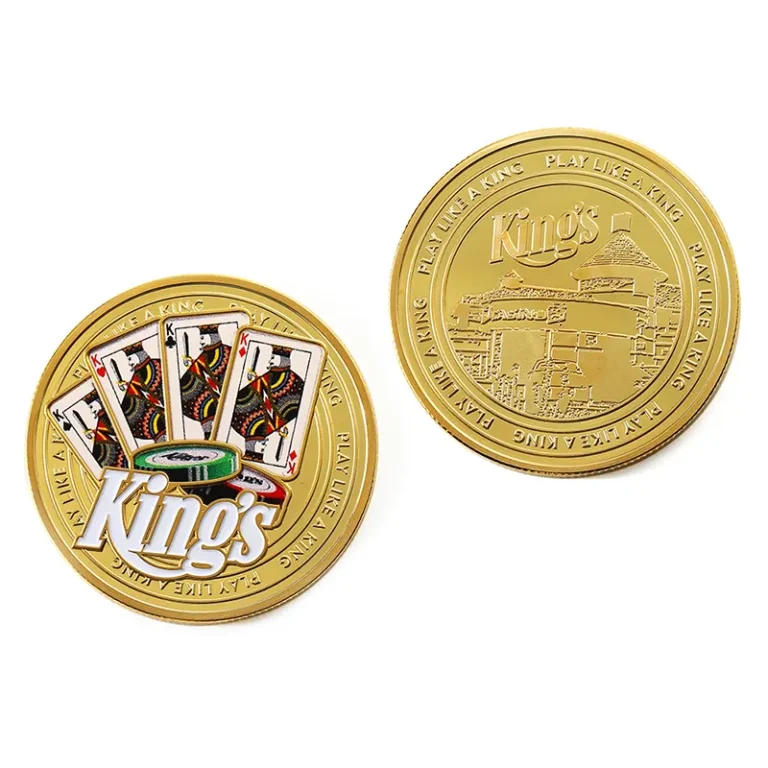
- Soft enamel. Color sits slightly below the raised metal lines, giving a textured, dimensional look. It is the most common choice for coins.
- Hard enamel. Color is filled level with the metal and polished smooth for a jewelry-like finish. Our guide to hard enamel vs soft enamel explains the difference; the same principles apply to coins.
- Glitter and glow-in-the-dark enamel. Popular for event, club and collector coins.
- Spray painting and printing. Used for gradients, photographic detail or large color areas that enamel cannot reproduce cleanly.
- Epoxy dome. A clear protective layer over printed or enamel areas.
- Sandblasting and polishing. Matte and mirror areas on the same coin create contrast without adding color.
- Engraving and edge details. Names, dates or serial numbers can be engraved, and the edge can be finished plain or with a decorative pattern.
NOT SURE WHICH METAL OR FINISH?
Tell us how the coin will be used and we will recommend the combination.
Hesank makes custom challenge coins in our own factory in zinc alloy, brass, copper and iron, with gold, silver, antique, black nickel and dual plating. MOQ 50 pcs, free 2D design mockups with unlimited revisions, 12–15 days production after sample approval.
How to Match Metal and Finish to the Use
The right combination depends far more on how the coin will be used than on any general rule. A few typical cases:
| Utilização | Common choice | Why |
|---|---|---|
| Unit or club coin carried daily | Brass, antique or polished plating, soft enamel | Heavy feel, crisp detail, finish that hides light wear |
| Commemorative or anniversary coin | Zinc alloy or copper, antique gold or bronze | Relief reads well, classic look for display |
| Sculpted 3D or cut-out design | Zinc alloy, antique or dual plating | Only casting can form the shape; antique finish shows depth |
| Event giveaway in large numbers | Iron or zinc alloy, polished plating, soft enamel or printing | Cost-effective while still looking finished |
| Collector or premium gift | Brass or zinc alloy, hard enamel, dual plating, presentation box | Smooth, jewelry-like surface and strong presentation |
More examples of colored and painted coins:
Safety and Compliance
If your coins are going to schools, youth programs or buyers with strict material requirements, raise it at the start of the project. We can supply nickel-free and RoHS/REACH compliant options on request, and we confirm the specification with you before production. Our factory works under an ISO-certified quality system and has been verified by Intertek.
It is also worth knowing what plating can and cannot do. Plating is a thin layer over the base metal. On coins that are carried in a pocket every day, the high points will slowly wear over the years, which is one reason antique finishes are popular: the darkened recesses make light wear look natural rather than damaged. Slight natural oxidation or tarnish over time is a normal property of plated metal and not a production defect.
How Material Choices Affect Price and Lead Time
Material and finish affect the price, but usually less than quantity, size and the number of process steps. In general:
- Brass and copper cost more than zinc alloy and iron.
- Each extra finish or process, such as dual plating, hard enamel, epoxy dome or engraving, adds cost and time.
- Larger, thicker coins use more metal.
- Higher quantities lower the unit price, because the one-time mold fee is spread over more pieces.
On timing, the sample takes 5–7 days after the design is confirmed, and 3D casting usually adds 2–4 days. Standard production takes 12–15 days after sample approval; complex specifications such as 3D, double plating or multi-color work take 20–25 days. Our MOQ and lead time guide walks through each stage, and the guia de preços de moedas comemorativas explains what moves the price.
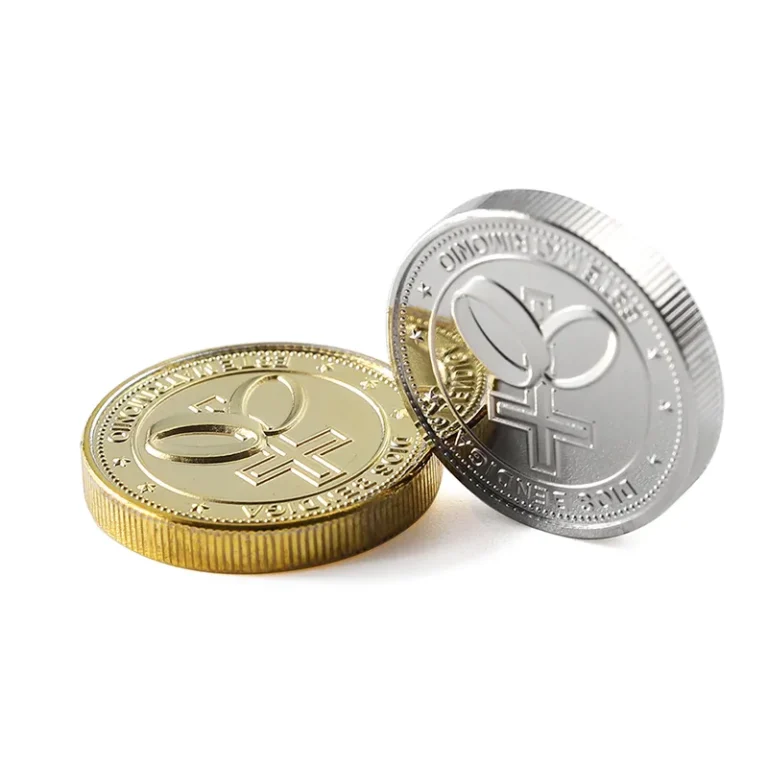
A few more coins for reference:

How We Confirm the Material and Finish Before Production
Metal and plating are hard to judge from a screen, so we confirm them in steps before anything is mass-produced:
- 2D mockup. The proof states the base metal, size, thickness, plating and every color reference, so there is a written record of what was agreed. 2D mockups are free, with unlimited revisions.
- Reference pieces if you need them. If you are unsure how antique silver or black nickel looks in real life, we can send one or two existing products made with a similar process. The samples are free and the buyer pays shipping.
- Pre-production sample. For your own design, the one-time mold fee covers the sample. You approve it from photos or from the physical piece, and mass production starts only after that approval.
- Final inspection. Finished coins are checked against the approved sample before packing.
If anything changes between the mockup and the sample, such as switching from polished gold to antique gold, it is easier and cheaper to decide at the mockup stage than after the sample is made.
Common Mistakes When Choosing Materials
- Choosing brass for a deeply sculpted design. The relief will be shallow. If the design is 3D, plan for zinc alloy casting.
- Choosing a bright polished finish for a coin that will be carried daily. Scratches show more on mirror surfaces. An antique finish ages more gracefully.
- Using too many finishes at once. Dual plating, hard enamel, glitter and printing on one coin can look busy and add a lot of time. Pick one or two features that matter.
- Forgetting the reverse side. The back can carry a different design, engraving or a simple textured finish, and it affects cost.
- Not mentioning compliance needs early. If you need nickel-free or RoHS/REACH compliant materials, say so before the sample is made.
Perguntas frequentes
What metal are most challenge coins made of?
Most custom challenge coins are made of zinc alloy or brass. Zinc alloy is used for cast designs with 3D relief or unusual shapes; brass is used for struck coins with crisp detail and a heavier feel. Copper and iron are also common.
Are gold challenge coins real gold?
Almost never. The gold color comes from electroplating over a base metal such as zinc alloy or brass. The same applies to silver, nickel and antique finishes.
Which finish hides wear best?
Antique finishes such as antique gold, silver or bronze. The recesses are deliberately darkened, so light wear on the raised areas looks natural.
Can a coin have two metal colors?
Yes. Dual plating puts two metal colors on different parts of the same coin. It adds steps, so production time and cost are higher.
Can you make nickel-free coins?
Yes. We can supply nickel-free and RoHS/REACH compliant options on request. Mention it in your inquiry so we can confirm the specification before production.
Does the metal change the minimum order?
No. Our standard minimum is 50 pieces per design for custom coins, whichever metal you choose.
Next Steps
Start with how the coin will be used, then choose the metal and finish to match. Browse our moedas de desafio, moedas militares e moedas comemorativas for finishes you like, then send us your artwork. We will recommend the metal, plating and color options, and quote the alternatives side by side.