Blog de Artesanato em Metal
Size is the first decision when you design a challenge coin, and it shapes almost everything that follows: how much detail fits, how heavy the coin feels in the hand, which capsule or display case it needs, how much it costs to make and ship, and even how it is received. A coin that is too small can look cheap and crowd the artwork; a coin that is too large can be expensive, awkward to carry and wasteful for a simple design.
This guide compares the standard challenge coin sizes and thicknesses, explains how each choice affects design and price, and gives a simple method for choosing the right size for a military unit, agency, company, club or event.
Standard Challenge Coin Sizes at a Glance
| Diameter | Metric | Typical thickness | Melhor para |
|---|---|---|---|
| 1.5 in | ≈ 38 mm | 2.5–3 mm | Budget giveaways, simple logos, large quantities |
| 1.75 in | ≈ 44 mm | 3 mm | Corporate, club and team coins |
| 2 in | ≈ 50 mm | 3–3.5 mm | The most popular size for unit and agency coins |
| 2.25 in | ≈ 57 mm | 3.5–4 mm | Detailed unit coins, anniversaries |
| 2.5 in | ≈ 63 mm | 4 mm | Command coins, complex artwork, 3D relief |
| 3 in | ≈ 76 mm | 4–5 mm | Collectible and display pieces, special editions |
If you are unsure, start with 1.75 or 2 inches. These sizes fit standard coin capsules and display cases, feel substantial in the hand and leave enough room for a logo, text around the edge and several enamel colors.
A Closer Look at Each Size
1.5 inches (38 mm)
About the size of a large modern coin. It is the most economical option and works well for simple designs: a single logo, a short line of text and two or three colors. Companies use it for trade show giveaways, membership tokens and large event quantities where cost per piece matters most. The trade-off is limited space; long mottos and small details become hard to read.
1.75 inches (44 mm)
A popular middle ground. It feels like a proper challenge coin without the cost of the larger sizes, and it suits corporate recognition programs, clubs, sports teams and school awards. Most designs with a logo, a name around the edge and four to five colors fit comfortably.
2 inches (50 mm)
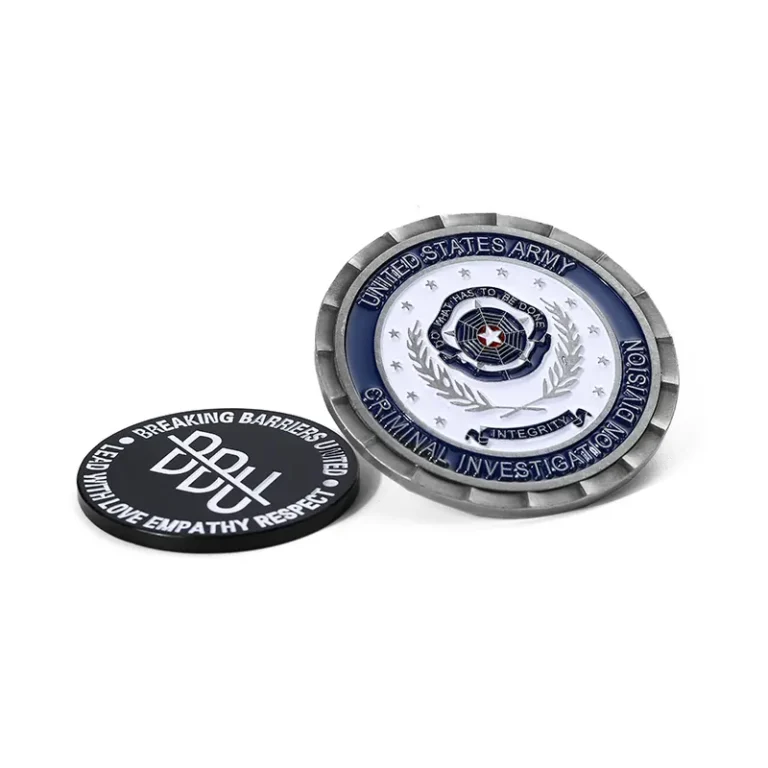
The classic size for military units, law enforcement agencies, fire departments and veteran organizations. It has enough space for a unit crest, a motto, the unit name and fine details such as small text on a ribbon banner, while still fitting easily in a pocket. If you only remember one size from this guide, it is this one.
2.25 to 2.5 inches (57–63 mm)
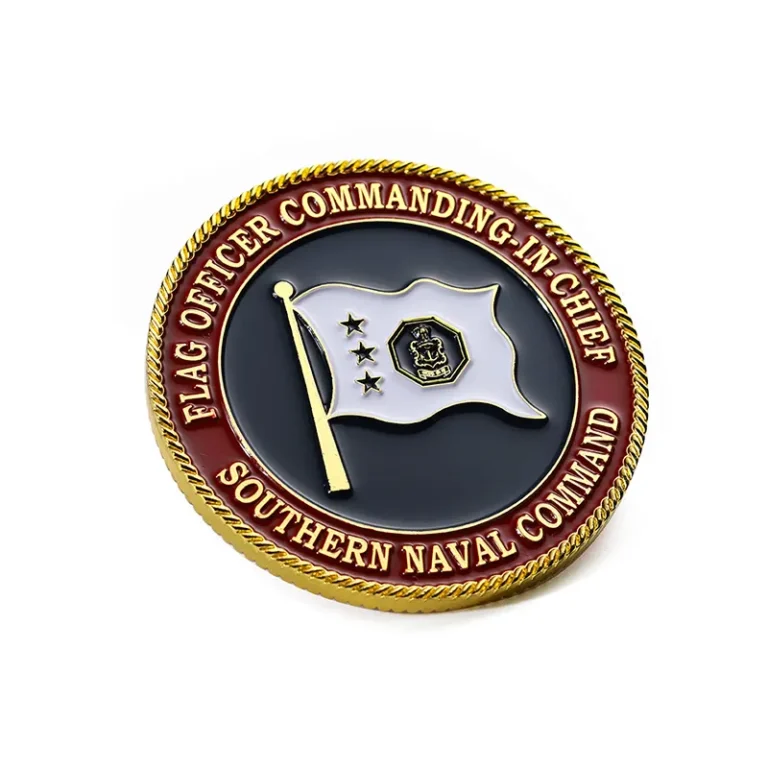
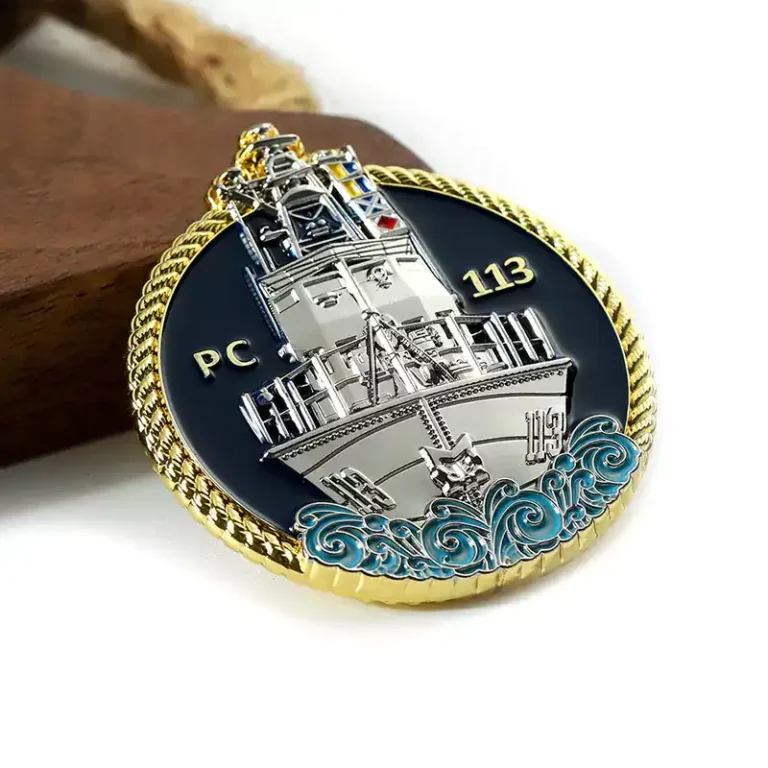
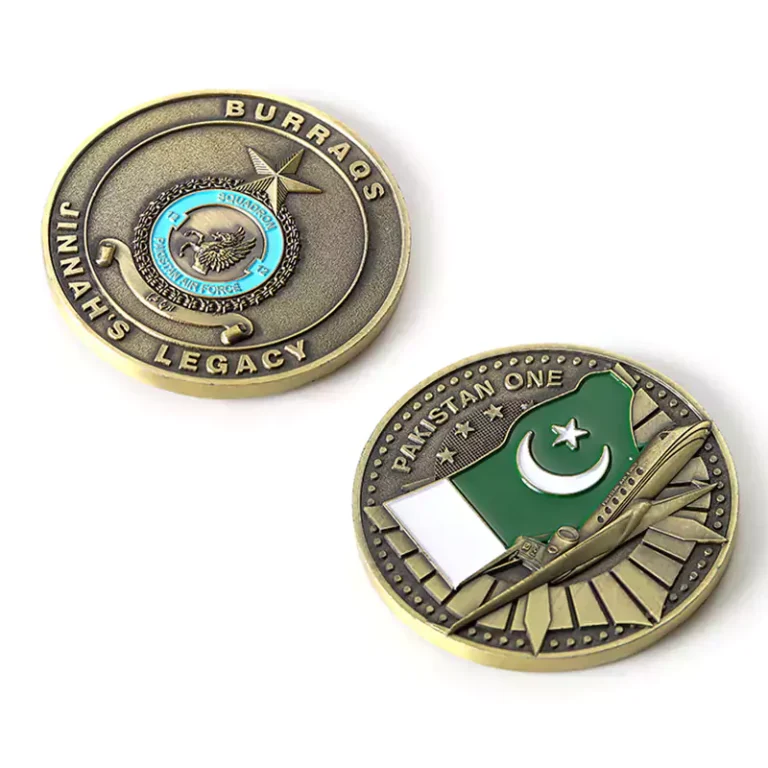
Often chosen for commanders’ coins, anniversary editions and designs with a lot of detail. The extra space allows 3D sculpted relief, more colors, edge engraving and features such as cut-outs or translucent enamel windows.
3 inches (76 mm) and larger
Impressive display pieces, usually made in smaller quantities for special editions, collectors or presentation sets. At this size coins are heavy and are normally kept in a display case rather than carried.
How Thick Should a Challenge Coin Be?
Thickness affects weight, durability, how deep the 3D details can be and what edge options are possible.
- 2.5–3 mm: standard for 1.5–1.75 inch coins. Light, economical and easy to mail.
- 3–3.5 mm: the usual choice for 2 inch coins. Feels solid without being heavy.
- 4 mm: recommended for 2.25–2.5 inch coins, 3D sculpting and edge engraving.
- 4.5–5 mm or more: for 3 inch coins, very deep relief, or coins with spinners and bottle openers.
A useful rule of thumb is that thickness should grow with diameter. A large but thin coin can feel flimsy and may bend, while a small but very thick coin looks more like a token than a coin.
How Size Affects Your Design
The available area grows quickly with diameter. A 2 inch coin has roughly 78% more surface than a 1.5 inch coin, which is why designs that feel crowded at 1.5 inches often look balanced at 1.75 or 2 inches.
- Text: keep letters at least 1 mm tall after production. Edge text around a 1.5 inch coin should be short; a 2 inch coin can carry a full unit name and motto.
- Cores: each enamel color needs its own area separated by raised metal lines. More colors need more space.
- Fine details: small crests, faces and lettering inside emblems look best on 2 inches or larger.
- 3D relief: sculpted portraits, animals and buildings need both diameter and thickness to show depth.
- Special features: cut-outs, glow-in-the-dark enamel, glitter, translucent windows and spinners all need extra room.
One good test is to print your artwork at the actual size you are considering. If you have to squint to read it on paper, it will be harder to read in metal.
How Size Affects Price
Several costs rise with size: the mold is larger, the coin uses more metal, plating covers a bigger area and shipping weight increases. In practice:
- Moving from 1.5 to 2 inches usually adds a moderate amount per coin.
- Moving from 2 to 3 inches can multiply the cost per coin, especially with 3D sculpting and thick edges.
- Quantity matters as much as size: the mold fee is paid once, so the price per coin drops quickly as the order grows.
For a detailed breakdown of mold fees, plating and quantity pricing, read our guia de preços de moedas comemorativas. You can also get an instant estimate with our challenge coin price calculator by choosing the size, colors and quantity.
Shapes and Edges
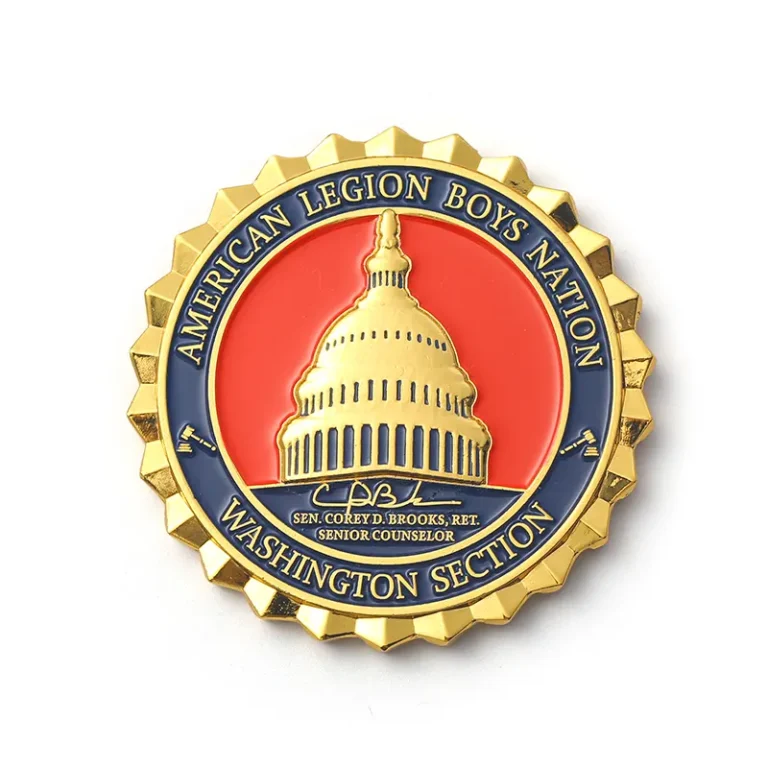
Size is not only about diameter. Custom shapes such as shields, dog tags, stars, states or unit outlines are measured by their longest side, and they usually need a slightly larger size than a round coin to show the same artwork.
Edge options also change how a coin feels:
- Smooth edge: clean and classic.
- Rope edge: a twisted pattern that frames the design.
- Reeded or diamond-cut edge: fine ridges or facets that catch the light.
- Edge text: engraved lettering around the rim, which needs a thickness of about 3.5–4 mm or more.
Size by Purpose: Quick Recommendations
- Military unit or deployment coin: 1.75–2 inches, 3–3.5 mm.
- Commander or senior leader coin: 2–2.5 inches, 3.5–4 mm, often with 3D details.
- Law enforcement or fire department coin: 1.75–2 inches, 3 mm.
- Corporate recognition or employee award: 1.75 inches, 3 mm, with a presentation box.
- Event giveaway or trade show: 1.5–1.75 inches, 2.5–3 mm.
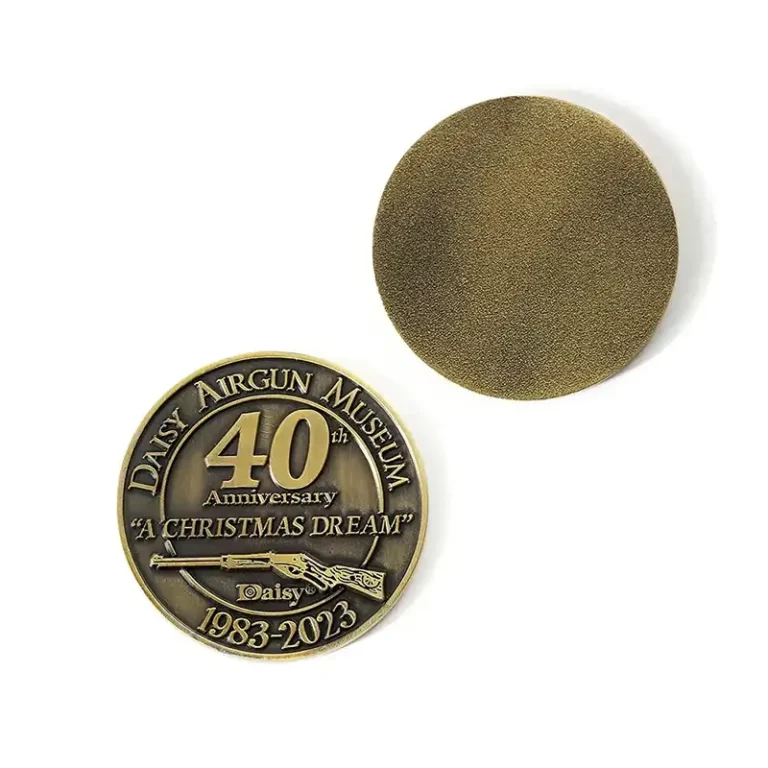
- Anniversary or commemorative edition: 2–2.5 inches, 3.5–4 mm, often antique plating.
- Collector’s or limited edition: 2.5–3 inches, 4 mm or more.
A Simple Way to Choose the Right Size
- Print circles of 1.5, 1.75, 2 and 2.5 inches on paper and place your artwork inside each one.
- Choose the smallest size where all the text is still easy to read.
- Go one size up if the coin is for senior leaders, a special event or collectors.
- Pick the thickness that matches the diameter from the list above.
- Check that capsules or display cases are available for your size and thickness.
Once you have the size, think about how the coin will be handed over and kept. Our guide on presenting a challenge coin covers the tradition, and our display guide helps you plan cases and stands. Browse more designs in our moedas militares de desafio e moedas comemorativas.
FOR UNITS, AGENCIES & COMPANIES
Not sure which size fits your design?
Send us your logo or sketch and we will suggest a size and thickness and return a free design proof. Hesank strikes custom challenge coins in our own factory, from 1.5 to 3 inches, with enamel colors, 3D relief and edge options. MOQ 50 pcs, free design proof, 12–15 days production.
Veja as moedas personalizadas para desafiosPeça um orçamento gratuito →
Packaging by Size
- Soft PVC pouch: the most economical; suits any size.
- Clear acrylic capsule: sized to the exact diameter and thickness; ideal for 1.5–2 inch coins.
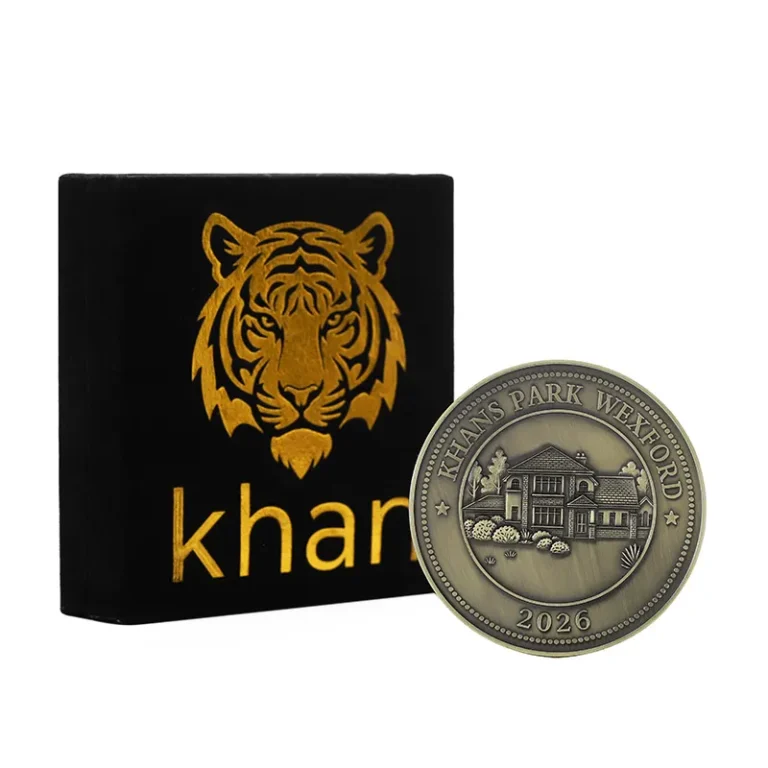
- Velvet or wooden box: for presentation coins, awards and gifts.
- Display frames and stands: for 2.5–3 inch coins and collector sets.
Tell us your coin size when you order and we can supply matching capsules or boxes in the same shipment.
How Much Does a Challenge Coin Weigh?
Weight depends on diameter, thickness, metal and how much of the surface is raised or cut away. As a rough guide for zinc alloy or brass coins with standard relief:
- 1.5 in, 3 mm: roughly 25–30 g
- 1.75 in, 3 mm: roughly 30–40 g
- 2 in, 3.5 mm: roughly 45–55 g
- 2.5 in, 4 mm: roughly 80–100 g
- 3 in, 4.5 mm: roughly 130–160 g
These figures vary with the design, so treat them as estimates. Weight matters when you plan shipping costs, mail coins to members, or want a coin that feels substantial without being heavy to carry every day.
Metals and Plating by Size
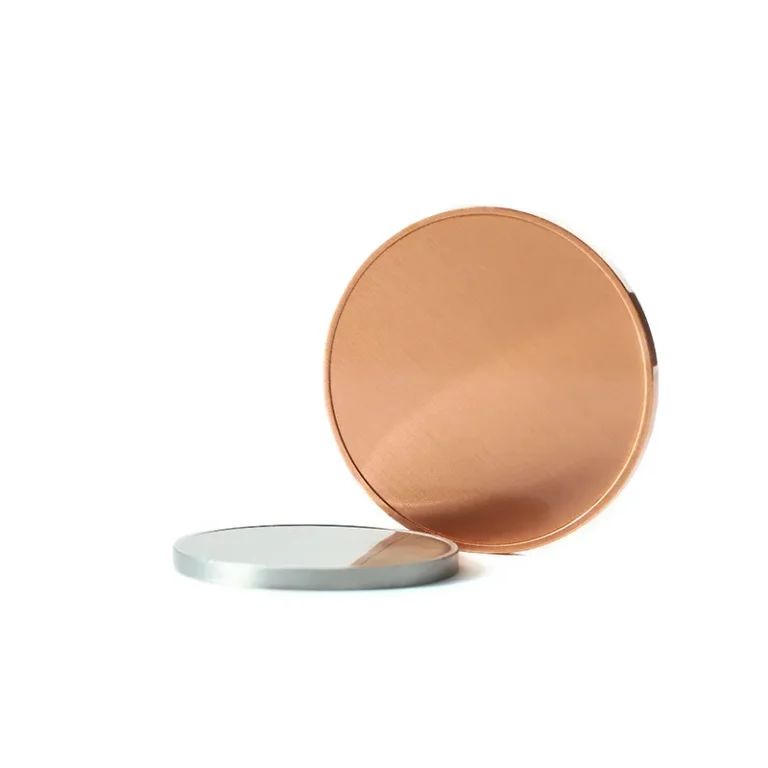
Most custom challenge coins are made from liga de zinco, which is cast into the mold and handles complex shapes, cut-outs and 3D relief well at any size. Brass and copper are struck rather than cast, giving very crisp detail and a traditional weight, and are a good choice for 1.5–2 inch coins with fine lines. Ferro is economical for large quantities of simple, flat designs.
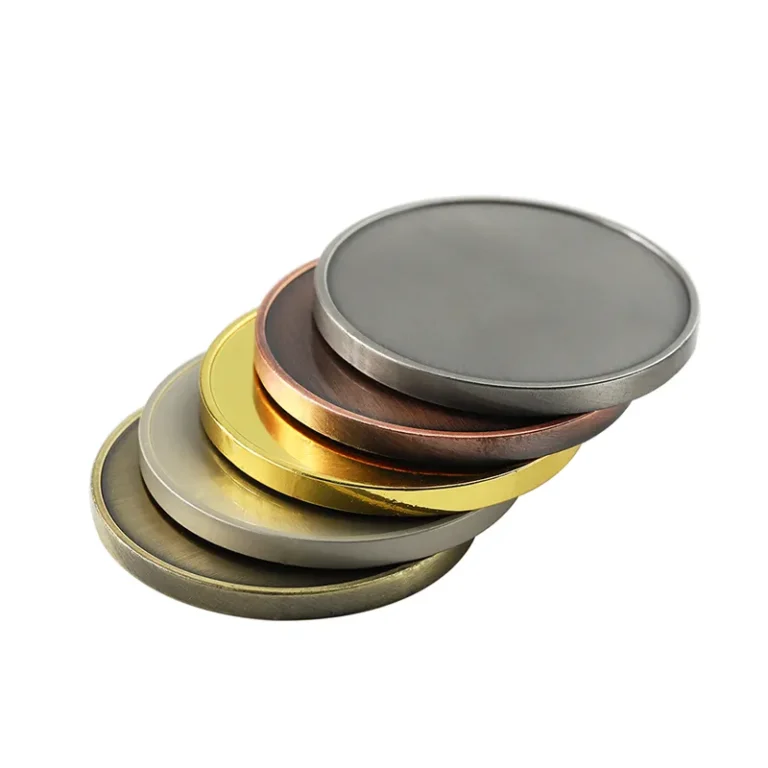
Plating can be gold, silver, nickel, copper or black, in bright or antique finishes. Antique finishes darken the recessed areas and highlight raised details, which suits larger coins with 3D relief. Two-tone plating, where parts of the coin are gold and others silver, adds contrast and works best from 1.75 inches up, where there is enough room to separate the two areas.
Common Sizing Mistakes
- Fitting too much artwork on a small coin: details fill with enamel or plating and disappear.
- Choosing a large size for a simple logo: the coin looks empty and costs more than necessary.
- Ignoring thickness: a 2.5 inch coin at 3 mm feels thin; match thickness to diameter.
- Forgetting packaging: non-standard sizes need matching capsules or boxes, which should be ordered with the coins.
- Measuring shaped coins like round ones: a shield or dog tag shape needs a slightly larger size than a circle to fit the same design.
Ordering Checklist
- Decide the purpose of the coin and who will receive it.
- Choose the diameter and thickness using the tables above.
- Prepare artwork for both sides, in vector format if possible.
- Choose metal, plating, enamel colors and edge style.
- Decide on packaging: pouch, capsule, velvet box or display case.
- Confirm the quantity and the date you need the coins.
With these details ready, a manufacturer can prepare an accurate design proof and quote in a single round, which saves days on the schedule.
Size and Collecting
Coin collectors often prefer consistent sizes within a series, so the coins sit neatly in the same display case. If you plan a yearly coin, an anniversary series or a set for different teams, choose one size and thickness at the start and keep it for every edition. Collectors also value details that reward a closer look, such as edge text, a serial number, a cut-out or a hidden element on the reverse. These features need space, which is another reason series coins are often 2 inches or larger. Numbering limited editions, for example “045 of 200”, adds value for both collectors and recipients, and it can be engraved on the edge or the back during production.
FAQ
What is the most common challenge coin size?
About 2 inches (50 mm) for military and agency coins, and 1.75 inches (44 mm) for many corporate and club coins.
How thick is a standard challenge coin?
Around 3 mm for a 1.75–2 inch coin. Large coins or coins with 3D relief are usually 4 mm or thicker.
Does a bigger coin cost much more?
Yes. The mold, metal weight, plating and shipping all increase with size. Ordering more pieces lowers the price per coin.
Can I order different sizes in one order?
Each size needs its own mold, so different sizes count as different designs. Many units order a standard coin for members and a larger version for leaders.
Will my coin fit a standard capsule?
Coins of 1.5, 1.75 and 2 inches with standard thickness fit widely available capsules. Larger or thicker coins need specific sizes, which we can supply.
What is the minimum order?
At Hesank the minimum is 50 pieces per design, with a free design proof and production in about 12–15 days.